“ Millicent hums the refrain to herself, and answers pleasantly to the noisy greeting with which one of the party hails them. A young girl, with the red-gold hair of her people, turns and looks long into Millicent's face. She wears over her broad shoulders a leopard-skin for warmth; while her head, with its glorious crown of hair, has no other protection than the doubtful one of a garland of roses. As she looks at Millicent, she takes the fragrant wreath from her brow, and, with a graceful salutation, tosses it into the gondola. ”
Millicent
Definition and stakes
The literary concept of "Millicent" emerges as a multifaceted figure, often portrayed as a woman of striking presence and emotional depth. Across works by authors such as Alan Sullivan, Meredith Nicholson, and Alice Duer Miller, Millicent embodies contrasts—ranging from the reserved, intellectual "strong, self-reliant woman" of The San Rosario Ranch to the enigmatic, sorrowful figure in Nicholson’s The Hope of Happiness.
Her character is frequently marked by symbolic gestures, such as the tossed garland of roses or the pallid, somber attire, reflecting inner turmoil or societal expectations. These varied depictions underscore her role as a narrative tool to explore themes of identity, longing, and emotional complexity, revealing a synthesis of vulnerability and fortitude that resonates across different literary contexts.
Quotes about “Millicent”
“ Graham's heart leaped from its quiet beating into a very tumult of pulsations, as the bolt was gradually drawn and the heavy door swung slowly open. On the threshold of his lonely tower stood Millicent, with downcast eyes and pale face. For a moment he was silent, looking at her, doubting his own vision; fearing to move lest she should vanish from before his eager eyes as she did in his dreams. Could this beautiful, colorless creature, with marble cheeks and fallen lids, with sombre garments and nerveless, pallid hands crossed upon the breast, be Millicent Almsford? ”
“ No longer a half-yielding, shrinking maiden, but a woman, full of tears, before whom some great sorrow, long stifled, had risen up again. Was her nature then two-fold? While she was with other people, Millicent seemed a strong, self-reliant woman, pure and cold, with quick intellectual sympathies, and strong opinions and convictions. When in the society of the man she loved, his influence unfolded the closed petals of her heart as the sun kisses back the white leaves of the daisy, and uncovers its great golden centre to the eyes of all men. ”

Related terms
Authors who wrote about “Millicent”
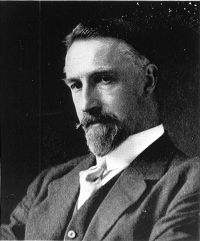 Alan Sullivan
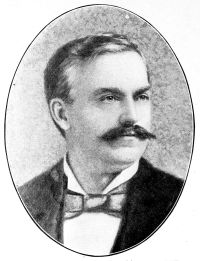 Linn Boyd Porter
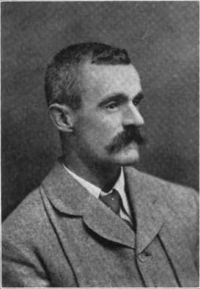 Harold Bindloss
 George Manville FennMatilda Charlotte Houston
 Meredith Nicholson
 Hugh WalpoleHenry JamesHenry Seton Merriman
 Natalie Sumner Lincoln
 E. W. HornungVarious
 Anne O'Hagan
 Alice Duer MillerAlbert W. Aiken
 Gertrude Franklin Horn AthertonEmily Sarah HoltLouis Tracy
 A. A. Milne
 Eden Phillpotts