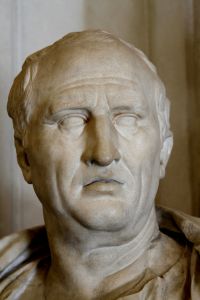
Mithridates VI of Pontus

Definition and stakes

Eugene Lawrence,  A Smaller History of Rome

“ Mithridates V., king of Pontus, assassinated, 186. Mithridates VI., king of Pontus, early life, 186; conquests and alliances, 187-8; orders a massacre of Romans and Italians in the cities of Asia, 188; defeated by L. Valerius Flaccus and by Sulla, 188-9; obtains peace on hard conditions, 189; defeats Murena on the Halys, 205; makes peace with Rome, and evacuates Cappadocia, 205; renews the war with Rome, 206; overruns Bithynia, and defeats Cotta, 200; retreats before Lucullus into Pontus, 207; defeated by Lucullus at Cabira, and takes refuge in Armenia, 207; defeats Fabius and Triarius, 208 ”

Source: Gutenberg

J. N. Larned,  History for ready reference, Volumes 1 to 5 (1895)

“ The early successes of Mithridates of Pontus, in his savage war with the Romans, included a general rising in his favor among the Greeks [see MITHRIDATIC WARS] , supported by the fleets of the Pontic king and by a strong invading army. Athens and the Piræus were the strongholds of the Greek revolt, and at Athens an adventurer named Aristion, bringing from Mithridates a body-guard of 2,000 soldiers, made himself tyrant of the city. A year passed before Rome, distracted by the beginnings of civil war, could effectively interfere. ”
Source: Gutenberg

John Lord,  Ancient States and Empires

“ Power of Mithridates. The king of Pontus made immense preparations to resist his powerful enemies. He strengthened his alliance with Tigranes. He made overtures to the Greek cities. He attempted to excite a revolt in Thrace, in Numidia, and in Syria. He encouraged pirates on the Mediterranean. He organized a foreign corps after the Roman fashion, and took the field with two hundred and fifty thousand infantry and forty thousand cavalry—the largest army seen since the Persian wars. He then occupied Asia Minor, and the Roman generals retreated as he advanced. ”
Source: Gutenberg

Get perspective with Kwize: daily news enlightened by great literature