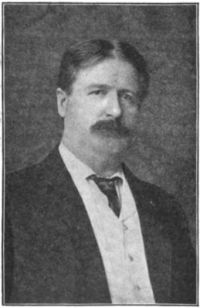
“ Eager had penetrated—and saw needs, states and yearnings there which must be filled or there could be no completeness of life. And now the still, pale face of Irene stood out distinctly; and her deep, weird, yearning eyes looked into his with a fixed intentness that stirred his heart to its profoundest depths. Mr. Emerson was absent from his office all that day. But on the next morning he was at his post, and it would have taken a close observer to have detected any change in his usually quiet face. But there was a change in the man—a great change. ”
Mr. Emerson
Definition and stakes
Quotes about “Mr. Emerson”
Oliver Wendell Holmes, Complete Project Gutenberg Oliver Wendell Holmes…
“ Among the stray glimpses we get of Emerson between the time when he quitted the pulpit of his church and that when he came before the public as a lecturer is this, which I owe to the kindness of Hon. Alexander H. Rice. In 1832 or 1833, probably the latter year, he, then a boy, with another boy, Thomas R. Gould, afterwards well known as a sculptor, being at the Episcopal church in Newton, found that Mr. Emerson was sitting in the pew behind them. Gould knew Mr. Emerson, and introduced young Rice to him, and they walked down the street together. ”
T. S. Arthur,
After the Storm
(1868)
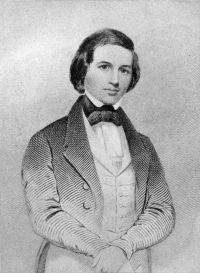
“ The causes which had produced a struggle were still in existence, and liable to become active, by provocation, at any moment. No change had taken place in the characters, dispositions, temperaments or general views of life in either of the parties. Strife had ceased between them only in consequence of the pain it involved. A deep conviction of this fact so sobered the mind of Mr. Emerson, and altered, in consequence, his manner toward Irene, that she felt its reserve and coldness as a rebuke that chilled the warmth of her tender impulses. ”
Oliver Wendell Holmes, Ralph Waldo Emerson
“ But certainly no physiologist, no cattle-breeder, no Calvinistic predestinarian could put his view more vigorously than Emerson, who dearly loves a picturesque statement, has given it in these words, which have a dash of science, a flash of imagination, and a hint of the delicate wit that is one of his characteristics:— "People are born with the moral or with the material bias;—uterine brothers with this diverging destination: and I suppose, with high magnifiers, Mr. Fraunhofer or Dr. Carpenter might come to distinguish in the embryo at the fourth day, this is a whig and that a free-soiler." ”
Oliver Wendell Holmes, Ralph Waldo Emerson
“ Mr. Cabot prefaces the eleventh and last volume of Emerson's writings with the following "Note":— "The first five pieces in this volume, and the 'Editorial Address' from the 'Massachusetts Quarterly Review,' were published by Mr. Emerson long ago. The speeches at the John Brown, the Walter Scott, and the Free Religious Association meetings were published at the time, no doubt with his consent, but without any active co-operation on his part. The 'Fortune of the Republic' appeared separately in 1879; the rest have never been published. ”
Oliver Wendell Holmes, Ralph Waldo Emerson
“ Ezra Ripley. The grandson spent much time in the family of Dr. Ripley, whose character he has drawn with exquisite felicity in a sketch read before The Social Circle of Concord, and published in the "Atlantic Monthly" for November, 1883. Mr. Emerson says of him: "He was identified with the ideas and forms of the New England Church, which expired about the same time with him, so that he and his coevals seemed the rear guard of the great camp and army of the Puritans, which, however in its last days declining into formalism, in the heyday of its strength had planted and liberated America.... ”
Oliver Wendell Holmes, Ralph Waldo Emerson
“ Whitman, who visited Concord in the autumn of 1881. Mr. Ireland gives a long extract from this journal, from which I take the following:— "On entering he had spoken very briefly, easily and politely to several of the company, then settled himself in his chair, a trifle pushed back, and, though a listener and apparently an alert one, remained silent through the whole talk and discussion. And so, there Emerson sat, and I looking at him. A good color in his face, eyes clear, with the well-known expression of sweetness, and the old clear-peering aspect quite the same." ”
Various, St. Nicholas, Vol. 5, No. 4, February 1878
“ Do you not know when the dog is sick or tired, or full of fun? yet, his bright eyes, eager little nose, lively body and whisking tail, tell no more surely than your own face and body."The tell-tale body is all tongues." Mr. Emerson, we think that is true."How can I be beautiful?" Every boy and girl, man and woman, wants to know that. Here is Mr. Emerson's beauty recipe: "There is no beautifier of complexion, or form, or behavior, like the wish to scatter joy and not pain around us." Do you suppose that recipe will work? Think of the most beautiful people you know. ”
Alice B. Emerson, Betty Gordon at Boarding School…
“ That was a busy week for the school boys and girls.The beautiful house and grounds of Fairfields were at their disposal, and the gallant host and gentle hostess gave themselves up to the whims and wishes of the houseful of young people."Racket while you may, for school-room discipline is coming," laughed Mr. Littell, when he went upstairs unexpectedly early one night and caught the abashed Tucker twins sliding down the banisters.Both Bob and Betty had wired Mr. Gordon of their safe arrival in Washington, and Bob had also telegraphed his aunts. ”
Alice B. Emerson, Ruth Fielding Homeward Bound; Or…
“ Is there nothing else to eat aboard?” “Ain’t no cook, Miss,” the man said. “We’re all so busy, anyway, that we just have to get what we can quickly. I’m sorry,” for she had dropped another half-dollar into his palm. “Is there nobody to cook for you hard-working men?” repeated Ruth briskly. “How many of you are there?” “Eleven, Miss, counting Mr. Boldig.” “Why, that’s not so many. And you feed Mr. Dowd and Mr. Rollife, of course?” “They haven’t had as much as you, Miss. Mr. Boldig said they could stand a little fasting, anyway. We haven’t had any decent grub ourselves.” ”
Alice B. Emerson, Ruth Fielding at Silver Ranch (1913)
“ Helen started the car again; but at that her brother and Ruth cried out in chorus: "Don't run us into the herd, Helen!" "What under the sun shall I do?" cried Miss Cameron. "I can't please you all, that's sure." "Oh, see that beast!" shrieked The Fox, who was likewise on the back seat. "I want to get out!" "Then the brute will catch you, sure," said Bob Steele. "Sit still!" commanded Mr. Hicks. "And stop the car, Miss! Better to be bunted by Old Trouble-Maker than set that whole bunch off on a stampede." ”
Alice B. Emerson, Betty Gordon at Boarding School…
“ I've had a wire and must leave for Chicago Wednesday morning. You and Bob will have to make the Washington trip alone.""I knew it was too good to be true," mourned Betty, a tear dropping on the yellowed silk shawl she was neatly folding. "Oh, dear, Uncle Dick, I did want you to go with us part of the way!""Better luck next time," replied Mr. Gordon. "There's no use grumbling over what you can't change." ”
Edward Morgan Forster,
A Room with a View
(1908)
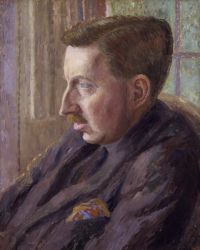
“ George, rather to her relief, refused to move, and she and the old man wandered not unpleasantly about Santa Croce, which, though it is like a barn, has harvested many beautiful things inside its walls. There were also beggars to avoid. and guides to dodge round the pillars, and an old lady with her dog, and here and there a priest modestly edging to his Mass through the groups of tourists. But Mr. Emerson was only half interested. He watched the lecturer, whose success he believed he had impaired, and then he anxiously watched his son. ”
Alice B. Emerson, Betty Gordon in the Land of Oil…
“ That agile youth had turned and dashed for the train, which was now slowly moving. He caught the steps of the baggage car and drew himself up. Once on the platform he turned to wave to Mr. Davis, but that good citizen was holding back the foaming Bud from dashing himself against the wheels and did not see Bob’s farewell.“Whew!” gasped Bob, making his way to Betty, after going through an apparently endless number of cars, “our Western adventures begin with a rush, don’t they? I’m hoping Flame City will be peaceful, for I’ve had enough excitement to last me a week.” ”
Alice B. Emerson, Ruth Fielding Homeward Bound; Or…
“ When Ruth opened her door she found the man to be rather a simple-looking fellow. He grinned and touched his forelock. “I’m to show you where they cook, Miss, and how to find the mess tins and all. There’s a good fire in one of the galley ranges. The boys is all your friends, Miss. You needn’t be afraid of us.” “I am not at all afraid of you, Fritz,” she said, smiling at him. “I count you as my friend aboard here, if nobody else is.” “Sure you can count on me, Miss. You know,” he added confidentially, “I ain’t a reg’lar German. Not like Mr. Boldig and these other fellers. ”
Alice B. Emerson, Betty Gordon at Boarding School (1921)
“ Bob nodded. "Have to keep an eye on you," he said with mock seriousness, at which Betty made a little face. "You haven't much time to get ready," Mr. Gordon warned them. "The aunts will leave Wednesday and our train pulls out at ten twenty-six on Friday morning. Of course you will do your shopping in Washington and be guided by the advice of Mr. and Mrs. Littell. I wish I could go to Washington with you, but that is impossible now. ”
Alice B. Emerson, Betty Gordon in Washington (1920)
“ In short, Betty poured out much of the pent-up excitement and doubt and conjecture of the last few weeks to Bob, who was as hungry to hear as she was to tell it. "They certainly are fine to you!" he exclaimed, referring to the Littells. "There isn't another family in Washington, probably, who would have been as kind to you. I think you'll hear from your uncle soon, Betty. Lots of times these oil wells, you know, are miles from a railroad or a post-office. You take that Mr. Littell's advice—he sounds as if he had a heap of common sense. ”
Alice B. Emerson, Betty Gordon at Boarding School…
“ The principal knew all about Bob through Mr. Gordon's letters and those from Mrs. Littell, and she knew most of the parents of the other lads Betty mentioned."I see no reason, my dear," she said graciously when she heard of the morning's visit, "why you should not go. Get the consent of your chaperone and then settle on the afternoon. How many of you are invited?""Seven," answered Betty truthfully. "But I want Constance Howard to go, Mrs. Eustice. The boys didn't know about her. She is Louise's roommate you see, and we eight always do everything together." ”
Alice B. Emerson, Ruth Fielding Down in Dixie; Or…
“ I hope we haven’t got him into more trouble,” mourned Ruth. 131 “And he can’t get the cat,” wailed Helen, in a moment. “The current is taking the raft clear out into midstream.” Curly was working vigorously with the single sweep, however, and he finally brought the cumbersome craft to the edge of the eddy where the hencoop with its frightened passenger whirled under the high bank. “Yo’ kyant git that cat, you fool boy!” bawled Jimson. “And yo’ll lose my raft.” “Oh, Mr. Jimson!” cried Nettie. “We do want him to save that cat if he can.” ”
Alice B. Emerson, Ruth Fielding Down East; Or, The Hermit of Beach Plum Point
“ But she should not be allowed to wander about in this awful way. Is she a woman grown, or a child?”“I couldn’t tell ye. I ain’t been close enough to her. By the way, my name is Peterby Paul, and I’m well and fav’rably knowed about this mounting. I did have my thoughts about you, same as that Whosis, I must say. But you ’pear to be all right. Wait, and I’ll bring ye down a couple of cans of gasoline, and you can go on and pick up the feller that’s started to walk to Ridgeton.”“But that poor creature I followed up here, Mr. Paul? We must find her.”“You say she ain’t nothin’ to you folks?” ”
Oliver Wendell Holmes, Ralph Waldo Emerson
“ Better than all is the testimony of those who knew him best. They who repeat the saying that "a prophet is not without honor save in his own country," will find an exception to its truth in the case of Emerson. Read the impressive words spoken at his funeral by his fellow-townsman, Judge Hoar; read the glowing tributes of three of Concord's poets,—Mr. Alcott, Mr. Channing, and Mr. ”
Willis George Emerson,
Buell Hampton
“ Hugh and his host lighted cigars. Judge Lynn tipped over the box in his clumsy effort to lift one out. “Gee whillikens!” exclaimed the judge, in self-derision, “I’m the tarnalest awkward man in the Southwest. Worse’n a bovine in a china-shop, bet yer life I am. Fact is, my nerves are clean knocked out. Overwork, Mr. Stanton, overwork! Say, Major, will you ‘scuse me a minit? I want ter see a feller ‘round the corner. ”
Alice B. Emerson, Betty Gordon in the Land of Oil…
“ Want to hear a little bit?”“I don’t mind,” conceded Bob graciously, keeping a finger in his book.“She says they’ve been to Atlantic City for a month,” explained Betty. “That is, Bobby, Esther, Louise and Mrs. Littell. Mr. Littell could spend only a week with them. And now the girls are going to boarding school. Listen. [Pg 208] “‘Louise and I are going away to school this fall, and though Esther is crazy to go, too, Dad says he must have one of us at home, so I think she will have to wait a year or two. ”
Oliver Wendell Holmes, Ralph Waldo Emerson
“ If you do refuse them a vote, you will also refuse to tax them,—according to our Teutonic principle, No representation, no tax.—The new movement is only a tide shared by the spirits of man and woman; and you may proceed in the faith that whatever the woman's heart is prompted to desire, the man's mind is simultaneously prompted to accomplish."Emerson was fortunate enough to have had for many years as a neighbor, that true New England Roman, Samuel Hoar. He spoke of him in Concord before his fellow-citizens, shortly after his death, in 1856. He afterwards prepared a sketch of Mr. ”
Willis George Emerson,
Buell Hampton
“ Gee, that’s easy.” “Yes, there would doubtless be a personal gain,” said Hugh. “In a business way I can readily see the advantages, but, if there were no other reasons, that in itself is sufficient to decide me against permitting my name to be offered as a candidate for membership.” “Judge Lynn,” said the major, sternly, “will you confine yourself to your cigar and let me discuss this subject with Mr. Stanton!” “Well, why not?” said the judge, as he blinked and looked with an intoxicated blankness at the major. “Bet yer life; course I will; I’m not hankerin’ after any man’s job. ”
Alice B. Emerson, Ruth Fielding At Sunrise Farm; Or…
“ Steele will go right ahead with this, I know,” said Tom, nodding. “He’s taken a fancy to those kids——” “Well! he ought to, to Sadie!” cried Ruth. “Sure. And he’s a generous man, after all. Too bad he’s taken such a dislike to old Caslon.” “Oh, dear, Tom! we ought to fix that,” sighed Ruth. “Crickey! you’d tackle any job in the world, I believe, Ruthie, if you thought you could help folks.” “Nonsense! But both of them—both Mr. Steele and Mr. Caslon—are such awfully nice people——” “Well! there’s not much hope, I guess. Mr. Steele’s lawyer is trying to find a flaw in Caslon’s title. ”
Alice B. Emerson, Ruth Fielding At Sunrise Farm; Or…
“ Caslon, again, but once more her husband interrupted: “Don’t you fuss about other folks, Mother,” he said, gravely. “It’ll do ’em good—mebbe—as I say. Nothin’ like tryin’ a game once by the way. And I bet twelve little tykes like these ’uns will keep that Steele man hoppin’ for a while.” “But his poor wife——” “Don’t you worry, Mrs. Caslon,” Ruth urged, but wishing to laugh, too. “We girls will take care of the kiddies, and Mrs. Steele sha’n’t be bothered too much.” “Besides,” drawled Mr. Caslon, “the woman’s got a good sized family of her own—there’s six or seven of ’em, ain’t there?” ”
Alice B. Emerson, Ruth Fielding Homeward Bound; Or…
“ And you’ve got none of the engineer’s crew.” “I am something of an engineer myself, Mr. Dowd,” returned the other, smiling with a satisfied air. “We shall have proper assistance before long.” He hailed Krueger, who had climbed to the roof of the radio house. “Is everything all right?” “Will be shortly, Mr. Boldig,” said the assistant radio man. 153 Ruth started. Then “Dykman” was “Boldig,” whose name she had formerly heard mentioned between Irma Lentz and the flaxen-haired man. The man with two names turned upon Ruth. ”