Mukden

Definition and stakes

1911 Encyclopædia Britannica, Volume 18… (1911)

“ MUKDEN (Chinese Shêngking) , the capital of Manchuria, on the Hun-ho, 110 m. N.E. of Niuchwang, in 41° 51′ N., 123° 38′ E., with a population of 250,000. It is a centre for trade and also for missionary enterprise. It was formerly the headquarters of the Manchu dynasty, and their tombs lie within its confines. Mukden is a fine town, with splendid walls, about a mile long each way. The suburbs extend a considerable distance from the city and are surrounded by mud walls. ”
Source: Wikisource

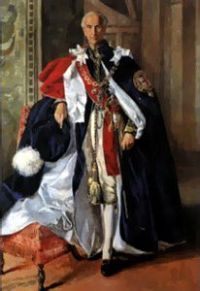
Portrait of Péter Vay Péter Vay,  Empires and Emperors of Russia…

“ My visit to Mukden had certainly been full of interest. Not only the town itself, its famous monuments, and its strangely superannuated people, but the whole situation as it is at present, offers endless scope for speculation. Chinese mandarins and Russian generals, Cossacks and coolies, how oddly they are amalgamated in incoherent groups! What developments may not the future have in store? Truly this is a fascinating problem. Will Manchuria be more prosperous under the new régime? Will the people be able to rise to a higher level? ”
Source: Gutenberg

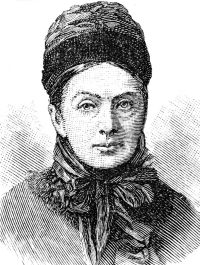
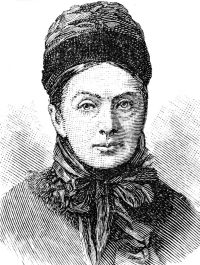
Portrait of Isabella L. Bird Isabella L. Bird,  Chinese pictures (1900)

“ AT MUKDEN. Mukden is the capital of Manchuria, the Northern Province. In every province of the Empire the God of Literature stands highest in the Chinese Pantheon, and it is interesting to note that the God of War stands low, though in China, as in other countries, we know women are devoted to his worship. In no country of the world does literature stand in such high estimation; by means of it the poorest man may climb to the highest post in the Empire. Nothing so helps a man to a career as a knowledge of the literature of his country. ”
Source: Gutenberg

Get perspective with Kwize: daily news enlightened by great literature