The concept of New Jerusalem represents a religious vision of a divine city in the Middle East, grounded in Jewish and Christian eschatology. Emerging from Ezekiel’s prophetic depiction of a Messianic Temple and elaborated in Revelation as a heavenly sanctuary, it signifies spiritual completeness and worldwide unity. Writers such as G.K.
Chesterton envisioned it as a city of radiant beauty, while Henry Van Dyke juxtaposed its mythic splendor with the concrete reality of modern Jerusalem. The theme blends literal and symbolic aspects, embodying aspirations for salvation and the presence of the divine, as found in apocalyptic writings and mystical traditions. Its lasting appeal stems from its dual function as both a heavenly ideal and a model for earthly transformation.
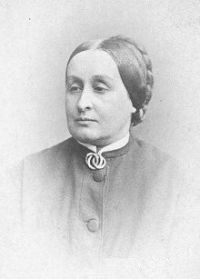 Karolina Světlá,
Maria Felicia
(1898)
Karolina Světlá,
Maria Felicia
(1898)