“ Paimpol itself is a fishing village, much frequented by artists, attracted by the fishing-boats with their vermilion sails, who never tire of depicting the gray stone quay, with its jumble of masts and riggings. ”
Paimpol
Definition and stakes
The theme of “Paimpol” has been addressed by authors such as Dorothy Menpes and Henry Blackburn. It is often associated with terms like Poland, Pomerania, Poles, Russia and polish.
Quotes about “Paimpol”
Henry Blackburn, Breton Folk: An artistic tour in Brittany
“ Looking far away northward and eastward across the water, dotted with white sails coming in with the tide, the island rocks light up brilliantly in the setting sun. The air is so clear seaward that we can distinguish little houses on the island which guards the port, and on more distant rocks far out to sea, all glittering in the sun. Turning southward, to the real bay of Paimpol, which we cannot see from the town, the opposite banks are in shadow, and the foliage which reaches to the water’s edge takes a rich purple tinge. ”
Mary Platt Parmele, A Short History of Russia
“ A new generation had grown up in Poland, men not nobles nor serfs, but a race of patriots familiar with the stirring literature of their century. They had seen their land broken into fragments and then ground fine by a proud and infatuated nobility. They had seen their pusillanimous kings one after another yielding to the insolent demands for their territory. Polish territory extended eastward into the Ukraine; now that must be cut off and dropped into the lap of Russia. ”
 Rufin Piotrowski,
The Story of a Siberian Exile; Followed by a Narrative of Recent Events in Poland
(1863)
Rufin Piotrowski,
The Story of a Siberian Exile; Followed by a Narrative of Recent Events in Poland
(1863)
“ At the end of the storms of the French Revolution, and of the Empire, in which the Poles had taken part with all their warlike humour, and during which, by the timid, ephemeral, and incomplete creation of a Grand-Duchy of Warsaw, they had for an instant believed that their country was reborn, the Congress of Vienna, after allowing hope to shine before the eyes of Poland, let her fall again under the triple yoke, and consecrated her dismemberment as an accomplished fact. ”
Wilhelm Meinhold, Sidonia, the Sorceress : the Supposed Destroyer of the Whole Reigning Ducal House of Pomerania…
“ However, I will do what I can to delay the time as much as possible; perchance from your great age, and the bitter heart-remorse you must, no doubt, suffer, you may end your miserable life before they can lay violent hands on you. Pray to the Lord God, therefore, day by day, for your speedy death! I will, likewise, pray for you. Meanwhile, if any evil befall you, I will write petitions in your favour to all the neighbouring princes, to the resident nobles, and to the Duke himself in Stettin, for your race is one of the most illustrious in all Pomerania. ”
Rufin Piotrowski,
The Story of a Siberian Exile; Followed by a Narrative of Recent Events in Poland
(1863)
“ When mass had been said, a Basilican priest (of the United Greek Church) rose, and thus addressed the crowd: ‘Behold to-day, assembled for the first time, the mutilated members of our beloved Poland! In our national history there is no better festival, and no memory more pure, than that which we have met to celebrate to-day. Look at that forest; count its trees; and for each tree that you count you may find upon the Polish soil the grave of a hero, of a martyr who has given himself for our liberty. Here, as everywhere in Poland, all are ready to sacrifice their lives ”
Mary Platt Parmele, A Short History of Russia
“ The liberal Russians might have sympathized with the first moderate demand, but when by the last there was an attempt made upon the integrity of Russia, there was but one voice in the empire. So cruel and so vindictive was the punishment of the Poles, by Liberals and Conservatives alike, that Europe at last in 1863 protested. The Polish language and even alphabet were prohibited. Every noble in the land had been involved in this last conspiracy. They were ordered to sell their lands, and all Poles were forbidden to be its purchasers. Nothing of Poland was left which could ever rise again. ”
Mary Platt Parmele, A Short History of Russia
“ Such a new reign of clemency awakened hope in Poland that it too might share these benefits. First it was a Constitution such as had been given to Hungary for which they prayed. Then, as Italy was emancipating herself, they grew bolder, and, incited by societies of Polish exiles, all over Europe, demanded more: that they be given independence. Again the hope of a Polo-Lithuanian alliance, and a recovery of the lost Polish provinces in the Ukraine, and the reestablishment of an independent kingdom of Poland, dared to assert itself, and to invite a more complete destruction. ”
comte Jean Rapp, Memoirs of General Count Rapp, first aide-de-camp to Napoleon
“ But the ally, on whose tactics they founded their principal hope, is no longer what he was: his citadels, his capitals, his magazines, his arsenals, 280 standards, 700 pieces of cannon, five great garrisons, are in our power. The Oder, the Warta, the deserts of Poland, the severity of the weather, have not for a moment impeded your advance: you have braved every danger, and surmounted every obstacle; your enemies every where fled at your approach. In vain did the Russians attempt to defend the capital of ancient and illustrious Poland. The French eagle hovers over the Vistula. ”
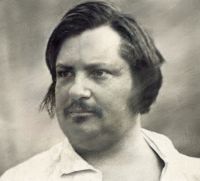 Honoré de Balzac,
Paz (La Fausse Maitresse)
Honoré de Balzac,
Paz (La Fausse Maitresse)
“ The graft from the tree that was felled in Italy flourished so vigorously in Poland that there are several branches of the family still there. I need not tell you that some are rich and some are poor. Our Paz is the scion of a poor branch. He was an orphan, without other fortune than his sword, when he served in the regiment of the Grand Duke Constantine at the time of our revolution. Joining the Polish cause, he fought like a Pole, like a patriot, like a man who has nothing,—three good reasons for fighting well. ”
Rufin Piotrowski,
The Story of a Siberian Exile; Followed by a Narrative of Recent Events in Poland
(1863)
“ In the garrison of our town, there were about ten Poles incorporated into our army after the revolution of 1831. Will you believe it, Sir, these Poles excited our soldiers, persuaded them that they were very unhappy, that the Tzar was the cause of it, and that his authority was not lawful? Now what was the consequence of all this? They only made their own case worse, and they drew upon themselves all the severities of the Russian law. These Poles never reflected that every nation has, and ought to have, a government suited to its nature. ”
 Giacomo Casanova,
The Memoirs of Jacques Casanova de Seingalt…
Giacomo Casanova,
The Memoirs of Jacques Casanova de Seingalt…
“ After an extremely agreeable visit to the palatin I returned to Leopol, where I amused myself for a week with a pretty girl who afterwards so captivated Count Potocki, starost of Sniatin, that he married her. This is purity of blood with a vengeance in your noble families!Leaving Leopol I went to Palavia, a splendid palace on the Vistula, eighteen leagues distant from Warsaw. It belonged to the prince palatin, who had built it himself.Howsoever magnificent an abode may be, a lonely man will weary of it unless he has the solace of books or of some great idea. ”
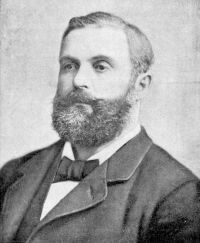 Thomas Wallace Knox,
The Boy Travellers in the Russian Empire
(1887)
Thomas Wallace Knox,
The Boy Travellers in the Russian Empire
(1887)
“ Laid desolate by many wars and subjected to despotic rule, the country around Warsaw bears little evidence of prosperity. Many houses are without tenants, and many farms are either half tilled or wholly without cultivation. The spirit of revolution springs eternal in the Polish breast, and the spirit of suppression must be equally enduring in the breast of the Russian. It is only by the severest measures that the Russians can maintain their control of Poland. ”
Charles Sarolea, Great Russia (1916)
“ The Polish child is not allowed to pray in its mother-tongue, because German culture, forsooth, in virtue of its superiority must stamp out Polish culture. The Polish peasant is not allowed to possess the land of his fathers, and whereas the Russian bureaucracy in the days of Milioutine has distributed millions of acres to Polish peasants, the Prussian bureaucracy have already spent hundreds of millions of marks to expropriate them. ”
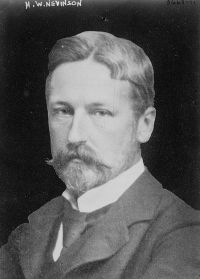 Henry Woodd Nevinson,
The dawn in Russia
(1906)
Henry Woodd Nevinson,
The dawn in Russia
(1906)
“ Petersburg, I have already described a Polish restaurant there which was sharply divided by an invisible but impassable line into two camps, both violently Polish, and both so hostile to each other that the girls of one would not speak or eat with the girls of the other, nor even with the men. Warsaw displayed a similar division in almost every street. Very likely it is the price that Poles pay for the strong individuality which has given them so many poets, artists, and musicians. ”
Rufin Piotrowski,
The Story of a Siberian Exile; Followed by a Narrative of Recent Events in Poland
(1863)
“ Alone, and abandoned to her own resources, Poland must evidently succumb; she must sink under the weight of arms, still more under the weight of oppression. Then, surely, the last words had been said, the last resistance conquered, and all was really at an end. On the contrary, nothing was finished; and this is the curious point, the great moral, so to speak, of the events which for the last two months agitate Warsaw and all Polish countries. ”
Edward Parrott, The Childrens' Story of the War…
“ I have already told you that on the Vistula, half-way between the German fortress of Thorn and the Galician frontier, stands the great city of Warsaw. [153] It is not only a great place of manufactures, but a powerful fortress and the capital of Russian Poland, which contains twelve million people—Poles, Germans, Russians, and half a score other races. Amongst these mixed peoples Germany had many friends who would spy for her, and otherwise help her to win the city. ”
Rufin Piotrowski,
The Story of a Siberian Exile; Followed by a Narrative of Recent Events in Poland
(1863)
“ No one can imagine what an amount of suffering is inflicted on Polish hearts by the moral isolation in which we are left, and that, too, in the middle of the agitation occasioned by the revival of other nationalities. ‘I see what it is,’ said a Polish peasant; ‘they will end in giving the Tsigans a king, but no one will ever think of giving one to us.’ Poland had at one time so completely disappeared, that she was supposed to be dead ”
Rufin Piotrowski,
The Story of a Siberian Exile; Followed by a Narrative of Recent Events in Poland
(1863)
“ After some moments of silence, Prince Bibikov replied, ‘I do not understand why the Poles and the Russians should hate and hurt each other for ever; we are all Slaves, brought together by origin, language, and manners, we ought to be united, and to march on together; and he who thinks otherwise does not understand the true interests of the two nations.’‘I am quite of your Excellency’s way of thinking, and we indeed have no feeling of ill-will towards the Russian nation; but we aspire to be free, and as regards the government....’‘I have no time to discuss this with you. ”
Wilhelm Meinhold, Sidonia, the Sorceress : the Supposed Destroyer of the Whole Reigning Ducal House of Pomerania…
“ Illustrious Princess, dear cousins, nobles, and faithful burghers, ye all know that I have ruled this Pomeranian land for fifty years, upholding the pure doctrine of Doctor Martin Luther, and casting down papacy in all places and at all times. But as I am now old, and find it hard sometimes to keep my unruly vassals in order, whereof we have had a proof lately, it is my will and purpose to resign the government into the hands of my dear cousins, the illustrious Princes von Pommern-Wolgast, and retire to Oderburg in Old Stettin, there to rest in peace for the remainder of my days ”
Wilhelm Meinhold, Sidonia, the Sorceress : the Supposed Destroyer of the Whole Reigning Ducal House of Pomerania…
“ The Serene and Illustrious Prince and Lord, Lord Philip, Duke of Stettin, Pomerania, Cassuben, and Wenden, Prince of Rugen, Count of Gutzkow, and Lord of the lands of Lauenburg and Butow, our gracious Prince, Seigneur, and Lord, hereby commandeth all present, from Lastadie, Wiek, Dragern, and other places assembled, to lay down their arms, and retire each man to his own home in peace and quietness, without offering further molestation to his loyal lieges, burghers, and citizens, on pain of severe punishment in person and life, and deprivation of all wonted privileges. ”
Comte de Auguste Louis Charles La Garde-Chambonas, Anecdotal Recollections of the Congress of Vienna
“ They will only find a country in the strictest sense through us and with us,’ the councillor went on. ‘Poland, completely independent and organised on the very risky basis of its erewhile constitutions, would only secure an ephemeral existence; she would carry her own germ of destruction. Is she to form a permanent camp in the centre of pacified Europe, or shall she arm all her nomadic sons like the Sarmatians of old, in order to make up by living ramparts for the natural frontiers and fortresses she lacks? She must have a support in order to insure her independence. ”
“ The vast majority of Poles, rich and poor, aristocratic and humble, lived their lives apart from the Russian Bureaucrats in their midst, who fattened on the country, reaping a harvest in peculation, drawing extra pay whilst there, on the lying legend that they carried their lives in their hands and slept with revolvers under their pillows for fear Polish insurgents should murder them in the night. ”
J. N. Larned, History for ready reference, Volume 4… (1895)
“ Such was the first case of the exercise of that liberum veto of which we hear so much in subsequent Polish history, and which is certainly the greatest curiosity, in the shape of a political institution, with which the records of any nation present us. From that time every Pole walked over the earth a conscious incarnation of a power such as no mortal man out of Poland possessed—that of putting a spoke into the whole legislative machinery of his country, and bringing it to a dead lock by his own single obstinacy ”
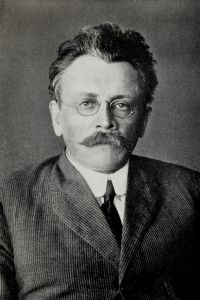 Abraham Cahan,
The White Terror and The Red: A Novel of Revolutionary Russia
Abraham Cahan,
The White Terror and The Red: A Novel of Revolutionary Russia
“ Pavel’s unbounded faith in the party instilled new faith into her. The great point was that he was a member of the aristocracy. If a man like him had his whole heart in the struggle, the movement was certainly not without foundation. Moreover, Boulatoff was close to the revolutionary centre, and he obviously spoke from personal knowledge. All sorts of questions worried her, many of which were answered at the present gathering, partly by herself, partly by others. ”
comte Jean Rapp, Memoirs of General Count Rapp, first aide-de-camp to Napoleon
“ Say, Sire, Let the kingdom of Poland exist! and the decree will be to the world equivalent to the reality. We are sixteen millions of Poles, among whom there is not one whose blood, arms, and fortune, are not devoted to your Majesty: every sacrifice will appear to us light, if it has for its object the reestablishment of our native country. From the Dwina to the Dniester, from the Borysthenes to the Oder, one word only from your Majesty will command every arm, every effort, every heart. ”
“ CHAPTER VI A FREEZING night in November, a cutting wind sweeping up from the Baltic, a sky so black with heavy clouds that not a star gleamed through, and the sentries on the walls of Stralsund shivered at their posts.It was the only city in Pomerania still held for Karl; everything was ready for defense in case of an attack, and the eyes and ears of the sentinels were strained against the darkness of the night. ”
J. Giles Powell, The narrative of a voyage to the Swan River… (1831)
“ That the climate is singularly healthy will not be denied, but a foreign language, difficult to learn, is spoken in the country, and the hatred of the Poles to the Government of Russia renders it more than probable that, as soon as an opportunity occurs, they will endeavour to throw off that yoke which they consider so galling and degrading;—and then—in the miseries and commotions of civil war, agriculture cannot flourish, nor the property of individuals remain secure ”
 Arthur Greenwood,
The War and Democracy
Arthur Greenwood,
The War and Democracy
“ Polish extremists, however, not content with these indubitably Polish districts, are already laying claim to the lower reaches of the Vistula and to Danzig as the port of the historical Poland; and there is a further tendency in certain Russian circles to regard the whole province of East Prussia as part of the natural spoils of war. ”
Henry Woodd Nevinson,
The dawn in Russia
(1906)
“ Like academic people among ourselves, they are fond of repeating that they demand evolution, not revolution, but their opposition to the Government is nevertheless sincere, and many of them were in prison. The gradual nationalization of the land, with compensation but compulsory sale where an owner possesses over a certain maximum, is a great point in their programme, and their aims in general are rather social than political, though they, too, demand a Polish Parliament and a military system under which Polish recruits shall remain in Poland. ”
 A. M. Williamson,
The Great Pearl Secret
A. M. Williamson,
The Great Pearl Secret
“ Very little information reached Russia through Lyda Pavoya! Reproaches and threats came to her from Markoff; and as a warning of what he could do to bring about her ruin if he chose, Russians in England, France, Italy, America, set the ball of scandal rolling against her. According to them she was a professional siren, a mercenary blood-sucker, a "tigress woman," a devourer of men's happiness and honour! Against such a campaign a woman, placed as she was, found herself helpless. ”
