Parabrahman

Definition and stakes

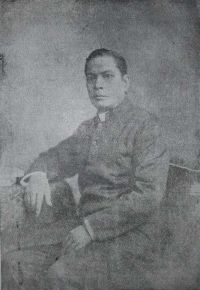
T. Subba Row,  Philosophy of the Bhagavad-Gita (1921)

“ In almost every doctrine they have formulated the existence of a centre of spiritual energy which is unborn and eternal, and which exists in a latent condition in the bosom of Parabrahmam at the time of pralaya, and starts as a centre of conscious energy at the time of cosmic activity. It is the first jnata or the ego in the cosmos, and every other ego and every other self, as I shall hereafter point out, is but its reflection or manifestation. In its inmost nature it is not unknowable as Parabrahmam, but it is an object of the highest knowledge that man is capable of acquiring. ”
Source: Wikisource

T. Subba Row,  Philosophy of the Bhagavad-Gita (1921)

“ In the case of every objective consciousness, we know that what we call matter or non-ego is, after all, a mere bundle of attributes. But whether we arrive at our conclusion by logical inference, or whether we derive it from innate consciousness, we always suppose that there is an entity--the real essence of the thing upon which all these attributes are placed—which bears these attributes, as it were, the essence itself being unknown to us.
All Vedantic writers of old have formulated the principle that Parabrahmam is the one essence of everything in the cosmos.
”
Source: Wikisource

Five Years of Theosophy

“ It is all very well for the Brahmans to distort, in their own interest, the real meaning contained in these laws, but the words as quoted never meant what they were made to yield later on. The Brahmans applied them selfishly to themselves, whereas by "Brahman," man's seventh principle, his immortal monad and the essence of the personal Ego were allegorically meant. He who kills or extinguishes in himself the light of Parabrahm—i.e., severs his personal Ego from the Atman, and thus kills the future Devachanee, becomes a "Brahman killer." ”
Source: Gutenberg

Get perspective with Kwize: daily news enlightened by great literature