Richard Hawkins

Definition and stakes

Various,  The book of Scottish story: historical… (1876)

“ When a young man, Richard Hawkins was guilty of the heinous crime of betraying the daughter of a respectable farmer in the west of Galloway, of the name of Emily Robson. As he yet loved the injured maiden, he would have married her, but in this he was determinedly opposed by her relatives, and particularly by her only brother, betwixt whom and himself an inveterate hostility had, from various causes, been growing up since their earliest boyhood. From remorse partly, and shame and disappointment, and partly from other causes, Hawkins hereupon left his home and went abroad ”
Source: Gutenberg

Hugh Robert Mill,  1911 Encyclopædia Britannica, Volume 11… (1911)

“ He took the same route as Drake along the west coast of America. From Cape San Lucas Cavendish steered across the Pacific, seeing no land until he reached the Ladrone Islands. He returned to England in 1588. The third English voyage into the Pacific was not so fortunate. Sir Richard Hawkins (1593) on reaching the bay of Atacames, in 1° N. in 1594, was attacked by a Spanish fleet, and, after a desperate naval engagement, was forced to surrender. Hawkins declared his object to be discovery and the survey of unknown lands, and his voyage, though terminating in disaster, bore good fruit. ”
Source: Wikisource

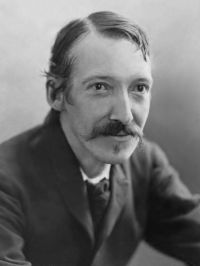
Portrait of Robert Louis Stevenson Robert Louis Stevenson,  Treasure Island (1883)

“ Alexander Smollett, master; David Livesey, ship's doctor; Abraham Gray, carpenter's mate; John Trelawney, owner; John Hunter and Richard Joyce, owner's servants, landsmen—being all that is left faithful of the ship's company—with stores for ten days at short rations, came ashore this day and flew British colours on the log-house in Treasure Island. Thomas Redruth, owner's servant, landsman, shot by the mutineers; James Hawkins, cabin-boy—
And at the same time, I was wondering over poor Jim Hawkins' fate.
”
Source: Gutenberg

Get perspective with Kwize: daily news enlightened by great literature