Samara

Definition and stakes

Lidiia Ivanovna Veselitskaia,  Mimi's Marriage

“ Aren't we going past Samara?' says I. 'We are going by steamer up the Volga, and shall pass. Samara,' says she. (And I come from Samara, from the district of Bousoulouk.) 'Well,' says I, 'little mother, you do as you like, but if you want to do the master good as well as yourself and get God to give you both your health again, you go and see Kousmitch (for in our part lives Kousmitch, who is worth all the doctors in the world; he comes of peasant stock, but princes and generals and lots of gentlefolk go to him to be cured, because he cures all those that the doctors can't cure) . ”
Source: Gutenberg

active 11th century Somadeva Bhatta,  The Kathá Sarit Ságara; or, Ocean of the Streams of Story

“ And Anangaprabhá was rekindled with the brightness of her recovered science, and immediately becoming a Vidyádharí, gleamed with that very body, which underwent a heavenly change. And then Madanaprabha, being delighted, and Anangaprabhá also, feeling great passion stir in both their hearts at the sight of one another’s heavenly bodies, and the auspicious Samara, king of the sky-goers, all flew up into the air, and went together to that city of the Vidyádharas, Vírapura. And there Samara immediately gave, with due rites, his daughter Anangaprabhá to the Vidyádhara king, Madanaprabha. ”
Source: Gutenberg

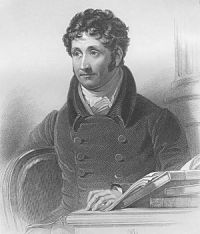
Portrait of William Hepworth Dixon William Hepworth Dixon,  Free Russia

“ One small town, Samara, has been planted on the eastern bank—a landing-place for Orenburg and the Kirghiz Steppe. All other towns—Simbirsk, Volsk, Saratof, Tsaritzin—rise on the western bank, and look across the river towards the Ural Ridge. Samara is a Kirghiz, rather than a Russian town, and but for the military posts, and the traffic brought along the military roads, the place would be wholly in Moslem hands. Samara has a name in the East as a place for invalids—the cure being wrought by means of fermented mare's milk, the diet and medicine of rovers on the Tartar Steppe. ”
Source: Gutenberg

Get perspective with Kwize: daily news enlightened by great literature