Slavic languages

Definition and stakes

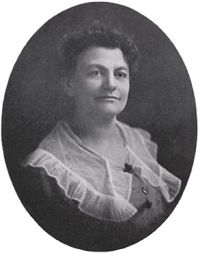
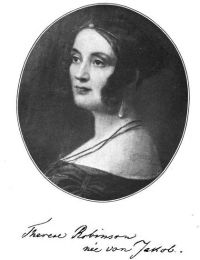
Portrait of Talvj Talvj,  Historical View of the Languages and Literature of the Slavic Nations

“ In laying before our readers a sketch of Slavic popular poetry, we must renounce at once any attempt at chronological order. Slavic popular poetry has yet no history. Not that a considerable portion of it is not very ancient. Many mysterious sounds, even from the gray ages of paganism, reach us, like the chimes of distant bells, unconnected and half lost in the air; while, of many other songs and legends, the colouring reminds us strongly of their Asiatic home. ”
Source: Gutenberg

Portrait of Talvj Talvj,  Historical View of the Languages and Literature of the Slavic Nations

“ It would be difficult to decide what portion of the still existing Slavic tongue has kept itself the purest; the Old Slavic has its Græcisms, the Servian its Turcisms, the Polish and Bohemian their Germanisms, the Russian its Tartarisms, Germanisms, and Gallicisms. No language in the world will ever resist the influence of the languages of its neighbours; and even the lofty Chinese wall cannot protect the inhabitants of that vast empire from corruptions in their language. ”
Source: Gutenberg

Portrait of Talvj Talvj,  Historical View of the Languages and Literature of the Slavic Nations

“ It is this copiousness and variety of radical syllables, which gives to the Russian in certain respects a claim over all other Slavic languages.
Another excellence is the great freedom of construction which it allows, without any danger of becoming unintelligible or even ambiguous. It resembles in this point the classic languages; from which however its small number of conjunctions decidedly distinguishes it. This want of conjunctions has been objected to the language as a defect; it seems however to be one of the causes, why it is so remarkably clear and distinct
”
Source: Gutenberg

Get perspective with Kwize: daily news enlightened by great literature