
“ Long before poor old Warner had clambered out of his cab, the thing we called Smith had dissolved into dew and light on this lawn. Once or twice more, by the mercy of God, we may feel the thing, but the man we shall never see. In a spring garden before breakfast we shall smell the smell called Smith. In the snapping of brisk twigs in tiny fires we shall hear a noise named Smith. ”
Quotes about “Smith _--_ Wesson”
 Anthony Trollope,
A Ride Across Palestine
“ Smith, if he were clever, might escape from the window of the room, which opened out upon a terrace, and still get down to the steamer. I would keep the old man in play for some time; and, even though I lost my passage, would be true to my friend. There lay our joint luggage at my feet in the yard. If Smith would venture away without his portion of it, all might yet be right.“My name, sir, is Sir William Weston,” he began. I had heard of the name before, and knew him to be a man of wealth, and family, and note. I took off my hat, and said that I had much honour in meeting Sir William Weston. ”
 George O. Smith,
Quest to Centaurus
(1947)
“ He should, by all rights, be slightly cowed by the senior captain's rank and the free commission, but he was aide to the High Brass of conquered Mars and larger brass than this had come and gone—unsatisfied."See here, I'm on a roving commission and I want aid.""Yes sir, I'll request you an audience—""Blast!" snarled Weston angrily. "I'm not fooling.""No one fools here," returned the aide."Are you being insolent?" ”
George O. Smith,
Quest to Centaurus
(1947)
“ No one is putting any blame on you for getting hung on the wrong end of a beam. Despite popular rumor, they don't hand out them things for cutting your hand on a can-opener," said Bill, nodding toward the purple ribbon on Weston's breast. It was beside another colored bit, awarded for his efforts in the initial directive attack."That one," said Weston, catching Bill's eye, "was a consolation prize. I didn't earn it.""My friend, you must learn to tell the difference between humility and the job of fishing for compliments. ”
Caroline Lockhart, 'Me--Smith'
“ It never before had occurred to Smith that the world through which he had gone his tumultuous way was a beautiful place, or that there was joy in the simple fact of being strongly alive. When the sage-brush commenced to turn green and the many brilliant flowers of the desert bloomed, when the air was stimulating like wine and fragrant with the scents of spring, it had meant little to Smith beyond the facts that horse-feed would soon be plentiful and that he could lay aside his Mackinaw coat. ”
 Stanley John Weyman,
Shrewsbury: A Romance
“ Naturally Smith, unable to comprehend, stared at me in astonishment. "Why, man," he cried, "what is the matter? What ails you?""You!" I said. "You, curse you." CHAPTER XXXVIIIAnd doubtless it was this outbreak, or rather the suspicion of me which it sowed in Smith's mind, that occasioned the sequel of our adventure; for when he had cursed me for a fool and had put on his cloak, being now ready to go out, he seemed to be in two minds about it; as if he dared neither leave me where I was, lest I should communicate with Sir John, nor take me with him on his immediate errand. ”
 Harriet Beecher Stowe,
The Minister's Wooing
“ Ah, in those days he had a vision!—a pair of soft eyes stirred him strangely; a little weak hand was laid on his manhood, and it shook and trembled; and then came all the humility, the aspiration, the fear, the hope, the high desire, the troubling of the waters by the descending angel of love,—and a little more and Mr. Smith might have become a man, instead of a banker! He thinks of it now, sometimes, as he looks across the fireplace after dinner and sees Mrs. Smith asleep, innocently shaking the bouquet of pink bows and Brussels lace that waves over her placid red countenance. ”
Stanley John Weyman,
Shrewsbury: A Romance
“ While I had lived in my lord's house, and moved to and fro soberly garbed, in a big wig or my own hair, the likeness had been no more than ground for a nudge and a joke among the servants. Now, dressed once more, as Smith had dressed me, in a suit of the Duke's clothes, and one of his perukes, and trimmed and combed by one who knew him, the resemblance I presented was so remarkable that none of the lords at the table could be blind to it. One or two, in sheer wonder, exclaimed on it; while Sir John, who, poor gentleman, was more concerned than any, fairly gasped with dismay. ”
George Webbe Dasent, Popular Tales from the Norse — The Master-Smith (1912)
“ The legs were burnt to ashes, and the Smith had to pay for the horse. Well, he didn't care much about that, but just then an old beggar-woman came along the road, and he thought to himself, "Better luck next time;" so he took the old dame and laid her in the furnace, and though she begged and prayed hard for her life, it was no good. "You're so old, you don't know what is good for you," said the Smith; "now you shall be a lovely young maiden in half no time, and for all that, I'll not charge you a penny for the job." ”
 B. L. Farjeon,
At the Sign of the Silver Flagon
“ So William Smith yearned to be king of five hundred men, and the proper complement of women and children--to be master of five hundred pairs of hands--to see peace and plenty and industry all about him--to walk among his workmen, and chat and smile with them--to walk among the women and children, and pat the youngsters on the head, and pass kind words with the mothers. ”
L. Dougall, The Mormon Prophet
“ Smith, with his brother Hyrum and their fellows, had suffered severely, but later their confinement had been more easy, and the news of the triumphant gathering of his people, together with the excitement of the escape, had induced in Smith a mood which spurned past failures with a foot that sped to a new goal. The acclamation, the sincere and touching joy, with which Smith was received by men and women and children, were enough to raise any man in his own esteem, and to set free the ambition which had been perhaps drooping in confinement. ”
 M. E. Braddon,
The Doctor's Wife: A Novel
“ Sigismund Smith. It sounds well; doesn't it? If a man's evil destiny makes him a Smith, the least he can do is to take it out in his Christian name. No Smith with a grain of spirit would ever consent to be a Samuel. But come in, dear old boy, and put your portmanteau down; knock those papers off that chair—there, by the window. Don't be frightened of making 'em in a muddle; they can't be in a worse muddle than they are now. ”
 Charles Kingsley,
Yeast: a Problem
“ Smith, that he will swear so. I do not like to say it; and yet you must have heard him too often yourself.’‘It is hardly a sin with him now, I think. He has become so habituated to it, that he attaches no meaning or notion whatsoever to his own oaths. I have heard him do it with a smiling face to the very beggar to whom he was giving half-a-crown. We must not judge a man of his school by the standard of our own day.’‘Let us hope so,’ said Argemone, sadly. ”
George O. Smith,
Quest to Centaurus
(1947)
“ He drove his fist into Ratty's stomach and sliced Dirty's throat with the edge of his hand.Here was something tangible for Weston to fight! For almost a year, he had been railing at the wind, storming at an invisible hand of fate that had clipped him hard. The men before him were the embodiment of all his ill luck and he drove into them with a burning hatred to maim and destroy.It was a dirty fight. The space rats had no qualms about sportsmanship and Weston had been tumble-trained on Terra to accept battle only when it was inevitable, at which point nothing was barred. ”
 Algernon Blackwood,
Pan's Garden
(1912)
“ On a hunting expedition Smith stumbled upon a natural oil well, and instantly staked his claim; a few months later he was rich, grown into affluence as rapidly as that patch of wilderness grew into streets and houses where you could buy anything from an evening's gambling to a tin of Boston baked pork-and-beans. Smith was really a tremendous fellow, a sort of human dynamo of energy and pluck, with rare judgment in his great square head—the kind of judgment that in higher walks of life makes statesmen. ”
 Jacob Grimm,
Grimm's Household Tales
(1884)
“ Another story from Hesse runs as follows. The Smith has by his loose life become quite poor, and goes into the forest to hang himself on one of the trees; but a man with a long beard, who has a book in his hand, meets him, and says, "Write thy name in this, and thou shalt have ten years of prosperity, after which thou wilt be mine." "Who art thou?" asks the Smith. "I am the Devil." "What canst thou do?" "I can make myself as tall as a fir-tree and as small as a mouse." ”
 Robert W. Chambers,
The Adventures of a Modest Man
“ Smith retired to his room to bathe, clothed himself in snowy linen and fresh tennis flannels, and descended again, book under his arm, to saunter forth through heavy tangles of cinnamon-tinted Flemish roses and great sweet-scented peonies, musing on love and fate."Kingsbury and his theories! The Countess of Semois will think him crazy. She'll think us both crazy! And I am not sure that we're not; youth is madness; half the world is lunatic! ”
 Edgar Wallace,
Number Six and the Borgia — X. The Lady Who Modeled
(1921)
“ Smith was, by all records, a hardened man and not unacquainted with beautiful women, but he never saw this girl but his tongue did not cleave to the roof of his mouth, and he was not reduced from the cool, sane man of affairs, to a stammering fool. ”
 Frank Harris,
My Life and Loves
(1922)
“ Smith was in doubt how to act and confided in me. He had found Professor Kellogg, in whose house he lived, trying to kiss the pretty help, Rose entirely against her will: Smith was emphatic on this point, the girl was struggling angrily to free herself, when by chance he interrupted them. I relieved Smith's solemn gravity a little by roaring with laughter: the idea of an old Professor and clergyman trying to win a young girl by force filled me with amusement: "What a fool the man must be!" was my English judgment; Smith took the American high moral tone at first. ”
Edgar Wallace,
Number Six and the Borgia — V. Caesar Reveals Himself
(1921)
“ He rose quickly and began to pace the room. “You shall see all my cards in time,” he continued. “I need such a man as you—a man without heart or mercy. Some day I will tell you a great secret.” “I will tell you your secret now,” said Smith speaking slowly, and pointed to the coat of arms above the mantelpiece. “Why are those arms in this house?” he asked. “Why is this cipher and these fleur-de-lis embroidered in your carpet, Mr. Valentine. I don't know whether you are a madman, or whether you're sane,” Smith spoke in that slow drawl of his. ”
 Arthur Conan Doyle,
Now Then, Smith
(1922)
“ Five million Smiths obeyed the call. To Smith the praise that he has earned, For by his blood he saved us all. Now then, Smith! You're neither rich nor gifted. But here's a job that must be done, A job we may not shirk. ”
Algernon Blackwood,
The Empty House
(1915)
“ Smith and his secret mode of life and mysterious pursuits, somehow contrived to awaken in my being a line of reflection that disturbed my comfortable condition of ignorance. I never saw him, as I have said, and exchanged no sort of communication with him, yet it seemed to me that his mind was in contact with mine, and some of the strange forces of his atmosphere filtered through into my being and disturbed my equilibrium. ”
 Joseph Conrad,
Amy Foster
(1901)
“ Every old woman in the village was up in arms. Smith, coming upon him near the farm, promised to break his head for him if he found him about again. But he twisted his little black moustache with such a bellicose air and rolled such big, black fierce eyes at Smith that this promise came to nothing. Smith, however, told the girl that she must be mad to take up with a man who was surely wrong in his head. ”
Azel Ames, The Mayflower and Her Log; July 15…
“ It is to be feared from the conduct of such men as Weston, Pierce, Andrews, Shirley, Thornell, Greene, Pickering, Alden, and others, that profitable investment, rather than desire “to do good and to plant Religion,” was their chief interest. That the higher motives mentioned by Smith governed such tried and steadfast souls as Bass, Brewer, Collier, Fletcher, Goffe, Hatherly, Ling, Mullens, Pocock, Thomas, and a few others, there can be no doubt. ”
 Gilbert Keith Chesterton,
The Apostle and the Wild Ducks…
(1975)
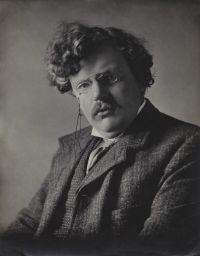
“ For the single case of the name `Smith' is sufficient to indicate what profundities of origin and significance lie in all our names. The case of Smith is no mere accident; the case would be the same with any one of the common names which we account prosaic or absurd. `Jones' is more mean and preposterous even than Smith, and even those who bear the name of Jones do not probably remember that it is but a corruption of the name that Christ loved. There is not one of us that is not noble in origin, whatever we may be in essence. ”
Nancy Casteel Vogel, Four and Twenty Beds
“ The ubiquity of the Smiths never became a personal thing to me until we moved to Banning. Never a week goes by that a car doesn't drive up in a flurry of gravel and belch forth a person who rings the bell and inquires, "Have you a party staying here by the name of Smith?" ”
 Christopher Morley,
Shandygaff
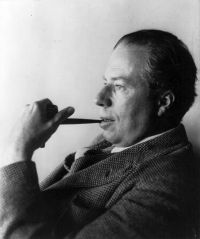
“ Smith is an infinitely close and acute observer of sophisticated social life, tinged with a faint and agreeable refined sadness, by an aura of shyness which amounts to a spiritual virginity. He comes to us trailing clouds of glory from the heaven of pure and unfettered speculation which is our home. He is an elf of utter simplicity and infinite candour. He is a flicker of absolute Mind. ”
 Mary Johnston,
Pioneers of the Old South: A Chronicle of English Colonial Beginnings
(1918)
“ Savages and procedures of the more civilized with savages have, the world over, a family resemblance. Like many a man before him and after, Smith casts about for a propitiatory wonder. He has with him, so fortunately, "a round ivory double-compass dial." This, with a genial manner, he would present to Opechancanough. The savages gaze, cannot touch through the glass the moving needle, grunt their admiration. Smith proceeds, with gestures and what Indian words he knows, to deliver a scientific lecture. Talking is best anyhow, will give them less time in which to think of those men he shot. ”
 Talbot Baines Reed,
My Friend Smith: A Story of School and City Life
“ Smith did follow her, and was flogged, of course.I was as indignant as he was at this tale of injustice; it reminded me of my box of sweets last year, which I had never seen back.Smith’s rage was beyond all bounds. “I won’t stand it!” said he; “that’s all about it, Fred!”“What can we do?” asked I.That was the question. And there was no answering it. So we slunk back to our places, nursing our wrath in our bosoms, and vowing all sorts of vengeance on the Henniker. ”
Arthur Conan Doyle,
The Captain of the Polestar and Other Tales
(1890)
“ THE RING OF THOTH. Mr. John Vansittart Smith, F.R.S., of 147-A Gower Street, was a man whose energy of purpose and clearness of thought might have placed him in the very first rank of scientific observers. He was the victim, however, of a universal ambition which prompted him to aim at distinction in many subjects rather than preeminence in one. ”
Talbot Baines Reed,
My Friend Smith: A Story of School and City Life
“ My holidays alone with my uncle had been almost as cheerless as my schooldays at Stonebridge House with Miss Henniker. If it hadn’t been for Smith I do believe I should have lost every vestige of spirit. But happily he gave me no chance of falling into that condition. He seemed always on the verge of some explosion. Now it was against Hawkesbury, now against the Henniker, now against Mr Ladislaw, and now against the whole world generally, myself included. ”
 Charles Heber Clark,
Out of the Hurly-Burly; Or, Life in an Odd Corner
“ Smith, in her despair, might impale herself on a variety of reversible toasting-fork, and die mingling the inventor's name with maledictions and groans, while Smith, in the anguish of his soul, could live in the barn, from whence he could use an ingenious kind of breech-loading gun—patent applied for—to perforate artists who came around to sketch the falls. ”
William Dodd, The Laboring Classes of England (1847)
“ Pancras with him, had gone the way of all flesh, one had become an idiot, inconsequence of ill treatment; one girl was unable to walk without the aid of crutches; and the remainder were more or less crippled and mutilated in various parts of their persons. Smith was a sad spectacle to look upon, stunted in growth, his legs twisted by standing so many hours at the frames, his countenance haggard and care-worn; altogether he presented the appearance of a man of seventy years, who had seen much service, rather than a person of twenty-one years, just entering upon manhood. ”
