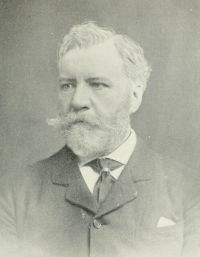
“ The lines running to the north and north-west carry us into an entirely new type of country, and before following them up we must look carefully at the build of the island on the other side of the mountain backbone. Here our experience of South Island will help us little. Instead of a gentle uniform slope to the ocean, we find a confused and bewildering structure. The mountain ranges in the long northern neck and in the Coromandel Peninsula, with its continuing islands, run from north-west to south-east, almost at right angles to our main dividing range. ”
South Island
Definition and stakes
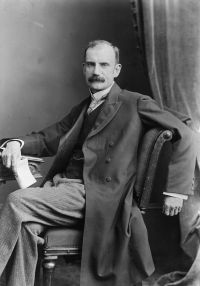
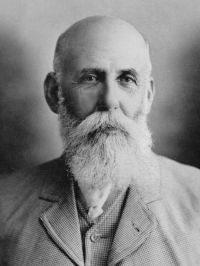
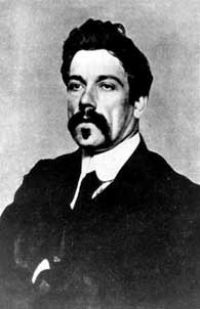
The South Island, known in Māori as Te Waipounamu, is New Zealand’s larger of two main islands, distinguished by its rugged terrain, including the Southern Alps and Fiordland. Authors like A. J. Sargent emphasized its dramatic geography, contrasting its mountainous spine with coastal plains, while Frank G.
Carpenter highlighted its botanical wealth and scenic magnificence. J. M. Synge, though focusing on the Aran Islands, evoked the South Island’s remote, untamed charm. These varied perspectives underscore the island’s dual role as both a geological wonder and a cultural meeting point, shaping its identity in literature and history.
Quotes about “South Island”
Martin Johnson, Through the South Seas with Jack London
“ We went in Port Mary on Santa Anna island. Hundreds of natives ran down the beaches, and tumbling into canoes, darted after us, all the time screaming at the top of their voices. After edging through the small lagoon and dropping anchor, we were surrounded in an incredibly short time by a hundred canoe-loads of savages—people who in looks and actions fully justified my expectations of what South Sea Islanders should be like. They started aboard, but with guns we kept them back; and they circled round the Snark, waving spears and clubs and shouting at the top of their voices. ”
Frank G. Carpenter,
Australia, New Zealand and some islands of the South seas
“ The South Island, which contains the highest mountains and some of the best agricultural areas, forms the leg, and Stewart Island, the little patch of land at the bottom, makes the loop at the end of the boot strap. ”
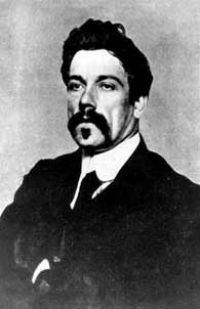
“ The black curagh working slowly through this world of grey, and the soft hissing of the rain gave me one of the moods in which we realise with immense distress the short moment we have left us to experience all the wonder and beauty of the world. The approach to the south island is made at a fine sandy beach on the north-west. This interval in the rocks is of great service to the people, but the tract of wet sand with a few hideous fishermen's houses, lately built on it, looks singularly desolate in broken weather. ”
George Ogilvy Preshaw, Banking Under Difficulties (1888)
“ The most eminent geographers of Great Britain and of the continent of Europe—such men as Arrowsmith, Keith Johnston, Petermann, Hochstetter, &c.—call it always the South Island, while in New Zealand, even in official documents, it is called sometimes by the one and sometimes by the other name. ”
“ As we steam in from the sea we might well imagine 3,4 that we were entering one of the fiords of South Island. The hills come down to the water’s edge so 5 that the city which they shelter is somewhat crowded and cramped for space. The old settlement was on a terrace up the hill; but a modern port must be close to the water-level, so the wharves and warehouses 6 are built largely on land reclaimed from the foreshore. In fact, the foundations are piles driven into the mud, and the buildings in the pictures before us seem to be growing out of the water. ”
W. E. Swanton, Notes on New Zealand (1892)
“ This harbour is very beautiful, and here the French commenced the first white settlement on the South Island. This is a great fruit growing district, and many ancient Maori relics and caves are to be found along the coast, which is a favourite resort in summer. The Peninsula is composed almost entirely of hills, ranging about 2,000 feet high. On these hills the cocksfoot grass is grown and harvested, as the seed commands a good price in local markets. ”
“ If we remember the latitude of South Island we might expect to find it rather warm; but we must take account of other things than latitude. It is true that there are occasional hot winds blowing down from the mountains over the Canterbury Plains, but the island as a whole is cool. The great mass of highland, with its winter covering of snow, the perpetual moist winds and the cool currents of the ocean all help to modify the heat of the sun’s rays, and to give us a climate not in the least enervating for English settlers. ”
Frank G. Carpenter,
Australia, New Zealand and some islands of the South seas
“ New Zealand is one of the most remarkable botanical regions of the world and nowhere are there more beautiful forests. The giant fern is so common that it is the emblem of the country. The southwest coast of the South Island rivals both Norway and Switzerland in its scenic beauty. There the glaciers have made fourteen great sounds, walled with steep cliffs and lofty mountain peaks. ”
Frank G. Carpenter,
Australia, New Zealand and some islands of the South seas
“ The South Island was, it is true, the cradle of the industry, which now flourishes over the whole of the Dominion, but there is said to be no finer sheep country in the world than the limestone downs of Hawke’s Bay on the North Island. Many of the sheep stations are very large, for it has been found that it is best to have only two or three animals to an acre of pasture land, and some of the flocks number five thousand, ten thousand, and even twenty thousand head. The size of the average flock from year to year is about one thousand. ”
House of Lords, Report from the Select Committee of the House of Lords… (1838)
“ The Population of the Northern Island is certainly very great; the Southern is much more thinly populated; quite a different Race of Men; they are much blacker; they are a very inferior Race of Men altogether. I had an Idea of colonizing Cloudy Bay myself. Where is that? That is on the Southern Island. What deterred you from that? The Circumstance of Captain Stewart having gone down to assist those Natives deterred me; I was afraid to go among them after that. I expected that they would take every Ship connected with New South Wales and Great Britain. ”
Everard Cotes, Down Under with the Prince
“ People coming with more permanent intentions had a way of settling in the South Island to be under home conditions of temperature, many of them gradually moving across the Strait to the North Island in pursuit of balmier airs. ”
Robert Caldwell Reid, Rambles on the Golden Coast of New Zealand (1886)
“ In a compendium of official documents relative to Native affairs in the South Island, compiled in 1873 by Mr Alexander Mackay, Native Commissioner, much valuable information has been furnished respecting the doings of the Natives in this part of the country, long before white men trod the soil. ”
William Pember Reeves,
The Long White Cloud: "Ao Tea Roa"
“ Features for which the traveller in New Zealand should be prepared are the far-reaching prospects over which the eye can travel, the sight and sound of rapid water, and the glimpses of snow high overhead, or far off—glimpses to be caught in almost every landscape in the South Island and in many of the most beautiful of the North. ”
House of Lords, Report from the Select Committee of the House of Lords… (1838)
“ The Missionaries themselves, I believe, have not been much upon the South Island; it is very little known, I believe. You say the Natives have not any thing in the Nature of a native Manufacture of Ropes? They have not what may be called a native Manufactory, but each Person makes Ropes for himself; but at the same Time that they have Ropes of their own they esteem ours superior. Do not they make remarkably good Fishing Lines; so good that our People here supply themselves with them? ”
L. E. Elliott Joyce, Chile today and tomorrow
“ The island lies in a lonely position, at the extreme west of the South Pacific series, and measures but thirteen miles in length and about seven in width. The hues of the land are sand and tawny; the sea is a faithful mirror of the turquoise sky; the dreamy heat of Polynesia endures throughout the year. Easter Island is lonely, lazy, unproductive, a little speck upon the broad breast of the Pacific. ”
“ The economic progress of North Island, so far as we have seen it, has consisted largely in the occupation 49 of the lowlands near the river mouths, and the gradual clearing of the forest further inland—a rather different forest from that of South Island, since the climate is warmer and drier. ”
William Pember Reeves,
The Long White Cloud: "Ao Tea Roa"
“ The management and sale of Crown lands, education, police, immigration, laws relating to live-stock and timber, harbours, the making of roads and bridges—almost the entire work of colonization—came within their scope. By a "compact" arrived at in the session of 1856 each Province was in effect given the entire control of its public lands—an immense advantage to those of the South Island, where these were neither forest-covered nor in Maori hands. ”
William Pember Reeves,
The Long White Cloud: "Ao Tea Roa"
“ The whole length of the South Island is ridged by Alpine ranges, which, though not quite equal in height to the giants of Switzerland, do not lose by comparison with the finest of the Pyrenees.No man with an eye for the beautiful or the novel would call Australia either unlovely or dull. It is not, however, a land of sharp and sudden contrasts: New Zealand is. ”
“ The result is that the plains on the east are smaller than those in South Island. There is one of these plains behind Wellington and another south of Napier; the railway runs through them and connects up a whole string of small agricultural towns. North of Napier there is no railway, and the country is hilly or mountainous with few settlements. The whole arrangement is similar to that which we have seen in South Island, and is equally dependent on the position and structure of the main mountain backbone. ”
James Mackay Drummond, The Life and Work of Richard John Seddon (1907)
“ Nothing has caused my heart to bleed more than to find so many natives in the South Island practically landless. The Europeans have disagreed upon some of the questions of the policy of the present Government, but in respect to our native policy, I hold that no Government has done so much for the Native race as the present Administration. ”
A. R. Hope Moncrieff, The Highlands and Islands of Scotland
“ The very existence of the island of South Uist is itself a tragedy which shames our civilisation. Nowhere in our proud Empire is there a spot more desolate, grim, hopelessly poverty-stricken. It is a wilderness of rocks and of standing water, on which, in the summer, golden lichen and spreading water-lilies mock the ghastly secrets of starvation and disease that they conceal. The water is constantly utterly unfit for drinking purposes. There is not a tree on the island, and one wonders how the miserable cattle and sheep contrive to live on the scant grey herbage. ”
Thomas Frederick Cheeseman,
Manual of the New Zealand Flora
(1906)
“ Kermadec Islands, North Island, Chatham Islands: Abundant, chiefly in lowland situations not far from the sea. South Island: Marlborough and Nelson to Banks Peninsula and Westland, but very rare and local. ”
“ The South Island of New Zealand is like home, with a vastly improved climate, and clothes for there identical with England. North Island is hotter, but never so warm as Australia. If you are going to live in a town you will need the same sort and amount of dress as in England. ”
W. Delisle Hay, Brighter Britain! (Volume 1 of 2…
“ The bulk of the land in the North Island belongs to the Maori tribes, who sell tracts of it to Government or private individuals occasionally. In the South Island all the waste land is the property of the Crown—a nice little estate of about the size of England and Wales. Most of the Kaipara district belonged to the Ngatewhatua tribe when we came on the scene; and the early settlers bought their stations from them. ”
William Pember Reeves,
New Zealand
“ In the eastern half of the South Island particularly, there are landscapes where the Scot’s memory, one fancies, must often be carried back to the Selkirks, the peaks of Arran, or the Highland lochs of his native land. Always, however, it is Scotland under a different sky. The New Zealanders live, on the average, twelve degrees nearer the equator than do dwellers in the old country, and though the chill of the Southern Ocean makes the change of climate less than the difference of latitude would lead one to expect, it is still considerable. ”
Lady Barker,
Station Amusements in New Zealand
“ If my readers will refer to the accompanying map of New Zealand, and look at the Middle or South Island, they will notice a long seaboard on the eastern side of the island, stretching SS.W. for many hundred leagues. It extends beyond the Province of Canterbury to that of Otago, and embraces some of the most magnificent pastoral land in the settlement. Not only is the soil rich and productive, but the climate is rather less windy than with us in the northern portion of the island ”
Sir Charles Wentworth Dilke, Greater Britain: A Record of Travel in English-Speaking Countries During 1866-7
“ New Zealand suffers, not only by the artificial division into provinces, but also by the physical division of the country into two great islands, too far apart to be ever thoroughly homogeneous, too near together to be wholly independent of each other. The difficulty has been hitherto increased by the existence in the North of a powerful and warlike native race, all but extinct in the South Island. ”
Beatrice Grimshaw,
In the Strange South Seas
“ Thirty years ago—even twenty—the Great South Seas were scattered over with independent island states, ruled by monarchs who displayed every degree of civilisation, from the bloodthirsty monster, Thakomban of Fiji and Jibberik, the half-crazy tyrant of Majuro, up to such Elizabeths of the Pacific as Liluokalani of Hawaii, and Queen Pomaré of Tahiti. Now there is but one island kingdom left; but one native sovereign, who still sits on his throne unembarrassed by the presence of a British Resident, who is ruler in all but name. Hawaii has fallen to America ”
Beatrice Grimshaw,
In the Strange South Seas
“ Hence his visits to the great Pacific ports that can be reached by liner; hence, in most cases, his gradually acquired conviction that the islands are, after all, very much like any other place in the tropics—beautiful, interesting, but—— Well, writer fellows always exaggerate: every one knows that. Hotel dinners, big liners, shops, hired carriages, guides, and picture postcards—these things are death to the spirit of the South Seas. This is the first lesson that the island wanderer must learn. Where every one goes the bloom is off the peach. ”
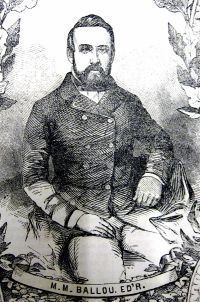
Maturin M. Ballou,
Under the Southern Cross
“ The diversity of surface, as well as the fact that these islands extend over thirteen degrees of latitude, give New Zealand a varied climate; but it is a remarkably temperate one, its salubrity far surpassing that of England or any portion of the United States. While snow is never seen in the North Island except upon the highest mountain peaks, the plains of the South Island—as far south as Otago—are sometimes sprinkled with it, but only to disappear almost immediately. The rivers are generally destitute of fish, and the forests of game. It is no sportsman's country ”
House of Lords, Report from the Select Committee of the House of Lords… (1838)
“ Queen Charlotte Sound, in the Southern Island, Cloudy Bay, Otargo, and all down to the South West is inhabited by European Gangs of Whalers for Merchants resident in Sydney. On the South Island there are Europeans, and there have been Europeans there for the last Five-and-thirty Years past, what the Natives call Kou Matuas; that is, old Men living there for the last Forty Years on the Coast. There are innumerable Europeans ”
George Bass, An Account of the English Colony in New South Wales…
“ Preservation Island, which takes its respectable name from having preserved the crew of the ship Sydney Cove, arranges itself in the humble class of islands, and is of a very moderate height. A surface of sand, varying in depth, and mixed in different scanty proportions with vegetable soil, scarcely hides from view the base, which is of granite. ”
George Bass, An Account of the English Colony in New South Wales…
“ If an idea may be hazarded, Van Diemen's Island holds out in every respect a more advantageous spot for a settlement, than this parched, unattainable island; and were it not for the expense already incurred there, it would be advisable to remove the whole of that settlement thither; where, from the account given by Captain Flinders, and Mr. Bass, they would be as likely to remain unmolested by natives as they are at Norfolk Island, and would possess the superior benefits of a temperate climate and capacious harbour. ”
Louis Becke,
The Call of the South
“ Not a score of them returned to their island homes—the rest perished under the lash and brutality of their cruel taskmasters. Towards 1870 the demand for South Sea Islanders became very great. They were wanted in the Sandwich Islands, in Tahiti and Samoa; for, naturally enough, with their ample food supply, the natives of these islands do not like plantation work, or if employed demand a high rate of pay. ”