Teutonic peoples

Definition and stakes

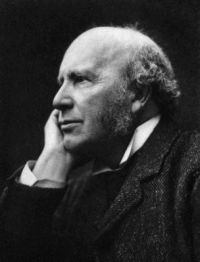
Portrait of James Hutchins Baker James Hutchins Baker,  Education and life (1900)

“ The religious revolt of the sixteenth century is a Teutonic inheritance—a revolt which transmitted some evils, but which abjured formalism and based merit upon the essential, conscious attitude of man. If the impulse that grew into the revolution of the eighteenth century and led to political emancipation was not of Teutonic origin, it was received and cherished everywhere by Teutonic peoples, and was carried by them to permanent conclusions. The modern Teuton is found in his highest development in the intelligent American of to-day. ”
Source: Gutenberg

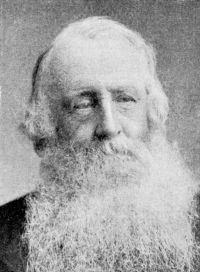
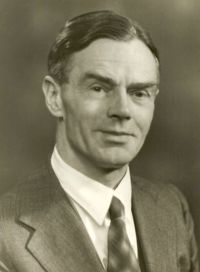
Portrait of Charles Kingsley Charles Kingsley,  The Roman and the Teuton

“ Only by some such actual superiority of the upper classes to the lower can I explain the deep respect for rank and blood, which distinguishes, and will perhaps always distinguish, the Teutonic peoples. Had there even been anything like a primæval equality among our race, a hereditary aristocracy could never have arisen, or if arising for a while, never could have remained as a fact which all believed in, from the lowest to the highest. ”
Source: Gutenberg

1911 Encyclopædia Britannica, Volume 26… (1911)

“ At the beginning of our era the Teutonic peoples stretched from the Rhine to the Vistula. Before Caesar's arrival in Gaul they had advanced beyond the former river, but their further progress in this direction was checked by his campaigns, and, though both banks of the river were occupied by Teutonic tribes throughout the greater part of its course, most of these remained in definite subjection to the Romans. The easternmost Teutonic tribe was probably that of the Goths, in the basin of the Vistula, while the farthest to the south were the Marcomanni and Quadi, in Bohemia and Moravia. ”
Source: Wikisource

Get perspective with Kwize: daily news enlightened by great literature