Thomas Münzer

Definition and stakes

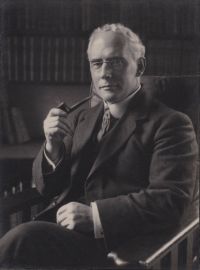
Portrait of Albert Frederick Pollard Albert Frederick Pollard,  The Cambridge Modern History, Volume 2… (1904)

“ The most extreme embodiment of the revolutionary spirit was found in Thomas Münzer, to whose influence the whole movement has sometimes been ascribed. After his expulsion from Zwickau he fled to Prague, where he announced his intention of following the example of Hus. His views, however, resembled more closely those of the extreme Hussite sect known as Taborites, and their proximity to Bohemia may explain the reception which the Thuringian cities of Allstedt and Mühlhausen accorded to Münzer's ideas. At Allstedt his success was great both among the townsfolk and the peasants ”
Source: Wikisource

Benjamin Rush Davenport,  The Crime of Caste in Our Country

“ Thomas Münzer and Götz von Berlichingen were the only leaders who took part in what is known as “The Peasants’ War,” in Germany. This was an uprising of the peasants, which first manifested itself January 1, 1525, by the capture and looting of the convent of Kempton. This served as a signal for general uprising of the peasantry from the Alps to Havz, and from the Rhine to the Bohemian frontier. Münzer quickly persuaded the whole population in and around Mühausen and Laugensalza to rise in revolt, and Götz von Berlichingen hastened to place his skill at the service of the infuriated peasants. ”
Source: Gutenberg

The Great Events by Famous Historians…

“ Fifty thousand men had perished, and the people lost nearly everywhere the little liberty they had hitherto enjoyed. Such was the horrible termination of this revolt in the south of Germany.
But the evil was not confined to the south and west of Germany. Munzer, after having traversed a part of Switzerland, Alsace, and Swabia, had again directed his steps toward Saxony. A few citizens of Muelhausen, in Thuringia, had invited him to their city and elected him their pastor.
”
Source: Gutenberg

Get perspective with Kwize: daily news enlightened by great literature