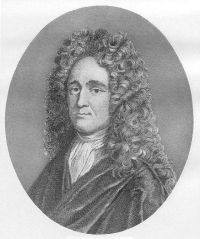
Thomas Rymer

Definition and stakes

Allan Boyd,  Explication of the prophecies of Thomas Rymer (1800)

“ This Thomas Lermont, or Rymer was born at Eislington, now called Heselingtown on Tweedside, above Kelso. He is reported by historians to be a quiet sober man given to no manner of vice, but prone to piety and devotion, a famous monthly prognosticator concerning the state of the weather, and government of the world, by studying the aspects of the planets. He being one day asked by a nobleman what sort of a day they should have to-morrow? To which he answered, That the morrow before high noon, a blast should blaw, that Scotland should not overcome the evil thereof for twenty years thereafter. ”
Source: Wikisource

Portrait of George Saintsbury George Saintsbury,  A history of criticism and literary taste in Europe from the earliest texts to the present day… (1902)

“ He will “connoisseur no man out of his senses,” [510] and refuses to be so connoisseured by any, while he will give good reasons for his own and others’ pleasure. These are the marks of the true and catholic criticism; and Dryden has them.
Let us pass from him directly to one who has them not. There are few English critics who require to be dealt with at once more carefully and more faithfully than does Thomas Rymer. |Rymer.| He has become a name, and to become a name is to be at least on the way to becoming a legend, if not a myth.
”
Source: Gutenberg

Richard Garnett,  The Age of Dryden

“ Thomas Rymer (1639-1714) will be mentioned again as a meritorious antiquary. As a critic he is remarkable for having by his Tragedies of the Last Age (1673) drawn some judicious remarks from Dryden, and for having analyzed Othello as a pattern of a bad play. He has consequently been unanimously hooted by his countrymen, for it passes belief that Pope should have praised him to Spence, though Spence affirms it. It was his misfortune to be an Englishman; in France at the time his views would have been thought very correct; in fact, he criticises Shakespeare much in the style of Voltaire. ”
Source: Gutenberg

Get perspective with Kwize: daily news enlightened by great literature