Turkish language

Definition and stakes

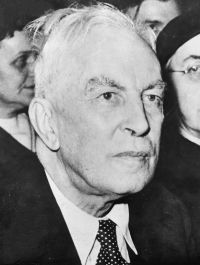
Portrait of F. Max Müller F. Max Müller,  Lectures on the Science of Language

“ In the grammar of the Turkic languages, on the contrary, we have before us a language of perfectly transparent structure, and a grammar the inner workings of which we can study, as if watching the building of cells in a crystal bee-hive. An eminent orientalist remarked “we might imagine Turkish to be the result of the deliberations of some eminent society of learned men;” but no such society could have devised what the mind of man produced, left to itself in the steppes of Tatary, and guided only by its innate laws, or by an instinctive power as wonderful as any within the realm of nature. ”
Source: Gutenberg

Andrée Hope,  Turkish Harems & Circassian Homes

“ The Turkish language is rich and euphonious, and is capable of so much variety of expression that it is remarkably well adapted to poetry. The verses we occasionally heard recited had a rhythm that was exceedingly agreeable to the ear.
Though improvements do not march on in Turkey with giant strides, still progress is being made surely, though slowly; and many of the Turks, besides being well educated in other [20] respects, now speak Italian, English, and French with much fluency.
”
Source: Gutenberg

Fanny Janet Sandison Blunt,  Twenty Years' Residence among the People of Turkey… (1878)

“ To the young and willing, instruction in the rudiments of the Turkish language is given; they are also initiated in the simpler forms of Mohammedanism taught to women, such as the Namaz and other prayers and the observance of the fasts and feasts. Most of them are, however, left to pick up the language as best they can, and for this they display great aptitude, and often succeed in speaking Turkish with a certain amount of eloquence, although their native accent is never lost, and the extraction of a seraili can always be discovered by her particular accent. ”
Source: Gutenberg

Get perspective with Kwize: daily news enlightened by great literature