“ These modern Utopians with the universally diffused good manners, the universal education, the fine freedoms we shall ascribe to them, their world unity, world language, world-wide travellings, world-wide freedom of sale and purchase, will remain mere dreamstuff, incredible even by twilight, until we have shown that at that level the community will still sustain itself. ”
Utopians
Definition and stakes
The theme of “Utopians” has been addressed by authors such as Thomas More, Georgii Valentinovich Plekhanov, Georgi Valentinovich Plekhanov, H. G. Wells and Th. Ribot. It is often associated with terms like Utopia, social, humanity, society and city.
Quotes about “Utopians”
Th. Ribot, The evolution of general ideas (1899)
“ We need only recall the fact that Utopians abound who, while rejecting miracle in the religious order, admit it freely in the social; believing all to be possible, and reconstructing human society from top to bottom according to their dreams. ”
Thomas More, Utopia (1901) — Chapter 6: Of the Travelling of the Utopians (1901)
“ The Utopians wonder how any man should be so much taken with the glaring doubtful lustre of a jewel or a stone, that can look up to a star or to the sun himself; or how any should value himself because his cloth is made of a finer thread ”
“ Short of damage to things cherished and made, the Utopians will surely have this right, so we may expect no unclimbable walls and fences, nor the discovery of any laws we may transgress in coming down these mountain places. ”
“ And everywhere about the world, on road and path, by sea and land, the happy holiday Utopians will go.The population of Utopia will be a migratory population beyond any earthly precedent, not simply a travelling population, but migratory. The old Utopias were all localised, as localised as a parish councillor; but it is manifest that nowadays even quite ordinary people live over areas that would have made a kingdom in those former days, would have filled the Athenian of the Laws with incredulous astonishment. ”
Thomas More, Utopia (1901) — Chapter 8: Of Their Military Discipline (1901)
“ This animates them to adventure again, whenever there is occasion for it; for the Utopians are not at all troubled how many of these happen to be killed, and reckon it a service done to mankind if they could be a means to deliver the world from such a lewd and vicious sort of people, that seem to have run together, as to the drain of human nature. ”
Georgii Valentinovich Plekhanov, Anarchism and Socialism
“ This is so true that one asks oneself at the first blush why a man who had so clear a conception of the connection between the various phases of historical evolution, should be classed among the Utopians. ”
Georgi Valentinovich Plekhanov, Anarchism and Socialism (1906)
“ Before we leave them let us remind the reader that in human nature, an extremely thin and therefore not very satisfying abstraction, the Utopians really appealed, not to human nature in general, but to the idealised nature of the men of their own day, belonging to the class whose social tendencies they represented. The social reality, therefore, inevitably appears in the words of the Utopians, but the Utopians were unconscious of this. ”
“ The Utopians distinguished two extremes of this Kinetic class according to the quality of their imaginative preferences, the Dan and Beersheba, as it were, of this division. At one end is the mainly intellectual, unoriginal type, which, with energy of personality, makes an admirable judge or administrator and without it an uninventive, laborious, common mathematician, or common scholar, or common scientific man; while at the other end is the mainly emotional, unoriginal man, the type to which—at a low level of personal energy—my botanist inclines. ”
 Peter Kropotkin,
The Conquest of Bread
(1906)
Peter Kropotkin,
The Conquest of Bread
(1906)
“ That we are Utopians is well known. So Utopian are we that we go the length of believing that the Revolution can and ought to assure shelter, food, and clothes to all—an idea extremely displeasing to middle-class citizens, whatever their party colour, for they are quite alive to the fact that it is not easy to keep the upper hand of a people whose hunger is satisfied. ”
Thomas More, Utopia (1901) — Chapter 4: Of Their Trades… (1901)
“ But among the Utopians all things are so regulated that men very seldom build upon a new piece of ground, and are not only very quick in repairing their houses, but show their foresight in preventing their decay, so that their buildings are preserved very long with but very little labour, and thus the builders, to whom that care belongs, are often without employment, except the hewing of timber and the squaring of stones, that the materials may be in readiness for raising a building very suddenly when there is any occasion for it. ”
Thomas More, Utopia — Chapter 7: Of Their Slaves… (1901)
“ "The Utopians call those nations that come and ask magistrates from them Neighbours; but those to whom they have been of more particular service, Friends; and as all other nations are perpetually either making leagues or breaking them, they never enter into an alliance with any state. They think leagues are useless things, and believe that if the common ties of humanity do not knit men together, the faith of promises will have no great effect; and they are the more confirmed in this by what they see among the nations round about them, who are no strict observers of leagues and treaties. ”
Thomas More, Utopia (1901) — Chapter 9: Of the Religions of the Utopians (1901)
“ In the meanwhile, though it must be confessed that he is both a very learned man and a person who has obtained a great knowledge of the world, I cannot perfectly agree to everything he has related. However, there are many things in the commonwealth of Utopia that I rather wish, than hope, to see followed in our governments. ”
Thomas More, Utopia (1901) — Chapter 8: Of Their Military Discipline (1901)
“ They offer not only indemnity, but rewards, to such of the persons themselves that are so marked, if they will act against their countrymen. By this means those that are named in their schedules become not only distrustful of their fellow-citizens, but are jealous of one another, and are much distracted by fear and danger; for it has often fallen out that many of them, and even the prince himself, have been betrayed, by those in whom they have trusted most; for the rewards that the Utopians offer are so immeasurably great, that there is no sort of crime to which men cannot be drawn by them. ”
Edmond Holmes, What Is and What Might Be
“ But is there not too much joy in Utopia? Is not the sky too cloudless? Is not the atmosphere [223] too clear? Does the Utopian never act from a sense of duty? Has he never to do anything that is distasteful to him? ”
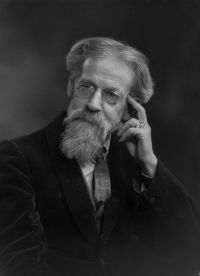 Patrick Geddes,
Civics: as Applied Sociology
(1905)
Patrick Geddes,
Civics: as Applied Sociology
(1905)
“ But it is at least a Utopia specially adapted to a given place and time, one in which every feature of landscape and history is made the most of, one in which a beginning can be made at once, leaving room for further developments as occasion may serve. ”
Bryce Walton, The sleeper is a rebel (1947)
“ The fanatical chanting came back to him, the quivering filthy faces, the sea of leaping, whirling celebrants. This—this was the dazzling future. An Utopian thought it had been, to attempt to escape from an imperfect society into one conceived to fulfill ideal human values. But the word, Utopia, was from an ancient race, the Greeks, and significantly enough meant: "Nowhere."They had ignored the temper of individuals, variable human nature—which they had thought to control by conditioning—or the inevitable opposition of entrenched groups such as the Anarchs. ”
Mrs. J. J. Colter, Medoline Selwyn's Work
“ Ah, you describe a second Utopia, or the golden age. A few in each generation might reach that clear, chill region of sublime thought; but the rank and file of womankind, and perhaps of mankind, would despise them as cranks. ”
Helen Campbell, Women Wage-Earners: Their Past…
“ It is this sense of the struggle of humanity out of which have been born Utopias of every order, from the "Republic" of Plato to the dream in "Looking Backward." Not one of these can be spared; and that they exist and find a following larger and larger, is the surest evidence of the soul at the bottom of each. ”
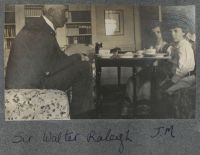 Sir Walter Alexander Raleigh,
Milton
Sir Walter Alexander Raleigh,
Milton
“ The speculations of the poet awaken no hostile resentment so long as they are admittedly abstract. He is at liberty to build his Republic, his City of the Sun, his Utopia, or his New Atlantis, amid the indifferent applause of mankind. ”
“ There is a common notion that the reading of a Utopia should end with a swelling heart and clear resolves, with lists of names, formation of committees, and even the commencement of subscriptions. But this Utopia began upon a philosophy of fragmentation, and ends, confusedly, amidst a gross tumult of immediate realities, in dust and doubt, with, at the best, one individual's aspiration. Utopias were once in good faith, projects for a fresh creation of the world and of a most unworldly completeness; this so-called Modern Utopia is a mere story of personal adventures among Utopian philosophies. ”
“ In some of these visions of Utopias and coming times which I have read, there is a vast amount of detail about building, and social arrangements, and so forth. But while such details are easy enough to obtain when the whole world is contained in one’s imagination, they are altogether inaccessible to a real traveller amid such realities as I found here. ”
 Marie Louise de la Ramée,
Idalia, Volume I
(1867)
Marie Louise de la Ramée,
Idalia, Volume I
(1867)
“ I had dreams—of the sceptre of my ancestors, of the crown of the Violet City, of an Utopia here, where east and west meet one another, and nature would give us a paradise if men did not make us a hell. ”
“ Down the mountain we shall go and down the passes, and as the valleys open the world will open, Utopia, where men and women are happy and laws are wise, and where all that is tangled and confused in human affairs has been unravelled and made right. ”
“ In that intermediate region between the kindred heights and deeps those beginnings and promises will arise that are the essential significance, the essential substance, of life. From our human point of view the mountains and sea are for the habitable lands that lie between. So likewise the State is for Individualities. The State is for Individuals, the law is for freedoms, the world is for experiment, experience, and change: these are the fundamental beliefs upon which a modern Utopia must go. ”
 Donald Grant Mitchell,
English Lands, Letters and Kings…
Donald Grant Mitchell,
English Lands, Letters and Kings…
“ Sir Thomas smacked the humor of the thing, in giving the name Utopia, which is Greek for Nowhere. If, indeed, men were all honest, and women all virtuous and children all rosy and helpful, we might all live in a Utopia of our own. All the Fourierites—the Socialists—the Knights of Labor might find the germs of their best arguments in this reservoir of the ideal maxims of statecraft. ”
“ And yet now that I come to think it over, is not this too one of the necessary differences between a Modern Utopia and those finite compact settlements of the older school of dreamers? It is not to be a unanimous world any more, it is to have all and more of the mental contrariety we find in the world of the real; it is no longer to be perfectly explicable, it is just our own vast mysterious welter, with some of the blackest shadows gone, with a clearer illumination, and a more conscious and intelligent will. ”
H. E. Marshall, English Literature for Boys and Girls
“ But every one, too, thinks that this land where everything is right is an impossible land. Thus More gave a new word to our language, and when we think some idea beautiful but impossible we call it "Utopian." ”
“ There will be many footpaths in Utopia. There will be pleasant ways over the scented needles of the mountain pinewoods, primrose-strewn tracks amidst the budding thickets of the lower country, paths running beside rushing streams, paths across the wide spaces of the corn land, and, above all, paths through the flowery garden spaces amidst which the houses in the towns will stand. ”
“ No less than a planet will serve the purpose of a modern Utopia. Time was when a mountain valley or an island seemed to promise sufficient isolation for a polity to maintain itself intact from outward force; the Republic of Plato stood armed ready for defensive war, and the New Atlantis and the Utopia of More in theory, like China and Japan through many centuries of effectual practice, held themselves isolated from intruders. ”
Samuel Cranston Benson, "Back from Hell"
“ I could not help myself, but today I am proud to state that I accepted this conclusion and that deliberately and boldly I will defend it.In a Utopian world one can act in a Utopian manner. And a Utopian world is a beautiful theory. But it is a theory and a dream. You and I today are living in a world of stern, cruel fact; in this world of fact we find the stern, cruel German. ”
 H. G. Wells,
The Salvaging of Civilization
H. G. Wells,
The Salvaging of Civilization
“ To most people Utopia conveys the idea of a high-toned political and ethical dream—agreeable and edifying, no doubt, but of no practical value whatever. What I have to talk about this evening is not a bit dreamlike, it is about real dangers and urgent necessities. It is a Project and not a Utopia. It may be a vast and impossible project. It may be a hopeless project. But if it fails our civilization fails. ”
“ You have only to look at all these houses below. (We should be sitting on a seat on the Gütsch and looking down on the Lucerne of Utopia, a Lucerne that would, I insist, quite arbitrarily, still keep the Wasserthurm and the Kapellbrucke.) You have only to mark the beauty, the simple cleanliness and balance of this world, you have only to see the free carriage, the unaffected graciousness of even the common people, to understand how fine and complete the arrangements of this world must be. ”
Edward John Payne, The Cambridge Modern History, Volume 1… (1902)
“ The traveller's name is Hythlodaeus, or Expert in Nonsense; and none among the countries visited by him so strongly arrests his attention as the island of Utopia, or Nowhere, where the traditional absurdities dominant in the Old World are unknown, and society is constituted on a humane and reasonable basis. Utopia is an aristocratic republic, in which the officers of government, elected annually, are presided over by a chief magistrate elected for life. Everyone is engaged in agriculture, and drones are banished from the hive ”
William James, Talks To Teachers On Psychology…
“ There had been spread before me the realization—on a small, sample scale of course—of all the ideals for which our civilization has been striving: security, intelligence, humanity, and order; and here was the instinctive hostile reaction, not of the natural man, but of a so-called cultivated man upon such a Utopia. ”
 Oscar Wilde,
Miscellaneous Aphorisms; The Soul of Man
Oscar Wilde,
Miscellaneous Aphorisms; The Soul of Man
“ A map of the world that does not include Utopia is not worth even glancing at, for it leaves out the one country at which Humanity is always landing. And when Humanity lands there, it looks out, and, seeing a better country, sets sail. Progress is the realisation of Utopias.Now, I have said that the community by means of organisation of machinery will supply the useful things, and that the beautiful things will be made by the individual. ”
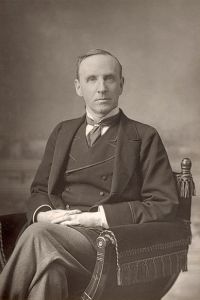 John Morley,
Critical Miscellanies (Vol. 3 of 3…
John Morley,
Critical Miscellanies (Vol. 3 of 3…
“ They are said, though it is not easy to believe, to have been elaborated by way of Utopia. If so, no Utopia has ever yet been presented in a style so little calculated to stir the imagination, to warm the feelings, to soothe the insurgency of the reason. ”
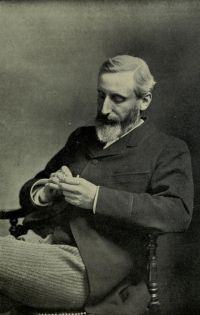 Grant Allen,
Post-Prandial Philosophy
Grant Allen,
Post-Prandial Philosophy
“ For these, after all, are mere Utopias; their details are the outcome of individual wishes; what will emerge must be, not a Utopia at all, either yours or mine, but a practical reality, full of shifts and compromises most unphilosophical and illogical—a practical reality distasteful in many ways to all us Utopia-mongers. ”
 Victor Hugo,
Ninety-Three
(1900)
Victor Hugo,
Ninety-Three
(1900)
“ With these men full of passion, were mingled men full of dreams. The Utopia was there in all its forms; in its warlike form, which admitted the scaffold, and in its innocent form which abolished capital punishment; a spectre when facing thrones, an angel when facing the people. ”
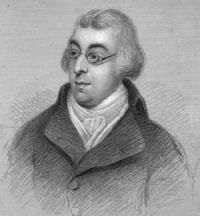 Isaac Disraeli,
Amenities of Literature
Isaac Disraeli,
Amenities of Literature
“ This combination of philosophy, politics, and fiction, though borrowed from the ideal republic of Plato, is worthy of an experienced statesman and a philosopher who at that moment was writing not only above his age, but, as it afterwards appeared, above himself. It has served as the model of that novel class of literature—political romances. But though the “Utopia” is altogether imaginary, it displays no graces of the imagination in an ingeniously constructed fable. ”
