Valley of Hinnom

Definition and stakes

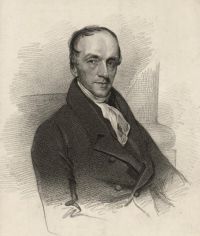
J. D. Paxton,  Letters from Palestine

“ At the junction of the valley of Hinnom with that of the Kedron, which is nearly at right angles—the Hinnom running nearly east and the Kedron nearly west—there is a level space of several acres, laid out in gardens, and well set with trees. These gardens and trees continue up the valley of the Kedron, which is wider than that of the Hinnom, for some distance; this rich and beautiful-looking spot, watered by the fountain of Siloam, is called the King's Dale. These valleys have all steep, high banks. ”
Source: Gutenberg

George Jones,  Excursions to Cairo, Jerusalem…

“ Without the city on the south and west, after crossing the valley of Hinnom, we find ourselves on an open and rather barren plain ascending gently as it recedes from the city, and stretching off for a distance [224] of two or three miles; on the northward the ground is rolling for a few miles, when it begins to ascend, and at the distance of about five miles attains considerable elevation ”
Source: Gutenberg

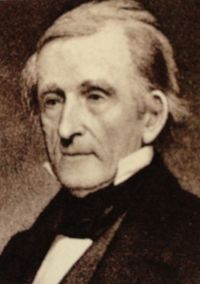
Portrait of Richard Watson Richard Watson,  A Biblical and Theological Dictionary

“ Mighty trees the tempests tear,
And lay the spreading forests bare!” HINNOM, Valley of, called also Tophet, and by the Greeks Gehenna, a small valley on the south-east of Jerusalem, at the foot of Mount Zion, where the Canaanites, and afterward the Israelites, sacrificed their children to the idol Moloch, by making them “pass through the fire,” or burning them. To drown the shrieks of the victims thus inhumanly sacrificed, musical instruments, called in the Hebrew tuph, tympana or timbrels, were played; whence the spot derived the name of Tophet.
”
Source: Gutenberg

Get perspective with Kwize: daily news enlightened by great literature