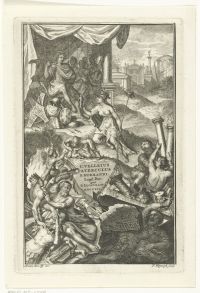
Velleius Paterculus

Definition and stakes

Portrait of Velleius Paterculus Velleius Paterculus Compendium of the History of Rome… (1852)

He never, or very rarely, stretched his power to excess, and was almost exempt from vice, unless it be counted among the greatest vices, that, in a free state, the mistress of the world, though, in every right, he saw every citizen his equal, he could not endure to behold any one on a level with him in dignity. From the time of his assuming the manly gown, he was trained to war in the camp of his father, a general of consummate judgment
Source: Wikisource

Terence Terence's Andrian, a comedy, in five acts (1820)

Velleius Paterculus wrote his eulogium as follows, “Publius Scipio Æmilianus inherited the virtues of his grandfather Publius Africanus, and of his father Lucius Paulus, excelled all his cotemporaries in wit and learning, and in all the arts of war and peace; and, in the course of his whole life never did, said, or thought, any thing, but what was worthy of the highest praise.”
“We have seen princes in France, who, at the age of eighteen, were capable of assisting a poet, as well with respect to the conduct and arrangement of his subject
Source: Gutenberg

Portrait of Velleius Paterculus Velleius Paterculus Compendium of the History of Rome… (1852)

In Macedonia, Marcus Brutus had drawn over to his side the legions of Caius, the brother of Mark Antony, and those of Vatinius, near Dyrrachium, who willingly joined him. Antonius he had attacked in the field; Vatinius he had overawed by the dignity of his character; as Brutus was reckoned preferable to any leader of the times, and Vatinius was considered inferior to every one; a man in whom deformity of person vied with depravity of mind, so that his soul seemed lodged in an habitation perfectly adapted to it. He was seven legions strong.
Source: Wikisource

Get perspective with Kwize: daily news enlightened by great literature