“ It is quite obvious from the map that West Ham was destined to be rapidly built over. It is now a huge town of two hundred and seventy thousand people, also, like East Ham, entirely consisting of working-people. It was at one time a place much loved by Quakers; evidence of their occupation still remains in certain stately old houses, now let out in lodgings; their gardens are built over; the character of the place is changed; the streets are crowded with people; trains and omnibuses run about all day ”
West Ham
Definition and stakes
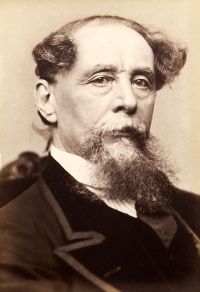
The theme of “West Ham” has been addressed by authors such as Ben Casseday, N. D'Anvers, Walter Besant, H. G. Wells and William Shakespeare. It is often associated with terms like Hamburg, London, merchant, city and England.
Quotes about “West Ham”
1911 Encyclopædia Britannica, Volume 28… (1911)
“ In 1762 the number of houses in West Ham parish was stated to be 700, of which " 455 are mansions and 245 cottages." Now few large houses remain, but the smaller houses have greatly increased. There are numerous chemical and other manufactures which have been removed from London itself; and the large population can also be traced in part to the foundation of the Victoria and Albert docks at Plaistow. Included within the borough are the extensive railway works of the Great Eastern railway at Stratford. ”
N. D'Anvers, The Skirts of the Great City
“ A century ago West Ham was one of the most {79} picturesque villages of Essex, with many charming old mansions belonging to the wealthy City merchants in its immediate vicinity, but it is now a densely populated town, with scarcely anything about it to recall the olden times. The much modernised church of All Saints, however, retains its original foundations, a Norman clerestory and an early English nave, with which, unfortunately, the modern brick chancel and aisles are quite out of character. ”
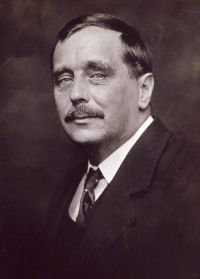 H. G. Wells,
Mankind in the Making
H. G. Wells,
Mankind in the Making
“ In a place like West Ham or Tottenham you find starved schools and an abundant delocalized industrial population, and, by way of contrast, at Guildford or Farnham for example, you will find enormously rich delocalized people, belonging to the same great community as these workers, who pay only the most trivial poor rate and school rate for the benefit of their few immediate neighbours, and escape altogether from the burthens of West Ham. ”
Various, Punch, or the London Charivari…
“ The situation in Bobadig is easing rapidly. The Government has at last carried out the instructions of The Slime, and we understand that a Ministerial expert in sheep-shock has been sent to the assistance of the surviving mules. But while we may congratulate ourselves on the lifting of the clouds in that direction matters in West Ham give ground for the gravest anxiety. The wood-lice of West Ham are proverbially of an irritable nature, and the attitude of the Government has been calculated for some time to inflame.... ”
 Robert Ezra Park,
The City: Suggestions for the investigation of human behavior in the city environment
(1915)
Robert Ezra Park,
The City: Suggestions for the investigation of human behavior in the city environment
(1915)
“ The people of the original East London have now overflowed and crossed the Lea, and spread themselves over the marshes and meadows beyond. This population has created new towns which were formerly rural villages, West Ham, with a population of nearly 300,000 ”
N. D'Anvers, The Skirts of the Great City
“ Stratford on the Lea, named after the ancient ford that was in use between it and Bow, the Stratford-atte-Bow of Chaucer, till the river was spanned by the bridge built by Matilda, wife of Henry I., that was taken down as recently as 1839, was originally only an outlying hamlet of West Ham, but it has of late years grown into a densely populated manufacturing centre, well provided with modern places of worship, but retaining, alas, not a trace of the beautiful Cistercian abbey, founded in the twelfth century, that was once the pride of the whole neighbourhood. ”
Mrs. S. A. Barnett, Practicable Socialism, New Series
“ It may begin by sending down to the distressed district a clever young man with a cab-load of tickets. Nothing seems easier than to give to those who ask, and so money is poured into the hands of applicants, or sent to the clergy for distribution. A rough experience soon enforces the necessity of inquiry and organization. In West Ham, in the winter of 1904-5, when the Borough Council was spending £28,000 on relief, when the Guardians had 20,000 persons on their out-relief lists and 1300 men in the stone yard, the Press funds were distributed without any inquiry or any attempt at co-operation. ”
Samuel Smiles, Lives of the Engineers
“ In 1831 Crewe was a little village with 295 inhabitants; it now numbers upwards of 10,000. Rugby and Swindon have quadrupled their population in the same time. The railway has been the making of Southampton, and added 30,000 to its formerly small number of inhabitants. In like manner the railway has taken London to the sea-side, and increased the population of Brighton from 40,000 to nearly 100,000. That of Folkestone has been trebled. New and populous suburbs have sprung up all round London. The population of Stratford-le-Bow and West Ham was 11,580 in 1831 ”
Anonymous, London and Its Environs Described…
“ Halsey’s court, Blackman street.†Halsted, a village in Essex, between Cray and Sevenoak, near which is the seat of the Duke of Richmond, called Halsted Place.Ham (East) a village in Essex, south east of Plaistow, and six miles from London.Ham (West) a village in Essex, between Stratford and Little Ilford.Hamburgh Merchants, a company incorporated by Edward I. in the year 1269, by the name of Merchant Adventurers. This being the first company of merchants incorporated in this kingdom, they soon obtained ample privileges of John Duke of Brabant, for establishing a factory at Antwerp. ”
George H. Ham, Reminiscences of a Raconteur, Between the '40s and the '20s
“ When you met men from the Arctic circle, from the Pacific coast, from the plains and the forests of the great West, from all points of the compass—except the South—men who had grown grey in the service, who had lived lonely but wonderful lives amongst aborigines, you felt that no matter how much the policy of the company in by-gone days might be criticized and condemned—for it’s always the pioneer who gets the worst of it—you were meeting grand old men. ”
George H. Ham, Reminiscences of a Raconteur, Between the '40s and the '20s
“ The famous Royal North West Mounted Police of Canada, whose record constitutes a strikingly romantic chapter in the history of Canada, was called into being in 1873 to preserve British law and order in the vast wildernesses lying between the Great Lakes and the mountain ranges of British Columbia. The newly-formed Dominion of Canada had but recently acquired these huge preserves from the Hudson’s Bay Company, subsequently to convert them from the Northwest Territories into the Provinces of Alberta, Saskatchewan and Manitoba. ”
George H. Ham, Reminiscences of a Raconteur, Between the '40s and the '20s
“ Canadian authority had been established by the first Red River expedition of 1870; a transcontinental railway was to be built at an early date that would displace the primitive conditions then existing. The doors of vast opportunity lay wide open and Canada’s adventurous sons flocked to Winnipeg to have a part in the great expansion—the building of a newer and greater Canadian West. They were big men, come together with big purpose. ”
George H. Ham, Reminiscences of a Raconteur, Between the '40s and the '20s
“ Never before has a wandering young Canadian boy unconsciously got into so much of the white light which beateth about the throne.Sir William Whyte came to the C.P.R. in its early days, and after filling several important positions in the east, went to Winnipeg, where he was Vice-President, in which position he exerted a wide influence throughout the west. ”
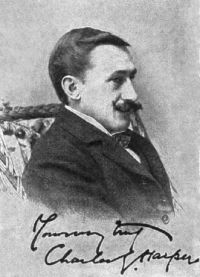 Charles G. Harper,
From Paddington to Penzance
Charles G. Harper,
From Paddington to Penzance
“ And from here it is well within three miles to the little village of Ham, encircling, with its scattered cottages and mansions of stolid red brick of legitimate “Queen Anne” design, that common whose name has within the last two years been so familiar in the mouths of men. You may journey into the county’s depths and not find so quiet a spot as this out-of-the-world corner, nor one so altogether behind these bustling times. It has all the makings of the familiar type of an old English village, even to its princely manor-house. Ham House is magnificent indeed, and thereby hangs a tale. ”
“ For instance, there are two places, both lying outside the limits of the London County Council, which twenty or thirty years ago were mere villages or rural hamlets, the churches standing among market gardens and fields, having still their great houses and gardens, the residence of City merchants who drove in their own carriages to and from their offices. One of them, called East Ham, I remember, a quarter of a century ago, as a village spread about on a large area, as if land had no value. ”
N. D'Anvers, The Skirts of the Great City
“ The latter lived in what was known as Ham House, which was pulled down soon after his death in 1856, and eighteen years later the park in which it used to stand was bought for the people, partly by the Gurney family and partly by the corporation of London. East Ham is another town of rapid growth, the nucleus of which was not long ago a charming village, still in close touch with the long ago. In early Norman times it was a dependency of Westminster {80} Abbey, and the much modernised parish church, dedicated to St. ”
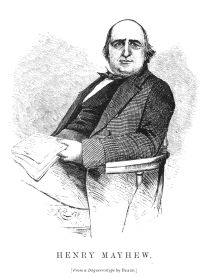 Henry Mayhew,
London Labour and the London Poor…
Henry Mayhew,
London Labour and the London Poor…
“ In this three-mile district are chiefly condensed the population, commerce, and wealth of the greatest and richest city in the world.The Six-Mile Circle runs from Streatham (on the south) ; just excludes Sydenham; contains within its exterior line Lewisham, Greenwich, and a part of Woolwich; also, wholly or partially, East Ham, Laytonstone, Walthamstow, Tottenham, Hornsey, Highgate, Hampstead, Kensall-green, Hammersmith, Fulham, Wandsworth, and Upper Tooting. ”
 William Seymour Edwards,
Through Scandinavia to Moscow
William Seymour Edwards,
Through Scandinavia to Moscow
“ The wealth and energy of the German Hinterlands pours itself eagerly into Hamburg’s lap and the ancient mediaeval city now finds itself, unlike somnolent Copenhagen, at the very forefront of Europe’s activity. Hamburg is, commercially, more alive and active than Berlin, and as a port receives more shipping than London. Hamburg is almost as wide awake as is New York.After our drive, we came to the Hotel Europaer, where we dined and rested, and then departed a little before midnight for Amsterdam. ”
N. D'Anvers, The Skirts of the Great City
“ Adjoining Petersham is the little village of Ham, the history of which, though it is not mentioned in Doomsday Book, can be traced back to before the Conquest, its manor having been given by King Athelstan to his chief alderman, Wulgar. Until quite recently a mere hamlet of scattered cottages, Ham is now growing into a populous suburb, but it still owes its chief distinction to its association with the celebrated Ham House, which is, however, really in Petersham parish, and represents the home of the Saxon thane Wulgar. ”
John Guy Vassar, Twenty years around the world (1861)
“ On my arrival at Hamburg, I found the river Elbe, upon which it stands, blockaded by the Danes, and the merchants complaining bitterly. This city is eighty miles from the mouth of the river, and is divided in many places by canals and crossed by bridges; and in the old town, the houses, bridges, and quays reminded me of Amsterdam. The city has a population of some one hundred and forty thousand, and possesses an immense amount of commerce. ”
Various, Rivers of Great Britain. The Thames…
“ Twickenham might pleasantly detain us for a whole chapter; but the wooded slopes of Richmond rise beyond, and tempt us on to “Ham’s umbrageous Walks,” and the green meadows of Petersham. The river between Eel Pie Island and Richmond Bridge has a charm all its own, which owes much to the associations of the shores between which it flows. The meadows on the Surrey shore are sweet to look upon from the water; but until Ham is approached there is greater interest and variety upon the Middlesex bank. Ham, with its famous “Walks,” lies low, and little of it can be seen from a boat. ”
H. G. Wells,
Tono-Bungay
(1909)
“ Factory chimneys smoke right over against Westminster with an air of carelessly not having permission, and the whole effect of industrial London and of all London east of Temple Bar and of the huge dingy immensity of London port, is to me of something disproportionately large, something morbidly expanded, without plan or intention, dark and sinister toward the clean clear social assurance of the West End. ”
William Seymour Edwards,
Through Scandinavia to Moscow
“ Hamburg has always been an important city and one where great volume of business has been transacted. In the Middle Ages it was a member of the Hanseatic League; in after days it was a Free City and, even at this time, its citizens view its absorption within the German Empire not altogether with satisfaction. It bears the marks of great antiquity. Quaint and picturesque are the lofty mediaeval buildings which lean over its canals, where men and women push, with long poles, blunt-ended canal boats and clumsy-looking, but storm-proof, sloops and luggers, among perpetual cries and clamors ”
Edric Holmes, Wanderings in Wessex
“ The true nucleus of this principality, which might, without great call upon the imagination, be called the nucleus of the future Britain, is that wide and fertile valley that extends from the shores of the Solent to Winchester and was colonized by two kindred races. Those invaders known to us as the Jutes took possession of Vectis—the Isle of Wight—and of the coast of the adjacent mainland. The second band, of West Saxons, penetrated into the heart of modern Hampshire and presently claimed the allegiance of their forerunners. ”
Eric Parker, Highways and Byways in Surrey
“ But the fascination of this stretch of river is on the Surrey bank, where Ham House stands among noble trees. Ham House is not a "show house"; and indeed, considering its nearness to Richmond and London, it would be impossible [Pg 237] that it should be. There are limits to the claims which may be made upon owners of historic houses who may also wish to live in them. But Ham House holds other magnets than its pictures and relics of Stuarts and Lauderdales. ”
 William Dean Howells,
Their Silver Wedding Journey — Volume 1
William Dean Howells,
Their Silver Wedding Journey — Volume 1
“ The illusion remained with them and qualified the impression which Hamburg made by her much-trolleyed Bostonian effect; by the decorous activity and Parisian architecture of her business streets; by the turmoil of her quays, and the innumerable masts and chimneys of her shipping. At the heart of all was that quaintness, that picturesqueness of the past, which embodied the spirit of the old Hanseatic city, and seemed the expression of the home-side of her history. ”
Frédéric Barbey, A friend of Marie-Antoinette (Lady Atkyns… (1906)
“ This fact did not escape the émigrés, who were finding it more and more difficult to evade the rigorous look-out of the Revolutionary Government, and soon Hamburg was filled with nobles, ecclesiastics, Chouans, conspirators, Royalist agents, just as London had been some years earlier. Safe from surprises, and in constant communication with England, Germany, and Italy, this world of wanderers had discovered an ideal haven in which to hatch all their divers plots. Clubs were started by them, called after celebrated men. ”
John Horace Round, The Commune of London, and other studies (1899)
“ It is true that Mr. Seebohm, as I have said, recognises no distinction, and even speaks of this example as “the growth of a new ham”; but it seems to me to confirm the view I am here advancing. It is obvious that if such a canon of research as that ham (not ton) was a mark of early settlement could be even provisionally accepted, it would greatly, and at once, advance our knowledge of the settlement of England. ”
William Seymour Edwards,
Through Scandinavia to Moscow
“ Many narrow streets cross these canals on high-built bridges, bearing a continuous and deliberately-moving traffic.Hamburg also possesses noble boulevards, long and straight and wide, and well-shaded with umbrageous lindens, where, set back behind high walls and strong-barred gates, are miles of sumptuous mansions, in which her merchant princes maintain their households in unostentatious luxury. The wealth of the merchants of Hamburg is said to exceed that of the aristocratic office-holding classes of Berlin. ”
Constance Holme, The lonely plough (1914)
“ He could not know that, five hours before, on the Preston Road, she had decided that Hamer should certainly take this very same party to the Royal. He only felt like a turnip, and wished that his boots were more like those of the nearest showman, and wondered if he could possibly tolerate an overcoat with a waist to it. And when they had turned their backs on the city lights, she had wriggled from under the rug to look behind her over the hood, and had sighed: “Dear Manchester!” ”