Western China

Definition and stakes

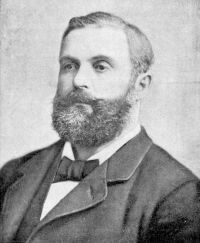
Sir Alexander Hosie,  Three Years in Western China

“ The most interesting part of China, from a geographical and ethnological point of view, is the West—geographically, because its recesses have not yet been thoroughly explored, and ethnologically, because a great part of it is peopled by races which are non-Chinese, and one at least of which, though nominally owing allegiance to the Great Khan, is in reality independent. ”
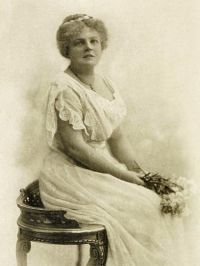
Source: Gutenberg

Portrait of Mary Gaunt Mary Gaunt,  A Woman In China

“ One hundred and twenty years ago the Western nations were only a stage removed from the barbaric civilisation the Chinese had reached two or three thousand years before, but still they were moving onward, and they felt they must combine if they would trade with this rich land, and yet protect their subjects and their goods. And so they did combine, and there arose that curious state of affairs between the foreigners and the people of the land that has held for many years, that holds in no other land, and that has crystallised in the Legation Quarter of Peking. ”
Source: Gutenberg

Philip Lake, Richard Lydekker, Augustine Henry, Herbert A. Giles, George Jamieson, Henry Yule, Friedrich Hirth, Robert K. Douglas, Ignatius V. Chirol, Laurence Binyon, Charles J. Holmes and Lionel Giles,  1911 Encyclopædia Britannica (1911)

“ Western China consists of highlands often sparsely, and eastern China of lowlands densely peopled. Western China contains the only provinces where the population is under 100 per sq. m. From the Tibetan and Mongolian tablelands project mountain ranges which, ramifying over the western region, enclose elevated level tracts and lower basins and valleys. ”
Source: Wikisource

Get perspective with Kwize: daily news enlightened by great literature