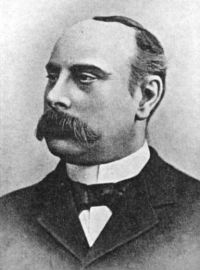
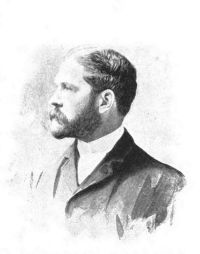
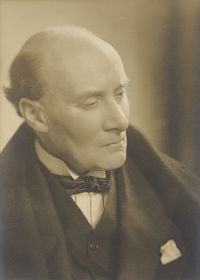
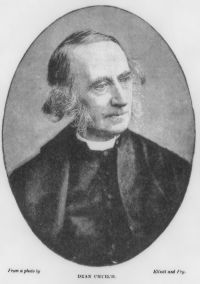
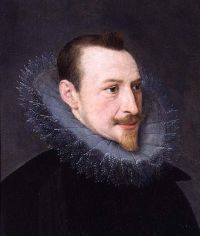
“ In Elizabeth’s reign began the rise of the Cecil family, whose fortunes have since been so closely bound up with Stamford.Richard Cecil, the father of the great Lord Treasurer, obtained possession of the manor of Burghley in 1528, and, after adding considerably to the estates, died in 1552, and was buried in St. Margaret’s Church, Westminster. His more famous son William, afterwards first Lord Burghley, was born at Bourne, and received part of his education at Stamford Grammar School, proceeding thence to St. John’s College, Cambridge. ”
William Cecil, 1st Baron Burghley
Definition and stakes
William Cecil, 1st Baron Burghley (1520–1598), was a key English statesman and principal advisor to Queen Elizabeth I, shaping her reign through financial discipline, diplomatic acumen, and religious policy. Authors such as Sidney Lee emphasize his influence at court, while Martin A. S. Hume underscores his practical governance, noting his skill in managing political instability without overt ambition.
His vision of a unified Protestant British Isles, though only partially achieved, set the stage for England’s future dominance. Cecil’s legacy persists through his family’s political lineage and the institutional structures he created, solidifying his position as a pillar of Elizabethan rule.
Quotes about “William Cecil, 1st Baron Burghley”
Sidney Lee, Dictionary of National Biography… (1891)
“ At an early age he seems to have been received into the household of Sir William Cecil, afterwards Lord Burghley, and ultimately became one of Cecil's two chief secretaries. The position gave him much influence at Elizabeth's court, and being ‘very witty and jocose’ he was popular in society. ”
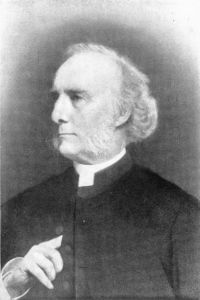
Augustus Jessopp,
Dictionary of National Biography…
(1887)
“ CECIL, THOMAS, first Earl of Exeter, second Lord Burghley (1542–1622) , eldest son of William Cecil, lord Burghley, by Mary Cheke [see Cecil, William] , was born on 5 May 1542. He seems to have been brought up under tutors at his father's house, and never to have received a university education; he gave no signs of more than average ability, and it was probably because his father knew him to be deficient in capacity that he felt compelled to keep him in the background during his own lifetime. ”
Martin A. S. Hume,
The Great Lord Burghley: A study in Elizabethan statecraft
“ He was Constable of Warwick Castle, Bailiff of Wittlesea Mere, and Keeper of the Swans, like his father, and Sheriff of Rutland; and to add to his prosperity, he married the heiress of William Heckington of Bourne, who brought to him the fine property of Burghley adjoining his own estates at Stamford. When, therefore, William Cecil was born in the house of his maternal grandfather at Bourne, he was prospective heir to broad acres in a half-dozen counties, with almost the certainty of advancement through court influence in whatever career he might choose. ”
William Younger Fletcher, English Book Collectors
“ He was mixed up in the troubles of the time, and was, says Macaulay, 'foolish to a proverb,' and the 'prey of gamesters.' John Cecil, Earl of Exeter, from 1678 to 1700, who was descended from Lord Burghley's elder son, was himself a book collector, and therefore not likely to part with the library of his illustrious ancestor. ”
“ His uncle by marriage was that William Cecil who was to be Lord Burghley. His mother, the sister of Lady Cecil, was one of the daughters of Sir Antony Cook, a person deep in the confidence of the reforming party, who had been tutor of Edward VI. She was a remarkable woman, highly accomplished after the fashion of the ladies of her party, and as would become her father's daughter and the austere and laborious family to which she belonged. She was "exquisitely skilled in the Greek and Latin tongues;" ”
Martin A. S. Hume,
The Great Lord Burghley: A study in Elizabethan statecraft
“ Cecil would certainly bear no other man’s burden if he could help it.Through all this critical time Sir William was indefatigable. His wife lived usually retired from the court, at their home at Wimbledon; but Cecil’s town house at Cannon Row, Westminster, was the scene of ceaseless business, for Petre, the joint-Secretary, was ill disposed, and did little. The Duchess of Suffolk, Lord Clinton, and all the Lincolnshire folk used Cecil unsparingly in [32] all their suits and troubles, and they had many. ”
Various, Encyclopaedia Britannica, 11th Edition…
“ Created earl of Exeter by James I., the second Lord Burghley was more soldier than statesman, and from his death to the present day the elder line of the Cecils has taken small part in public affairs. William Cecil, 2nd earl of Exeter, took as his first wife the Lady Roos, daughter and heir of the 3rd earl of Rutland of the Manners family. The son of this marriage inherited the barony of Roos as heir general, and died as a Roman Catholic at Naples in 1618 leaving no issue. ”
Martin A. S. Hume,
The Great Lord Burghley: A study in Elizabethan statecraft
“ If he was austere in a frivolous court, if bribes failed to buy him in an age of universal corruption, if he was cool and judicious amidst general vehemence, it was because the qualities of his mind and his strict self-schooling enabled him to understand that his country might thus be most effectively served, and that it would be unworthy of William Cecil to act otherwise. ”
Martin A. S. Hume,
The Great Lord Burghley: A study in Elizabethan statecraft
“ This throughout his life was the function of William Cecil. His gifts were not of the highest, for he was not a constructive statesman or a pioneer of great causes. He often stood by and saw injustice done by extreme men on one or the other side rather than lose his influence by appearing to favour the opposite extreme; and, as we have seen in his own words, he was quite ready to carry out as a minister a policy of which as a Councillor he had expressed his disapproval. ”
Martin A. S. Hume,
The Great Lord Burghley: A study in Elizabethan statecraft
“ When he arrived [264] in Flanders he made a long report of his embassy, containing the following interesting appreciation of Burghley as he appeared to his greatest enemy: “The principal person in the Council is William Cecil, now Lord Burghley, a Knight of the Garter. He is a man of mean sort, but very astute, false, lying, and full of artifice. He is a great heretic, and such a clownish Englishman as to believe that all the Christian princes joined together are not able to injure the sovereign of his country, and he therefore treats their ministers with great arrogance. ”
David Carnegie Andrew Agnew, Protestant Exiles from France… (1886)
“ Strype’s best documentary information is from the papers of Queen Elizabeth’s great minister, Sir William Cecil, known as Mr Secretary Cecil, after 1570 as Lord Burghley, and after 1572 as the Lord High Treasurer of England. In 1562 the Queen was prevailed upon to send succour to the French Protestants. Sir Nicholas Throgmorton had interviews in France with Theodore Beza, and conveyed to Cecil a letter from that famous divine, dated at Caen, 16 March 1562, (signed) T. de Belze. This letter is printed in Strype’s “Annals of Queen Elizabeth,” Second Appendix, B., vol. i. ”
Augustus Jessopp,
Dictionary of National Biography…
(1887)
“ If it be a fair specimen of his style of composition, he must indeed have been a man of but small ‘parts.’ Next year, on the occasion of the French ambassador visiting Cambridge, accompanied by Lord Burghley as chancellor of the university, and other notables, Cecil was admitted M.A. by a special grace of the senate. At a magnificent tournament held at Westminster during this year he took a prominent part, and received a prize at the hands of the queen for his prowess at the barriers. He had always had a desire for a military life, which his father would never allow him to gratify ”
Martin A. S. Hume,
The Great Lord Burghley: A study in Elizabethan statecraft
“ The embarrassment of riches in the way of material is, indeed, the rock upon which most of the serious biographers of Cecil have foundered. In the Lansdowne MSS., at the British Museum alone, there are 122 folio volumes of Burghley manuscripts, which descended through the minister’s secretary, Sir Michael Hicks, besides large numbers in the Cotton and Harley collections. ”
John Harland, Lancashire Folk-lore
“ The Earl of Huntingdon wrote to Sir William Cecil, then the Queen's Secretary of State (afterwards Lord Burghley, her Treasurer) , a letter, communicating suspicions of the Earl of Derby, which the writer asked should be burned as soon as read, but which has been preserved (and printed) amongst Lord Burghley's State Papers (I. 603.) Modernising the spelling, the letter runs thus:—Sir,—I am bolder to write to you on weighty matters, than I dare be to some others ”
Martin A. S. Hume,
The Great Lord Burghley: A study in Elizabethan statecraft
“ Northumberland consulted and deferred to him at every point; Cranmer sent to him the host of Protestant refugees from Germany and France: no matter what business was in hand, or whose it was, it inevitably found its way into Sir William Cecil’s study, and by him was dealt with moderately, patiently, and wisely.In the war of faiths he was the universal arbitrator, and his task was not an easy one. The clergy had sunk to the lowest depth of degradation, and cures of souls had been given by patrons to domestic servants, and often to persons unable to read. ”
Edmund Spenser,
The Faerie Queene — Volume 01
“ Lord Burghley > (William Cecil, Lord Burghley, 1520-98: the most powerful man in England. An enemy of the Earl of Leicester, who was the uncle of Sir Philip Sidney (one of Spenser's friends) . This, taken in combination with Spenser's friendship with Raleigh (another enemy) perhaps disinclined Burghley to favour the poet or his work) 413 Treasurer of England_ 414 415 To, you right noble lord, whose careful breast careful > {Full of cares; prudent} breast > heart ”
Martin A. S. Hume,
The Great Lord Burghley: A study in Elizabethan statecraft
“ But withal, her vanity, her fickleness, the folly and greed of her favourites, or the machinations of her enemies, would inevitably have dragged her to ruin again and again, but for the fact that she always had near her, in moments of weakness or danger, a fixed point to which [viii] she could turn, a councillor whose gaze was never diverted from the ultimate goal, a man whom flattery did not move, whom bribery did not buy—wise, steady William Cecil, who, to her honour and his, remained her prime adviser from the moment of her accession to the day of his death. ”
Martin A. S. Hume,
The Great Lord Burghley: A study in Elizabethan statecraft
“ It was not until he had promised that he would only act in accordance with the advice of the new King-consort, Philip, that he was permitted to proceed on his mission, with the certainty now, that the restitution of the Church property would go no further than was dictated by the political interests which the Emperor had nearest his heart. This happened in November 1554, four months after the Queen’s marriage, and the somewhat curious choice of Paget (Lord Privy Seal) , Sir Edward Hastings, and Sir William Cecil, was made to go and meet the Legate at Brussels, and bring him to England. ”
E. K. Chambers, The Elizabethan Stage, Vol. 3 (1923)
“ Theobalds Entertainment of 1594 (William Lord Burghley) .The Hermit was brought into play again when Elizabeth next visited Theobalds, in 1594 (13–23 June) . He delivered an Oration, in which he recalled the recovery of his cell at her last coming, and expressed a fear that ‘my young master’ might wish to use it. No doubt the alternative was that Robert Cecil should become Secretary. The oration, ‘penned by Sir Robert Cecill’, is printed by Nichols, Eliz. iii. 241, from Bodl. Rawlinson MS. D 692 (Bodl. 13464) , f. 106.iv. Wimbledon Entertainment of 1599 (Thomas Lord Burghley) . ”
Martin A. S. Hume,
The Great Lord Burghley: A study in Elizabethan statecraft
“ This was the condition of English politics at home and abroad when William Cecil first saw the light at Bourne, in Lincolnshire, on the 13th September 1520. He came into the world at the opening of a new epoch both for his country and for the general advancement of civilisation, and before he left it the modern dispensation was firmly planted, in England at least, owing in no small measure to his sagacity and statecraft. ”
Martin A. S. Hume,
The Great Lord Burghley: A study in Elizabethan statecraft
“ It was decided that a progress should be undertaken for her health, in which the University of Oxford could be visited, and Cecil be specially honoured by a stay of the Queen at his house of Burghley. She left London in July, and underwent an ordeal at Oxford similar to that which she had experienced two years before at Cambridge. The vestments controversy was raging with great bitterness, clergymen were deprived and punished for contumacy, pulpit and press were silenced, and the Protestants resentful. ”
Martin A. S. Hume,
The Great Lord Burghley: A study in Elizabethan statecraft
“ The youth, he thought, should be “taught to ride, play the lute, dance, play tennis, and use such exercises as are noted ornaments of courtiers.” [158] A subsequent recommendation of Thomas Windebank, the young man’s governor, to the effect that it would be well to accept Throgmorton’s offer, although Sir William Cecil was loth to trespass on his [121] friend’s hospitality, in order that the youth “might learn to behave himself, not only at table, but otherwise, according to his estate,” [159] leads us to the conclusion that Thomas Cecil had thitherto not been an apt scholar. ”
Various, Notes and Queries, Vol. IV, Number 88…
“ Cecil did not become the Lord of Burghley until the death of his uncle, the 9th Earl of Exeter, two years after this marriage, up to which time he resided at Bolas, Salop, the residence of his wife before her marriage, and there the two eldest of their four children were born. The Countess of Exeter died greatly beloved and respected at the early age of twenty-four, having been married nearly seven years. ”
Augustus Jessopp,
Dictionary of National Biography…
(1887)
“ Being of a weakly constitution and a delicate physique, he was educated at home under private tutors. It is probable that Dr. Richard Neile, eventually archbishop of York, was one of them; it is certain he was one of Lord Burghley's chaplains and received his preferments through the aid afforded him by father and son. When it is said, as it often has been said, that Robert, earl of Essex, was his ‘early playmate,’ it is forgotten that Essex was his junior by at least four years, and was actually a member of Lord Burghley's household only for a few weeks. It is said that Cecil entered at St. ”
Thomas Graves Law, Dictionary of National Biography (1901)
“ For eighteen months (1587-8) he acted as Latin secretary to Cardinal Allen, and afterwards spent two years in Spain, and was with Father Parsons at his newly erected seminary at Valladolid. Early in 1591 Parsons sent Cecil, with another priest, Fixer, alias Wilson, into England, via Amsterdam; but the vessel in which they sailed was captured by her Majesty's ship Hope in the Channel, and the two priests were carried to London. Here they at once came to terms with Lord Burghley. Cecil had already in 1588 corresponded, under the name of Juan de Campo, with Sir Francis Walsingham. ”
Gilbert William Child, Church and State under the Tudors (1890)
“ The document in which the appeal was made, or a copy thereof, was sent by Cecil to Whitgift, and has been preserved, together with Whitgift's annotations upon it. In this form it was published by Strype, and is of much interest and some importance. It must be borne in mind in reading it that Lord Burghley was throughout far more favourable to Travers than Whitgift was, and that the latter was in these annotations making out his case to the best of his ability, in excuse for his somewhat sharp treatment of the former. On the whole, he makes out a good case. ”
Thompson Cooper, Dictionary of National Biography… (1886)
“ Bright's preface implies that he lectured at Cambridge, for he asserts that he had been asked to publish the notes from which he taught. He dedicates both parts to Cecil, as chancellor of the university, and speaks as if he knew him and his family. He praises the learning of Lady Burghley, and says the 'domus Cæciliana' may be compared to a university. 'Cecil himself has paid,' he says, 'so much attention to medicine that in the knowledge of the faculty he may almost be compared to the professors of the art itself.' His 'Treatise of Melancholie' is as much metaphysical as medical. ”
Martin A. S. Hume,
The Great Lord Burghley: A study in Elizabethan statecraft
“ For his own part his desire had always been to see the Queen married to a prince of the House of Austria, with which it was well to be in alliance; but since old friends cast them off, and your Majesty refused to confirm the treaties, or receive a minister at your court, [418] they must seek new friends.”The current of affairs and the Queen’s fickleness evidently displeased the Lord Treasurer. In September (1578) he had unsuccessfully begged leave of absence to visit Burghley, [419] where the rebuilding of the mansion was still progressing, under the care of Sir Thomas Cecil. ”
Francis Bacon,
The Essays of Francis Bacon
(1908)
“ Burghley was a plain, practical man, immersed in complicated affairs of state. It is possible, as has been suggested, that he quietly opposed the advancement of Francis Bacon in order to keep the pathway open for his son, Robert Cecil, a man of moderate ability only. It may be, Machiavellian as he was, that he recognized from the first the pliability of his nephew and declined to trust him with political business. Without a doubt, Bacon's literary and philosophical aims were to him but the visions of a youthful enthusiast. ”