“ Brothers under the sun All one, strong and free. Verse 3 One land and one nation is our cry Dignity and peace 'neath Zambia's sky Like our noble eagle in its flight Zambia, praise to thee All one, strong and free. ”
Zambia
Definition and stakes
Zambia, a landlocked nation situated at the crossroads of Central, Southern, and East Africa, is bordered by eight countries and characterized by its abundant natural resources and intricate history. From David Livingstone’s 19th-century explorations to the United Nations’ 20th-century efforts to support its independence, Zambia’s story is shaped by colonial influences, economic challenges, and regional diplomacy.
The CIA’s reports emphasize its reliance on copper and shifts in political leadership, while UN resolutions highlight its role in fostering African unity. As a center of cultural and ecological variety, Zambia’s development reflects both the challenges imposed by its geography and the perseverance of its people.
Quotes about “Zambia”
United States. Central Intelligence Agency, CIA World Fact Book, 2004 — Zambia (2004)
“ During the 1920s and 1930s, advances in mining spurred development and immigration. The name was changed to Zambia upon independence in 1964. In the 1980s and 1990s, declining copper prices and a prolonged drought hurt the economy. Elections in 1991 brought an end to one-party rule, but the subsequent vote in 1996 saw blatant harassment of opposition parties. ”
by the United Nations, United Nations Security Council Resolution 329
“ Requests the Secretary-General in collaboration with the appropriate organizations of the United Nations system, to organize with immediate effect all forms of financial, technical and material assistance to Zambia to enable it to carry out its policy of economic independence from the racist regime of Southern Rhodesia. ”
by the United Nations, United Nations Security Council Resolution 393 (1976)
“ Demands that South Africa scrupulously respect the independence, sovereignty, air space and territorial integrity of Zambia;3. Demands that South Africa desist forthwith from the use of the international Territory of Namibia as a base for launching armed attacks against the Republic of Zambia and other African countries;4. Commends the Republic of Zambia and other "front-line" States for their steadfast support of the people of Namibia in their legitimate struggle for the liberation of their country from illegal occupation be the racist régime of South Africa ”
by the United Nations, United Nations Security Council Resolution 455
“ Strongly condemns the illegal régime in the British colony of Southern Rhodesia for its continued, intensified and unprovoked acts of aggression against the Republic of Zambia, which constitute a flagrant violation of the sovereignty and territorial integrity of Zambia ”
Earl W. Stevick, Adapting and Writing Language Lessons… (1971)
“ The annual report of the Bank of zambia states that the practice of moving from rural areas to urban centres in search of work is endangering the progress of Zambia. This hurts agriculture, on which the country depends. ”
by the United Nations, United Nations Security Council Resolution 268
“ Strongly censures the Portuguese attacks on Lote village in the Katete District of the Eastern Province of Zambia resulting in the loss of Zambian civilian life and property;2. Calls upon Portugal to desist forthwith from violating the territorial integrity of, and from carrying out unprovoked raids against, Zambia;3. Demands the immediate release and repatriation of all civilians from Zambia kidnapped by Portuguese military forces operating in the colonial Territories of Angola and Mozambique ”
United States. Central Intelligence Agency, The 1990 CIA World Factbook
“ Zimbabwe 797 kmCoastline: none—landlockedMaritime claims: none—landlockedDisputes: quadripoint with Botswana, Namibia, and Zimbabwe is in disagreement; Tanzania-Zaire-Zambia tripoint in Lake Tanganyika may no longer be indefinite since it is reported that the indefinite section of the Zaire-Zambia boundary has been settledClimate: tropical; modified by altitude; rainy season (October to April) Terrain: mostly high plateau with some hills and mountainsNatural resources: copper, cobalt, zinc, lead, coal, emeralds, gold, silver, uranium, hydropower potentialLand use: 7% arable land ”
United States. Central Intelligence Agency, CIA World Fact Book, 2004 — Zambia (2004)
“ Cooperation continues with international bodies on programs to reduce poverty, including a new lending arrangement with the IMF expected in the second quarter, 2004. A tighter monetary policy will help cut inflation, but Zambia still has a serious problem with fiscal discipline. ”
by the Central Intelligence Agency, The World Factbook (1982)
“ Land boundaries: 6,003 km PEOPLE Population: 6,222,000 (July 1982) , average annual growth rate 3.2% Nationality: noun—Zambian (s) ; adjective—Zambian Ethnic divisions: 98.7% African, 1.1% European, 0.2% other Religion: 82% animist, about 17% Christian, and under 1% Hindu and Muslim Language: English official; wide variety of indigenous languages Literacy: 28% Labor force: 402,000 wage earners; 375,000 Africans, 27,000 non-Africans ”
Viktor Pinchuk, In bullpen – voluntarily
“ At the end of the "interview", they still allocated a "living space" under the stairs and ... treated them to a ripe banana.Only for their own (Burundi) Mpulungu is a Zambian port city, from where you can get to Burundi by water transport on Lake Tanganyika. Four people bought tickets for the cargo ship. ”
Harry Johnston, 1911 Encyclopædia Britannica, Volume 4… (1911)
“ The southern border of this territory is the north bank of the Zambezi from the confluence of the Kafukwe to that of the Luangwa at Zumbo. Eastwards of Zumbo, British Central Africa is separated from the river Zambezi by the Portuguese possessions; nevertheless, considerably more than two-thirds of the country lies within the Zambezi basin, and is included within the subordinate basins of Lake Nyasa and of the rivers Luangwa and Luengwe-Kafukwe. ”
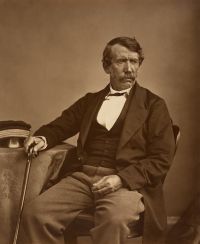 David Livingstone,
A Popular Account of Dr Livingstone's Expedition to the Zambesi and its Tributaries…
(1894)
David Livingstone,
A Popular Account of Dr Livingstone's Expedition to the Zambesi and its Tributaries…
(1894)
“ It is only by cutting off the supplies in the interior, that we can crush the slave-trade on the Coast. The plan proposed would stop the slave-trade from the Zambesi on one side and Kilwa on the other; and would leave, beyond this tract, only the Portuguese port of Inhambane on the south, and a portion of the Sultan of Zanzibar's dominion on the north, for our cruisers to look after. The Lake people grow abundance of cotton for their own consumption, and can sell it for a penny a pound or even less. ”
Edward Heawood, Frank R. Cana, T. Athol Joyce & John Scott Keltie, 1911 Encyclopædia Britannica (1911)
“ The more extensive Zang (Zenj) empire, of which the name Zanzibar (Zanguebar) is a lasting memorial, extending along the sea-board from Somaliland to the Zambezi, was also extinct. The Arabs had established themselves firmly on the coast, and thence made continual slave-raids into the interior, penetrating later to the Congo. The Swahili, inhabiting the coast-line from the equator to about 16° S., are a somewhat heterogeneous mixture of Bantu with a tinge of Arab blood. ”
David Livingstone,
Missionary Travels and Researches in South Africa
“ They have thus a body of exclusive tribes around them, preventing direct intercourse between them and the population beyond. It is strange that, when they had the power, they did not insist on the free navigation of the Zambesi. I can only account for this in the same way in which I accounted for a similar state of things in the west. All the traders have been in the hands of slaves, and have wanted that moral courage which a free man, with free servants on whom he can depend, usually possesses. ”
David Livingstone,
A Popular Account of Dr Livingstone's Expedition to the Zambesi and its Tributaries…
(1894)
“ No canal or railway would ever be thought of for this part of Africa. A few improvements would make the Zambesi a ready means of transit for all the trade that, with a population thinned by Portuguese slaving, will ever be developed in our day. Here there is no instance on record of the natives flocking in thousands to the colony, as they did at Natal, and even to the Arabs on Lake Nyassa. This keeping aloof renders it unlikely that in Portuguese hands the Zambesi will ever be of any more value to the world than it has been. ”
W. Holman Bentley, Life on the Congo
“ This water-torn plateau country, with its little useless rivers, has presented a formidable obstacle to exploration, and has served to throw all interior water into the Congo. To the north of the Great Basin stretches the high lands of the unknown countries which form also the watershed of the Shari and the Nile. Eastward stretches the hill country on the west of the Victoria and Albert Nyanza, and on the east of Tanganika, while to the south is the watershed of the Zambesi. ”
Charles Morris, Famous Men and Great Events of the Nineteenth Century
“ Zambesia—or Rhodesia, as it is often called—now extends far to the north of the Zambesi River, being bordered on the north by the Congo Free State and Lake Tanganyika, and on the east by Lake Nyassa, and embracing the heart of South Africa. This territory was chartered in 1889 by the British South Africa Company, with Cecil Rhodes, then premier of the Cape Colony, as its managing director and practical creator. ”
 Sir Richard Francis Burton,
Two Trips to Gorilla Land and the Cataracts of the Congo…
Sir Richard Francis Burton,
Two Trips to Gorilla Land and the Cataracts of the Congo…
“ River, the Orange River, and others, which would be first-rate streams in Europe, but are mere dwarfs in the presence of the four African giants. The Nile and Niger, being mainly tenanted by Moslemized and comparatively civilized races, have long been known, more or less, to Europe. The Zambeze, owing to the heroic labours of Dr. Livingstone, is fast becoming familiar to the civilized world; and the Congo is in these days (1873) beginning at last to receive the attention which it deserves. It is one of the noblest known to the world. ”
Le Roy Hooker, The Africanders (1900)
“ Nature has divided that part of Africa lying south of the Zambesi River into three distinct and well-defined regions. A strip of lowland skirts the coast of the Indian Ocean all the way from Cape Town around to Natal, Delagoa Bay and still northeast to the mouths of the Zambesi. Between Durban, the principal port of Natal, and Cape Town this strip is very narrow in places—the hills coming down almost to the margin of the sea. Beyond Durban, to the northeast, the low plain grows wider. ”
Various, The National Geographic Magazine…
“ Central Africa, including all that portion of the continent lying between, say, the Albert Nyanza and the river Zambesi, and Zanzibar and the Congo mouth, and which, although no part now remains of it that is not nominally the territory either of the Congo Free state or some European power, is still almost entirely in the possession and occupation of its lawful owners, the native uncivilized tribes. ”
Sir Richard Francis Burton,
Zanzibar; city, island, and coast…
(1872)
“ Its magnificent basin is formed by one of those small coralline islands which, from Suez to Cape Corrientes, have long been the centres of commerce with peoples who, brutalized by barbarism, and incapable of civilization, would have converted mainland depôts into scenes of rapine and bloodshed. Of this chain the principal links, the Tyre, the Alexandria, and the Araduses of East Africa, are Masawah, old Zayla, Berberah—in the 16th century an islet—Makdishu, Lamu, Wasin, ancient Mtanga, Pemba, Zanzibar, Mafiyah, the original Kilwa, and Mozambique. ”
David Livingstone,
A Popular Account of Dr. Livingstone's Expedition to the Zambesi and Its Tributaries
“ Formerly all the Manganja were united under the government of their great chief, Undi, whose empire extended from Lake Shirwa to the River Loangwa; but after Undi’s death it fell to pieces, and a large portion of it on the Zambesi was absorbed by their powerful southern neighbours the Banyai. This has been the inevitable fate of every African empire from time immemorial. A chief of more than ordinary ability arises and, subduing all his less powerful neighbours, founds a kingdom, which he governs more or less wisely till he dies. ”
James P. Boyd, Stanley in Africa
“ Nature has been exceedingly lavish of her gifts in the Lower Zambesi Valley, giving it a fertile soil, a splendid system of river communication, and great stores of mineral and vegetable wealth, everything indeed, that is necessary to make a prosperous country, except a healthy climate, and industrious population. Here as upon the borders of the Nile, war and slave hunting have cursed the country with an apparently hopeless blight. ”
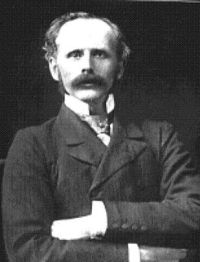 Henry Drummond,
Tropical Africa
Henry Drummond,
Tropical Africa
“ The great deltoid plain, yellow with sun-tanned reeds and sparsely covered with trees, stretches on every side; the sun is blistering hot; the sky, as it will be for months, a monotonous dome of blue—not a frank bright blue like the Canadian sky, but a veiled blue, a suspicious and malarious blue, partly due to the perpetual heat haze and partly to the imagination, for the Zambesi is no friend to the European, and this whole region is heavy with depressing memories. ”
 Lady Sarah Isabella Augusta Wilson,
South African Memories
Lady Sarah Isabella Augusta Wilson,
South African Memories
“ For this reason there was, in 1903, a very meagre population for many hundreds of miles north of the Zambesi in this direction; and of cattle, for which there is pasture in abundance, there was hardly one to be seen. One has to travel much farther north and west to find the densely populated valleys, whose inhabitants own Lewanika, Chief of the Barotse, as their ruler, who look to the great white British King as their protector, and to the Chartered Company as the immediate purveyor of their wants. ”
Andrew A. Anderson, Twenty-Five Years in a Waggon in South Africa…
“ May not an Arab tribe have passed down along the east coast, and established themselves in the Mashona region, and formed a kingdom? for the word Emperor is not a word used by any African races south of the Zambese, and none, I believe, except they are of Arab blood, or closely connected with that race. There is at present that tribe mentioned in my description of the northern Kalahara desert, on the Quito and Cubango, to the north of my explorations, that are termed white ”
Charles Patrick Daly, Popular Science Monthly (1880)
“ He states that fevers prevail all along the river-banks of the Zambesi, and in the lands adjoining the river, but that the country extending inland from the highlands of Benguela is the most suitable territory in all tropical Africa for colonization, being five thousand feet above the sea, fertile, well watered, and healthy. The people, he says, are docile, capable of improvement, are very fond of dress, and that a market would here be found for the consumption of foreign manufactures. ”
David Livingstone,
A Popular Account of Dr. Livingstone's Expedition to the Zambesi and Its Tributaries
“ In this light, a European colony would be considered by the natives as an inestimable boon to intertropical Africa. Thousands of industrious natives would gladly settle round it, and engage in that peaceful pursuit of agriculture and trade of which they are so fond, and, undistracted by wars or rumours of wars, might listen to the purifying and ennobling truths of the gospel of Jesus Christ. The Manganja on the Zambesi, like their countrymen on the Shiré, are fond of agriculture ”
David Livingstone,
Missionary Travels and Researches in South Africa
“ Not one is ever seen to blow or put his head up at all; they have learned to breathe in silence and keep out of sight. We never heard one uttering the snorting sound so common on the Zambesi. We crossed two small streams, the Kanesi and Fombeji, before reaching Cabango, a village situated on the banks of the Chihombo. The country was becoming more densely peopled as we proceeded, but it bears no population compared to what it might easily sustain. Provisions were to be had in great abundance; a fowl and basket of meal weighing 20 lbs. ”
Viscount James Bryce Bryce, Impressions of South Africa
“ Within the next half-century it is probable that, at least in the British territories as far as the Zambesi, as well as in the Transvaal and Swaziland, the power of the chiefs will have practically vanished and the natives be in a position similar to that which they now hold in Natal and the greater part of Cape Colony; that is to say, they will either dwell among the whites under the ordinary law, or will be occupying reservations under the control of a European magistrate, their old land customs having been mostly superseded and their heathen rites forbidden or disused. ”
1911 Encyclopædia Britannica (1911)
“ Several 17th-century writers extend the “empire” to the north of the Zambezi, Bocarro giving it in all “a circumference of more than three hundred leagues.” It was “divided among petty kings and other lords with fewer vassals who are called inkosis or fumos.” According to these authors, however, including Dos Santos, the paramountcy of the monomotapa was impaired in the 17th century by a series of rebellions. His zimbabwe, wherever it may have been in earlier days, was now fixed near the Portuguese fort of Masapa, only a short distance south of the Zambezi. ”
Henry Gannett, Ernest Ingersoll, George Parker Winship, Edwin A. Start, and others, The New International Encyclopædia…
“ The southeast watershed is not high, nor is that on the south, which separates the Congo waters from those flowing into Lake Ngami or collected by the Zambezi. North of Lake Tanganyika the high mountains form a lofty watershed between the northeastern sources of the Congo and the sources of the Nile, and a line of hills sweeps around to the westward in the southern Sudan, and are continued to the lofty Jebel-el-Marra, in Darfur, whose slopes contribute the remotest northern waters of the Congo. ”
Various, The National Geographic Magazine…
“ South of the Zambesi there are still other elements that promise fruit for strife ere the region is recognized as settled to the satisfaction of the contending powers. Boundaries now but illy defined must be adjusted before the venturous pioneers shall know to which nation their lands belong, and we may well foresee in the sections where exploration develops riches and abundance that the peaceful measures of arbitration will fail to satisfy the claims to dominance. ”
