The accusative case, a grammatical category that marks the direct object of a transitive verb, is a key element in numerous languages, ranging from Latin and Greek to contemporary languages such as German and Russian. While English mainly preserves it in pronouns (e.g., "her," "them"), other languages use it extensively, influencing both syntax and word formation.
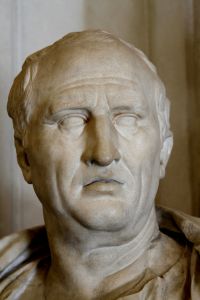
Writers like Cicero, in his legal speeches, implicitly interacted with the idea through Latin's accusative constructions, as demonstrated in his discussions on prosecutorial duty. Likewise, legal experts such as Henry M. Hunt and William O. Douglas, although not linguists, wrestled with the significance of "accusation" in judicial settings, highlighting the term's wider impact. The accusative case therefore serves as a link between linguistic structure and the act of accusing, emphasizing its dual function in grammar and communication.
 Thomas Aquinas,
Summa Theologiae — Question 68 - OF MATTERS CONCERNING UNJUST ACCUSATION…
Thomas Aquinas,
Summa Theologiae — Question 68 - OF MATTERS CONCERNING UNJUST ACCUSATION…