“ Asafoetida. Skt. hingu, Hind. hīng, Dakh. hīngu. A repulsively smelling gum-resin which forms a favourite Hindu condiment, and is used also by Europeans in Western and Southern India as an ingredient in certain cakes eaten with curry. (See POPPER-CAKE) . This product affords a curious example of the uncertainty which sometimes besets the origin of drugs which are the objects even of a large traffic. Hanbury and Flückiger, whilst describing Falconer's Narthex Asafoetida (Ferula Narthex, Boiss.) ”
Asafoetida
Definition and stakes
The theme of “asafoetida” has been addressed by authors such as Friedrich A. Flückiger, A. C. Burnell, Edward John Waring, Various and Arthur Heming. It is often associated with terms like Isopoda, trilobite, egg, worm and eye.
Quotes about “asafoetida”
Friedrich A. Flückiger, Pharmacographia (1879)
“ If a tear is touched with nitric acid sp. gr. 1·2, it assumes for a short time a fine green colour.When asafœtida is rubbed in a mortar with oil of vitriol, then diluted with water and neutralized, the slightly coloured solution exhibits a bluish fluorescence. The same will be observed, to some extent, if tears of the drug are immersed in water and a little ammonia is added. The tears of asafœtida when warmed become adhesive, but by cold are rendered so brittle that they may be powdered. With water they easily form a white emulsion. ”
 Edward John Waring,
Remarks on the Uses of some of the Bazaar Medicines and Common Medical Plants of India
Edward John Waring,
Remarks on the Uses of some of the Bazaar Medicines and Common Medical Plants of India
“ Asafœtida of good quality may be obtained in most bazaars. The moister and most strongly smelling kinds should be chosen for medical purposes. It may be given in the form of pill, in doses of from five to ten grains; or in that of mixture, prepared by rubbing down in a mortar five drachms of Asafœtida in a pint of hot water, and straining and setting aside to cool. Of this solution, which is thick and milky, the dose is from one to two table-spoonfuls. Its nauseous taste is a great objection to its use. ”
Friedrich A. Flückiger, Pharmacographia (1879)
“ Matthæus Platearius, who flourished in the second half of the 12th century, mentions asafœtida in his work on simple medicines, known as Circa instans, which was held in great esteem during the middle ages. It is also named a little later by Otho of Cremona, [1202] who remarks that the more fœtid the drug, the better its quality. Like other productions of the East, asafœtida found its way in European commerce during the middle ages through the trading cities of Italy. It is worthy of remark that it is much less frequently mentioned by the older writers than galbanum, sagapenum and opopanax. ”
A system of practical medicine…
“ Nervines, valerian, asafoetida, valerianate of ammonia, bromide of potassium, are of great service throughout the entire course of abortion, as the patient is usually in a nervous almost febrile state. Alone they may serve to allay the irritating symptoms in the early stages, and answer well in preventing the disagreeable effects of opium. Asafoetida may be given by injection or in pills, from 1⁄2 to 2 grains at a dose. ”
Various, Scientific American Supplement…
“ Quantities of preparations of valerian, asafoetida, compound spirit of ether, etc., which would yield a prompt effect upon many individuals seem to have little or no effect upon him, nor do moderate quantities of wines or spirits stimulate him. That is to say, he has not a very impressible nervous organization, is not imaginative, nor very liable to accept results on insufficient or partial evidence. ”
Friedrich A. Flückiger, Pharmacographia (1879)
“ Uses—Asafœtida is reputed stimulant and antispasmodic. It is in great demand on the Continent, but is little employed in Great Britain. Among the Mahommedan as well as Hindu population of India, it is generally used as a condiment, and is eaten especially with the various pulses known as dāl. In regions where the plant grows, the fresh leaves are cooked as an article of diet.Adulteration—The systematic adulteration, chiefly with earthy matter already pointed out, may be estimated by exhausting the drug with alcohol and incinerating the residue. ”
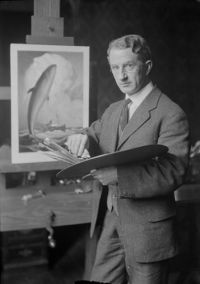 Arthur Heming,
The Drama of the Forests: Romance and Adventure
Arthur Heming,
The Drama of the Forests: Romance and Adventure
“ The reason for such a concoction is that the cold in winter does not affect the stench of asafoetida; aniseed forms a strong attraction for many kinds of animals; foxes are fond of eggs; and no stronger lure exists for an animal than the smell of the female gland. So powerful is the fetor of this "mixed bait," and so delicious is the merest whiff of it, that it forms not only an irresistible but a long-range allurement for many kinds of fur-bearers. ”
 Henry Yule,
Hobson-Jobson — H
(1903)
Henry Yule,
Hobson-Jobson — H
(1903)
“ Yet the plant producing it has been described and drawn by Kaempfer, who saw the gum-resin collected in the Persian Province of Lāristān (near the eastern shore of the P. Gulf) ; and in recent years (1857) Surgeon-Major Bellew has described the collection of the drug near Kandahar. Asafoetida has been identified with the σίλφιον or laserpitium of the ancients. The substance is probably yielded not only by the species mentioned above, but by other allied plants, e.g. Ferula Jaeschkiana, Vatke, of Kashmīr and Turkistan. The hing of the Bombay market is the produce of F. alliacea, Boiss. ”
Friedrich A. Flückiger, Pharmacographia (1879)
“ The finest sort, which is generally sold pure, is obtained solely “from the node or leaf-bud in the centre of the root-head.” At Kandahar, the price of this superior drug is equivalent to from 2s. 8d. to 4s. 8d. per lb, while the ordinary sort is worth but from 1s. to 2s.During a journey from North-western India to Teheran in Persia, through Beluchistan and Afghanistan, performed in the spring of 1872, the same traveller observed the asafœtida plant in great abundance on many of the elevated undulating pasture-covered plains and hills of Afghanistan, and of the Persian province of Khorassan. ”
1911 Encyclopædia Britannica (1911)
“ Valerian acts medicinally entirely in virtue of its volatile oil, which exerts the actions typical of its class. The special use of this drug, like that of others which contain an offensive volatile oil—such as asafoetida—is in hysteria or, as it is more properly styled, neuromimesis. It is generally believed that the drug acts in virtue of its unpleasant odour and taste, which cause the patient to display so much volition as shall enable him or her to control the symptoms and thereby obtain the discontinuance of the drug. ”
Marcus Hartog, The Cambridge natural history, Vol… (1906)
“ From this stock the Elasipoda developed by migrating into deeper water, whilst the Pelagothuriida sprang from the same root by taking to swimming; the Aspidochirota constituting the main line. The Dendrochirota were developed from a stock with respiratory trees and internal madreporite—in a word, from Aspidochirota. From them the Synaptida and the Molpadiida have developed as offshoots at different periods through taking to a burrowing life. ”
Percy E. Raymond, The Appendages, Anatomy, and Relationships of Trilobites
“ In Isopoda the antennæ are practically uniramous sensory organs. The second cephalic appendages of trilobites are capable of such development through reduction of the exopodite.In the Isopoda the coxopodites are usually fused with the body, remaining as free, movably articulated segments only in a part of the thoracic legs of one suborder, the Asellota. Endobases are entirely absent. This is of course entirely unlike the condition in Trilobita, but a probable modification. ”
Percy E. Raymond, The Appendages, Anatomy, and Relationships of Trilobites
“ At any rate, the time of the great development of the straight cephalopods coincided with the time of greatest development of caudalization; both were initiated in the Pacific realm, and both spread throughout the marine world during the middle Ordovician. And since, in the asaphids, a decrease in swimming power of the appendages accompanied the increase in the size of the pygidium, it seems probable that the swimming function of the one had been transferred to the other. ”
Sir A. E. Shipley, The Cambridge natural history, Vol… (1909)
“ Sub-Order 4. Asellota. In this group the abdominal segments are fused dorsally to form a shield-like caudal region; the pleopods are respiratory in function and reduced in numbers, the first pair being often expanded and produced backwards to form an operculum covering the rest. Several of the Asellota are fresh-water, Asellus aquaticus 128 (Asellidae) being extremely abundant all over Europe in weed-grown ditches, the mud of slowly-moving streams, and even on the shores of large lakes. ”
Various, Encyclopaedia Britannica, 11th Edition…
“ Amphipoda.—As in the genuine Isopoda, the eyes of Amphipoda are always sessile, and generally paired, and, in contrast to crabs and lobsters, these two groups have only four pairs of mouth-organs instead of six, but seven pairs of trunk-legs instead of five. ”
W. T. Calman, The Life of Crustacea
“ The thoracic limbs never have any trace of exopodites. The first pair are maxillipeds, and if they carry an epipodite it is never enclosed in a gill cavity, as in Tanaidacea. The swimmerets form one of the most characteristic features of the Isopoda, for they are always flattened into thin plates, which act as gills. In the Woodlice, which breathe air, certain curious modifications of the swimmerets are found, which will be described in a later chapter. In some Isopods that live as parasites on fish or on other Crustacea, each individual is at first a male, and later becomes a female. ”
Gustaf Lindström, Researches on the Visual Organs of the Trilobites (1901)
“ The enormous hypostoma of this giant resembles in a high degree that of the Asaphi, but is at the same time the most evident verification of the experience that the hypostoma per se cannot be regarded as the sole criterion for determinating the generic affinities of different species. The whole structure of this trilobite in other respects gives it a quite independent position, distinct, from Asaphus. ”
 Sir John William Dawson,
Some Salient Points in the Science of the Earth
Sir John William Dawson,
Some Salient Points in the Science of the Earth
“ It is a large species of Asaphus; the same genus which gave to the late Mr. Billings the limbs of a Trilobite, the first ever described; but in the Washington specimen they are remarkably perfect. Each limb presents a series of joints resembling those of the tarsus of an insect, each joint being of conical form with the narrow proximal end articulated to the enlarged distal end of the previous one, so as to give great facility of movement and accommodation for delicate muscular bands. ”
Richard Folkard, Plant Lore, Legends, and Lyrics
“ The fine flowers of this plant of the infernal regions produced grains which were believed by the ancients to afford nourishment to the dead. Accordingly we find that the Greeks planted Asphodel and Mallows round graves. The edible roots of the Asphodel were also wont to be laid as offerings in the tombs of the departed, and, according to Hesiod, they served as food for the poor. The Asphodel was held sacred to Bacchus, probably because he visited the infernal regions, and rescued his mother Semele from the kingdom of the departed. ”
Sir A. E. Shipley, The Cambridge natural history, Vol… (1909)
“ The members of this sub-order, although agreeing with the Isopoda in the essentials of their anatomy, resemble the Amphipoda in being rather laterally compressed, and in having the hand of the first free thoracic limb enlarged and subchelate. The abdomen is greatly produced laterally by expansions of the segments. In fact, the shape of the body and of the limbs is very Amphipodan.—Phreatoicus from New Zealand, Southern Australia, and Tasmania. ”
T. Spencer Cobbold, Parasites: A Treatise on the Entozoa of Man and Animals
“ Even if we suppose that the Ascaris suilla and A. lumbricoides are not identical species, still it is evident that any person discharging the eggs of lumbricoids in the vicinity of open waters becomes, by that fact, a source and centre of infection. To ensure an endemic it is probably only further necessary that the human inhabitants should employ the contaminated water for domestic purposes. But time and an increase of temperature must be allowed for the bringing about of those known and unknown larval changes that alike form the necessary antecedents of infection. ”
Percy E. Raymond, The Appendages, Anatomy, and Relationships of Trilobites
“ To avoid having the exopodites and endopodites intermingled in this way, the animal would have to bring all the endopodites together along the axial line in a plane approximately perpendicular to the dorsal test, in which case the exopodites would be free to act as swimming organs. The fact that the setæ of an exopodite stay together like the barbs on a feather would of course tend to strengthen the idea that the exopodites could be used in swimming, but that is not the only possible explanation of this condition. ”
Anthony Florian Madinger Willich, Domestic Encyclopædia (1802)
“ And though we are in possession of a remedy, sufficiently powerful to effect that desirable purpose, yet great circumspection is required in its use; as, otherwise, the consequences might be more distressing than the disease. This medicine is laudanum; which, judiciously administered, checks the most violent paroxysms for a considerable time, but cannot accomplish a cure. Hence asa-fœtida may be given with greater advantage, though it disagrees with some persons, and occasions pain in the stomach and vomiting. ”
T. Spencer Cobbold, Parasites: A Treatise on the Entozoa of Man and Animals
“ Ascaris lumbricoides, Linneus.—This common parasite was for a long while regarded as identical with the great lumbricoid of the horse, but the question has been finally settled by Schneider, who has shown that the human worm, although identical with Dujardin’s Ascaris suilla of the hog, is nevertheless quite distinct from the Ascaris megalocephala of solipeds. The large lumbricoid occasionally found in the ox belongs to the human worm. Our large human helminth resembles the common earth-worm in general appearance only. ”
 Gaston Leroux,
The Double Life
Gaston Leroux,
The Double Life
“ That this fish has only one eye ought not to astonish you, for the asellus aquaticus, which lives as well in the running water of the catacombs, is a small isopode aquatic, which often has no eyes at all. Many species have, instead of an eye, only a small red pig snout; others have not a trace of one. They do not need to see clearly, since they live in darkness. Nature is perfect, and never found wanting. It only gives eyes to those who can use them, and does not give them to those to whom they are unnecessary.” Théophraste was struck by M. Mifroid’s words. ”
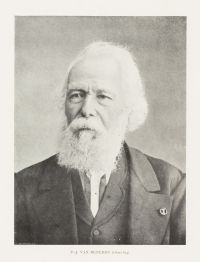 P. J. van Beneden,
Animal Parasites and Messmates
P. J. van Beneden,
Animal Parasites and Messmates
“ The Leptodera appendiculata inhabits the foot of the Arion empiricorum, in the larva state, and becomes sexual (male and female) in the decomposed body of the snail. The next generation has the sexes united, and lives in damp earth. The Leptodera pellio lives in the same way in the bodies of lumbrici; another Leptodera inhabits the intestine of the snail, and a third the salivary glands. The nematode so generally known under the name of Ascaris nigro-venosa also belongs to this genus. It lives in the lungs of the frog. ”
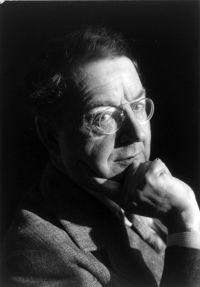 Francis Hackett,
The Invisible Censor
Francis Hackett,
The Invisible Censor
“ In Asphodelia the poets travel on all-fours, kick their heels toward Mercury, and utter startling cries. In Asphodelia a banker lives in the menagerie, and they feed mathematical instructors through a hole in the wall. This new participant had too much of the stern blood of the Puritan in his rustproof veins to kick more than one heel at a time, but when he observed a gamboling Asphodelian of seventy years he felt a little wishful, and permitted himself a trifling ululation. The local cheer-leader heard him and knew him at once for a Harvard Acutist, and there was joy in Asphodelia. ”
Jacob Green, A Monograph of the Trilobites of North America… (1832)
“ This fine, large caudal termination of an Asaph is in the cabinet of the Albany Institute—and it is a subject of great regret, that all that has yet been discovered relating to this highly interesting trilobite, is to be seen in this fragment.There are eighteen articulations of the tail and abdomen, which cannot be distinguished from each other. The middle lobe is composed of a series of straight, distinct, parallel articulations, very convex about the middle, so as to form a kind of longitudinal ridge down the back. ”
Jacob Green, A Monograph of the Trilobites of North America… (1832)
“ The middle lobe of the abdomen, is rarely more than one-fifth the width of the body. As the abdomen and tail of the Asaph are the only portions of the animal commonly found entire, the distinctive characters of the genus above given, may generally be ascertained. ”
Various, Encyclopaedia Britannica, 11th Edition…
“ In the primitive Malacostraca the gills were probably, as in the Phyllopoda and in Nebalia, the modified epipodites of the thoracic limbs, and this is the condition found in some Schizopoda. In the Cumacea and Tanaidacea only the first thoracic limb has a branchial epipodite. In the Amphipoda, the gills though arising from the inner side of the bases of the thoracic legs are probably also epipodial in nature. In the Isopoda the respiratory function has been taken over by the abdominal appendages, both rami or only the inner becoming thin or flattened. ”
