Bell (musical instrument)

Definition and stakes

Samuel B. Goslin,  First Steps to Bell Ringing

“ At all times when it may be desired to produce a good performer upon any musical instrument, it is well that he should understand the instrument itself; for just as the driver who understands his steam engine thoroughly in its parts and details, is the man who can work it best, so is it with the ringer with his bell in the steeple or tower. ”

Source: Gutenberg

Fritz August Gottfried Endell,  Old Tavern Signs: An Excursion in the History of Hospitality

“ George’s Day consisted of a beautiful golden bell richly adorned with the royal [Pg 249] escutcheon. But independent of this custom the bell has always been very popular in England. The great German musician Händel has even called it the national musical instrument, because nowhere else, perhaps, do the people delight so much in the chimes of their churches. We find it, therefore, everywhere on the tavern sign, sometimes in absurd combinations like “Bell and Candlestick” or “Bell and Lion” ”
Source: Gutenberg

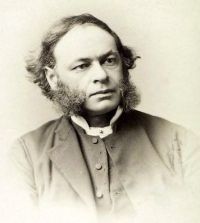
Portrait of John Evans John Evans,  The Ancient Bronze Implements, Weapons…

“ Another form of instrument intended for producing sound, if not indeed deserving to be classed as a musical instrument, is the bell, or rattle, formed of a hollow egg-shaped or pear-shaped piece of bronze, with a pebble or piece of metal inside by way of clapper.
The only examples which I am able to adduce are those which formed part of the Dowris hoard, one of which is represented in Fig. 446. [1401] There are three such in the Museum of the Royal Irish Academy, and four in the British Museum.
”
Source: Gutenberg

Get perspective with Kwize: daily news enlightened by great literature