Biological differentiation

Definition and stakes

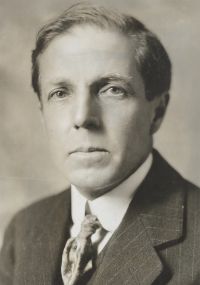
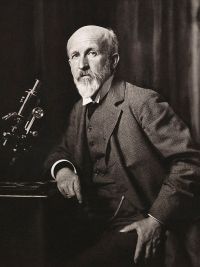
Portrait of Oscar Hertwig Oscar Hertwig,  The Biological Problem of To-day…

“ In fact, no one could even look at it as giving a partial solution of the problem, if differentiation is supposed to be due to that part alone of the germplasm becoming active which is required for the production of the cell or organ under consideration. But the higher we ascend in the organic world, the more limited does the power of producing the whole from separate cells become, and the more do the numerous and varied [Pg 103] differentiations of the soma claim our attention and require an explanation in the first instance. ”
Source: Gutenberg

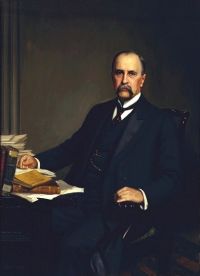
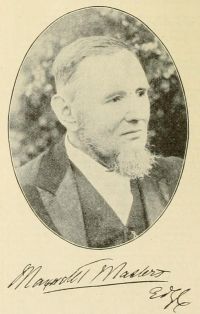
Various,  Popular Science Monthly (1887)

“ The neglect is due partly to the erroneous opinion that not the physiological function, but only its substratum the bodily organ, is capable of evolution. The organ, that much is certain, develops—that is, it passes through a series of transformations before assuming its final form. Any part of every organism will furnish the proof. But what determines the final form during phylogenetic evolution? I answer, Function. With its assertion begins the differentiation of the substratum of primitive beings. It is not the organ from which function derives its origin, but just the reverse. ”
Source: Wikisource

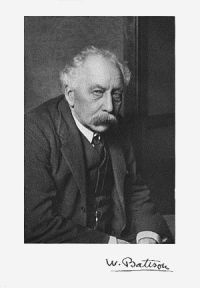
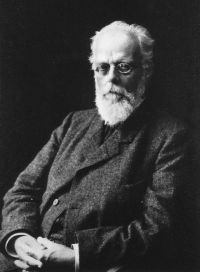
Portrait of August Weismann August Weismann,  The Evolution Theory, Vol. 1 of 2

“ These kinds of cells must be virtually implied in the germ-rudiment; they are themselves adaptations of the organism, and can therefore only be referred to personal selection. And this is true of all adaptations of the elements of multicellular organisms, and thus of the cells. Their adaptation according to the principle of division of labour, their differentiation into muscle, nerve, and gland cells can only be referred to natural selection in the Darwin-Wallace sense, and cannot depend upon histonal selection. ”
Source: Gutenberg

Get perspective with Kwize: daily news enlightened by great literature