Brace (sailing)

Definition and stakes

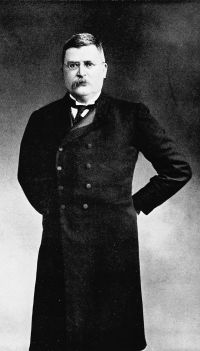
Portrait of E. Keble Chatterton E. Keble Chatterton,  Sailing ships (1909)

“ Spars and masts are made of steel, wire has taken the place of much of the rope that was used. Shrouds and stays are of wire, rigging screws are used instead of lanyards and of dead-eyes. All the brace-pendants except the lower ones are of wire, even to the royal and skysail braces, so that the greater part of the rigging of a ship is now done in harbour ashore by skilled mechanics. The result is that “marlin-spike seamanship” is fast disappearing and getting under way to join the spritsail, oak and hemp of other days. ”
Source: Gutenberg

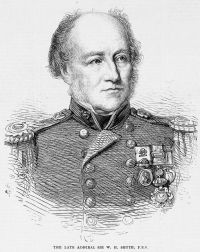
Portrait of W. H. Smyth W. H. Smyth,  The Sailor's Word-Book

“ Is bracing the head-yards one way, and the after-yards another. The counter-brace is the lee-brace of the fore-topsail-yard, but is only distinguished by this name at the time of the ship's going about (called tacking) , when the sail begins to shiver in the wind, this brace is hauled in to flatten the sail against the lee-side of the top-mast, and increase the effect of the wind in forcing her round. Counter-bracing becomes necessary to render the vessel stationary when sounding, lowering a boat, or speaking a stranger. It is now an obsolete term, and the manœuvre is called heaving-to. ”
Source: Gutenberg

Portrait of W. H. Smyth W. H. Smyth,  The Sailor's Word-Book

“ BRACE. The braces are ropes belonging to all the yards of a ship; two to each yard, rove through blocks that are stropped to the yards, or fastened to pendants, seized to the yard-arms. Their use is either to square or traverse the yards horizontally; hence, to brace the yard, is to bring it to either side by means of the braces. In ship-building, braces are plates of iron, copper, or mixed metal, which are used to bind efficiently a weakness in a vessel; as also to receive the pintles by which the rudder is hung. ”
Source: Gutenberg

Get perspective with Kwize: daily news enlightened by great literature