Bushbuck

Definition and stakes

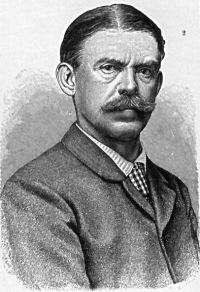
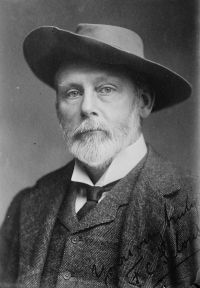
Portrait of Frederick Courteney Selous Frederick Courteney Selous,  African Nature Notes and Reminiscences

“ In all the different races of bushbucks, however, with which I am acquainted, the males are much darker in colour than the females, so that it is not so very surprising that in the case of the inyala and the Cape bushbuck the males should have been the first to lose their stripes and spots in a sombre environment. In the case of the Cape bushbuck the adult females have already lost all the stripes and most of the spots of the ancestral form. ”
Source: Gutenberg

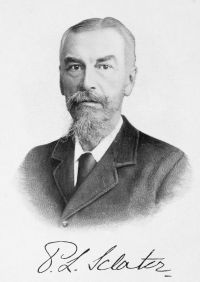
Portrait of Philip Lutley Sclater Philip Lutley Sclater,  The book of antelopes, vol. 4… (1899)

“ Nicolls and Eglington, in their ‘Sportsman in South Africa,’ inform us that at the present time the Bushbuck is still plentiful in all the maritime divisions of the Cape Colony and Natal, wherever there are any considerable belts of thick bush. It is not usual to find more than a pair of adults together, and the animals seldom emerge from the impenetrable bush except at night-time, when they come out into the open glades to feed. ”
Source: Gutenberg

Portrait of Philip Lutley Sclater Philip Lutley Sclater,  The book of antelopes, vol. 4… (1899)

“ When we proceed as far up the coast as the Limpopo the Cape Bushbuck, as we shall presently more fully explain, is replaced by Cumming’s Bushbuck (Tragelaphus roualeyni) . In this Bushbuck, as Mr. Selous informs us, the adult rams are of a brownish grey, often without a sign of any spots, and the adult females of a dark red with a few white spots. The young rams, however, are of a red colour and a good deal spotted, and have a few faint transverse stripes, while the young females are also more spotted than the old ones. ”
Source: Gutenberg

Get perspective with Kwize: daily news enlightened by great literature