Calcium oxide

Definition and stakes

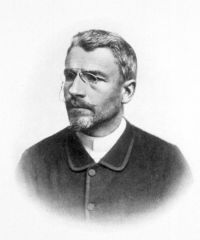
Dmitry Ivanovich Mendeleyev,  The Principles of Chemistry, Volume I

“ The members of one group combine with the members of the other group with particular ease. As representative of one group may be taken the oxides of the metals, magnesium, sodium, calcium, &c. Representatives of the other group are the oxides formed by the non-metals, sulphur, phosphorus, carbon. Thus, if we take the oxide of calcium, or lime, and bring it into contact with oxides of the second group, combination very readily ensues. For instance, if we mix calcium oxide with oxide of phosphorus they combine with great facility and with the evolution of much heat. ”
Source: Gutenberg

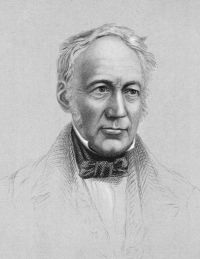
Various,  Appletons' Popular Science Monthly…

“ Thomas Willson, a Canadian electrician, tried to make the metal calcium in an electric furnace in his works at Spray, North Carolina, by heating a mixture of lime and coal dust. He thought that the lime (calcium oxide) would act on the coal (carbon) to form calcium and carbon monoxide. He did not succeed in [Pg 336] getting calcium, but found in the furnace a brown, crystalline mass, which was decomposed by pouring water on it, yielding an inflammable gas. ”
Source: Gutenberg

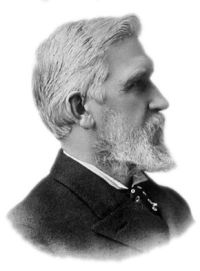
F. Dawidowsky,  Glue, Gelatine, Animal Charcoal…

“ The whole of the calcium hydrate will now have dissolved. Fifty cubic28 centimeters of the clear liquid should now be withdrawn by a pipette, transferred to a flask, colored with an indicator—either phenol-phthalein, methyl-orange, or litmus may be used—and its alkalinity determined by running in decinormal hydrochloric or sulphuric acid from a burette till the change of color occurs. Each cubic centimeter of the acid corresponds to 0.0028 gramme of calcium oxide, or 0.0037 gramme of the hydrate, Ca (OH) 2. The amount by calculation will give the percentage of real lime present in the sample. ”
Source: Gutenberg

Get perspective with Kwize: daily news enlightened by great literature