Catalysis

Definition and stakes

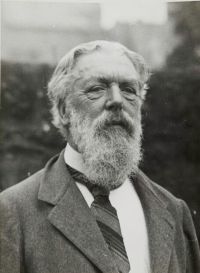
Portrait of Fielding Hudson Garrison Fielding Hudson Garrison,  Popular Science Monthly (1909)

“ In close connection with the theory of catalysis is the nature of chemical purity and the fact that chemical changes rarely proceed directly to their final product, but usually pass through a series of intermediate stages. For a long time chemists have noticed that absolutely dry or pure substances will not interact directly upon each other, but the cooperation of a third substance is necessary for chemical change. ”
Source: Wikisource

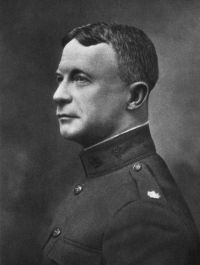
Portrait of Fielding Hudson Garrison Fielding Hudson Garrison,  Popular Science Monthly (1909)

“ This is catalysis, and Gibbs's definition of a catalytic agent—one capable of reducing a substance to a phase of dissipated energy without limitation as to their relative proportions—is characteristic of the mathematician. A chemical system at constant temperature has several states of equilibrium corresponding to different minima of its isothermal potentials, and on the solid diagrams of Gibbs these minima are valleys at the bottoms of sloping curves. ”
Source: Wikisource

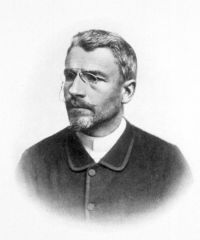
Robert Hunt,  The Poetry of Science; or, Studies of the Physical Phenomena of Nature

“ Physical research has proved to us that all bodies have peculiar powers, by which they condense with varying degrees of force gases and vapours upon their surfaces; every body in nature may, indeed, be regarded as forming its own peculiar atmosphere. To this power, in all probability, does catalysis belong. Different views have, however, prevailed on this subject, and Dr. Lyon Playfair [207] argues that the catalytic force is merely a modified form of chemical affinity, exerted under peculiar conditions. ”
Source: Gutenberg

Get perspective with Kwize: daily news enlightened by great literature