Ceramic tile

Definition and stakes

Jennie J. Young,  The Ceramic Art

“ Some beautiful heads of dogs, lions, and asses were marvellous examples of animal portraiture, and illustrated the capacity of tiling for the reception of that style of decoration. In them was seen the work of an artist who fully understood that, given the requisite mastery of color, a tile may be employed as a more lasting substitute for canvas. It is also worth noting that whenever tiles are used for covering a large surface, and each one is treated as a unit, the result is an artistic blunder. ”
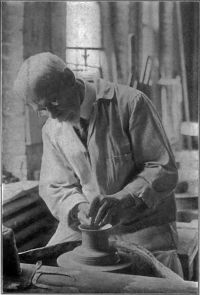
Source: Gutenberg

Jennie J. Young,  The Ceramic Art

“ The fourth style of decoration was upon the pate-sur-pate principle—a white paste being employed as a pigment upon the body of the tile, after which the piece was glazed. The introduction of tiling for pavements and walls was evidently in a great measure due to English intercourse with Spain and the East. Toward the close of the eleventh century, while England had not yet recovered from the first shock of the Norman invasion, Peter the Hermit was carrying from land to land the anti-Saracenic Gospel of the Sword, which led to the First Crusade. ”
Source: Gutenberg

Claude Fayette Bragdon,  Architecture and Democracy

“ Nearly the whole gamut of the spectrum is now available to the architect who wishes to employ ceramics. The colors do not change or fade, and possess a beautiful quality. Our craftsmen and manufacturers of face-brick, terra-cotta, and colored tile, after much costly experimentation, have succeeded in producing ceramics of a high order of excellence and intrinsic beauty; they can do practically anything demanded of them; but from that quarter where they should reap the greatest commercial advantage—the field of architecture—there is all too little demand. ”
Source: Gutenberg

Get perspective with Kwize: daily news enlightened by great literature