“ The Chariot Race. And so they stood, their cars in order as the umpires had decided by lot. Then, with sound of brazen trumpet, they started.All cheering their steeds at the same moment, they shook the reins, and at once the course was filled with the clash and din of rattling chariots, and the dust rose high. All were now commingled, each striving to pass the hubs of his neighbors' wheels. Hard and hot were the horses' breathings, and their backs and the chariot wheels were white with foam. ”
Chariot race
Definition and stakes
Quotes about “chariot race”
Arthur Anthony Macdonell,
A History of Sanskrit Literature
(1900)
“ Among the active and warlike Vedic Aryans the chariot-race was a favourite amusement, as is shown by the very metaphors which are borrowed from this form of sport. Though skilful driving was still a highly esteemed art in the epic period, the use of the chariot both for war and for racing gradually died out in Hindustan, partly perhaps owing to the enervating influence of the climate, and partly to the scarcity of horses, which had to be brought from the region of the Indus. The chief social recreation of men when they met together was gambling with dice. ”
Charles Bucke, Ruins of Ancient Cities (Vol. 2 of 2…
“ Of the Chariot-races.—This kind of race was the most renowned of all the exercises used in the games of the ancients, and that from whence most honour redounded to the victors. It is plain they were derived from the constant custom of princes, heroes and great men, of fighting in battle upon chariots. Homer has an infinity of examples of this kind. All those, who presented themselves in the Olympic games to dispute the prize in the chariot races, were persons considerable either for their riches, their birth, their employments, or great actions. ”
E. Norman Gardiner, Greek Athletic Sports and Festivals
“ Chariot-racing was, of course, merely a fashionable amusement, and except so far as it encouraged horse-breeding, of no service for war. Poorer states could not compete in it at all unless, like Argos, they entered public chariots or horses. [173] But the chariot-race was a great attraction to the spectators, and its growing popularity is evidenced by the introduction of two new races at Olympia and at Delphi. ”
Oscar Chrisman, The Historical Child
“ The greatest displays of all were the chariot races. Factions arose with their colors, at first but two with white and red, and then four with white, red, blue, green, and later gold and purple were added but soon dropped out, leaving the four factions and colors. Heavy bets were made by the factions and there were fierce contests and often fights between them. Sometimes two chariots raced, usually four, and again at times six, and there were two or four horses to each chariot, rarely three. The victor in the race was crowned and received a cash prize and his was greeted with great applause. ”
Ralph Albert Parlette, The University of Hard Knocks
“ Had Ben Hur never pulled on the oar, he never could have won the chariot race. Sooner or later you and I are to learn that Providence makes no mistakes in the bookkeeping. As we pull on the oar, so often lashed by grim necessity, every honest effort is laid up at compound interest in the bank account of strength. Sooner or later the time comes when we need every ounce. Sooner or later our chariot race is on—when we win the victory, strike the deciding blow, stand while those around us fall—and it is won with the forearms earned in the galleys of life by pulling on the oar. ”
Charles Rollin,
The Ancient History of the Egyptians…
“ It is obvious that these chariot-races could not be run without some danger; for as the motion146 of the wheels was very rapid, and it was requisite to graze against the boundary in turning, the least error in driving would have broken the chariot in pieces, and might have dangerously wounded the charioteer. An example of which we find in the Electra of Sophocles, who gives an admirable description of a chariot-race run by ten competitors. ”
Basil Tozer,
The Horse in History
“ It is said that on one occasion, when one of the best-known citizens, Exænetus, won the principal chariot race at Olympus, the entire population came forth to meet him, and that he was preceded into the city by 300 chariots drawn by pairs of white horses. ”
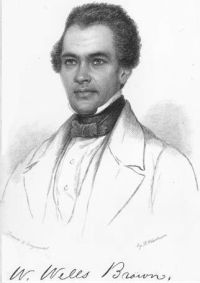
William Wells Brown,
The Rising Son; or, the Antecedents and Advancement of the Colored Race
“ Nations were distinguished from each other by the shape and color of their chariots.Great care was taken in the manufacturing of the chariots and also of the breeding of horses to draw them. Nothing in our time can equal the attention [Pg 41] paid by the ancients in the training of horses for the battle-field.The harness which these animals wore was richly decorated; and a quiver and bow-case, decorated with extraordinary taste and skill, were securely fixed to the side of each chariot. The bow was the national weapon, employed by both cavalry and infantry. ”
Hugo Blümner, The Home Life of the Ancient Greeks
“ Afterwards, when riding races came into fashion, they became extremely popular, although they never attained the great importance claimed by the chariot races in the Olympic games. In both contests it was the trainer of the horse who was regarded as victor, and though it sometimes happened that the owner or his son drove or rode himself, yet it was more commonly done by strangers, very often by professional charioteers{358} and riders hired for the purpose, like our jockeys of the present day. ”
Theodor Mommsen,
The History of Rome, Book I
“ That only two chariots—and likewise beyond doubt only two horsemen and two wrestlers—strove for the prize, may be inferred from the circumstance, that at all periods in the Roman chariot-races only as many chariots competed as there were so-called factions ”
W. R. Lethaby, Londinium, Architecture and the Crafts
“ There is evidence that gladiator contests and chariot races were popular. For gladiators, compare two small bone figures at the British Museum, evidently from one shop, with the fragment of a little statuette at the Guildhall. The bronze trident-head, also at the Guildhall, really does seem to be a gladiator’s weapon as suggested in the catalogue. For chariot races, see the fragments of glass bowls, which may have been made in London, in the British Museum. I have found an additional little point of evidence on chariot races. ”
J. G. Wood, Story of the Bible Animals
“ Chariots were far more valued in battle than horsemen, probably because their weight made their onset irresistible against infantry, who had no better weapons than bows and spears. The slingers themselves could make little impression on the chariots; and even if the driver, or the warrior who fought in the chariot, or his attendant, happened to be killed, the weighty machine, with its two Horses, still went on its destructive way.PHARAOH PURSUES THE ISRAELITES WITH CHARIOTS AND HORSES, AND THE SEA COVERS THEM.Of their use in battle we find very early mention. ”
The Children's Hour, Volume 3…
“ They leaped out of the bottomless hole, chariot and all; and there they were, tossing their black manes, flourishing their black tails, and curvetting with every one of their hoofs off the ground at once, close by the spot where Proserpina stood. In the chariot sat the figure of a man, richly dressed, with a crown on his head, all flaming with diamonds. ”
Edward Lucas White, Andivius Hedulio: Adventures of a Roman Nobleman in the Days of the Empire
“ He made sure that his axle was long, his wheels far apart, and their spokes short, so that his chariot- bed was as low as possible. He was right."But, after fighting from chariots was wholly a thing of the past in Italy and chariots were used, as they are used, for racing only, why cling to provisions for obsolete uses?"A good general thinks of winning victories, not, like the fools I have disgracing me along the Rhine, of avoiding defeats. So a good charioteer ought to think, not of avoiding upsets, but of winning races. ”
H. Rider Haggard,
The World's Desire
“ So the charioteer, praying to his Gods, lashed the horses with his scourge, and they sprang forward madly among the foe. And as they rushed, the great bow rang and sang the swallow string—rung the bow and sung the string, and the lean shaft drank the blood of a leader of men. Again the string sang, again the shaft sped forth, and a barbarian king fell from his chariot as a diver plunges into the sea, and his teeth bit the sand. “Dive deep, thou sea-thief!” cried the Wanderer, “thou mayest find treasures there! Drive on, thou charioteer, so should lions die while jackals watch.” ”
Denis Florence MacCarthy, Poems
“ When in the fulness of its light at length Shone forth the day, he bade his charioteer Harness his horses and his chariot yoke. "Harness my horses, good, my servant," said Cuchullin, "and my chariot yoke for me, For lo! an early-rising champion comes To meet us here beside the Ford to-day-- Ferdiah, son of Daman, Daré's son." "My lord, the steeds are ready to thy hand; Thy chariot stands here yoked, do thou step in; The noble car will not disgrace its lord." Into the chariot, then, the dextrous, bold, Red-sworded, battle-winning hero sprang Cuchullin, son of Sualtam, at a bound. ”
Sir Arthur Evans, Anthropology and the Classics
“ The chariot was extremely light; a man could lift a chariot and carry it away (Iliad x. 505) . Probably the chariot came into use for war, as Mr. Ridgeway supposes, in an age when a pony was unequal to the weight of a man in armour; the Highlanders, with their Celtic ponies, used chariots in Roman times; never did they acquire a breed of horses fit for chargers, hence they lost the battle of Harlaw. To judge by Homer’s description of horses, the chariot survived the cause of its origin; steeds were tall and strong enough for cavalry purposes, but human conservatism retained the chariot. ”
A. I. Douglas, The Shetland Pony
“ This tribe (the Sigynnæ) , Herodotus says, “had horses with shaggy hair, five fingers long, all over their bodies, and which were small and flat-nosed, and incapable of carrying men, [F19] but when yoked under a chariot were very swift, in consequence of which the natives drove in chariots.” ”
“ Some are run by beautiful girls, who come out mounted on elegant gray horses that are mottled like leopards, each of the riders having a scarf over her shoulders of a different color from the rest, so that they may be all readily distinguished from each other in the race. Then there are races of chariots, three running at a time, round and round the area; and of small ponies, with monkeys on them for riders. ”
Sacred Books of the East (1900)
“ Come hither, Maruts, on your chariots charged with lightning, resounding with beautiful songs, stored with spears, and winged with horses! Fly to us like birds, with your best food, you mighty ones! They come gloriously on their red, or, it may be, on their tawny horses which hasten their chariots. He who holds the axe is brilliant like gold;—with the tire of the chariot they have struck the earth. On your bodies there are daggers for beauty; may they stir up our minds as they stir up the forests. ”
Visvanatha Kanakasabhai Pillai,
The Tamils Eighteen Hundred Years Ago
(1979)
“ He will feast thee all the days of thy stay, and when thou departest he will tie golden lotus flowers on the knot of hair on thy head, and to thy wife he will present necklaces of gold and pearl. He will give thee a chariot whose top is made of ivory, drawn by four milk-white steeds with flowing manes coloured red; and many elephants and well watered villages he will give thee. ”
Edward Lucas White, Andivius Hedulio: Adventures of a Roman Nobleman in the Days of the Empire
“ The jockeys, athletes, acrobats and mimes about him made way for Tanno and me and some other gentlemen."I have always had very definite theories of chariot construction," Commodus went on. "I hold that the popular makes are all bad; in fact I am positively of the opinion that the tendencies in chariot building have been all in the wrong direction for centuries. They have followed and intensified the traditions from ancient days, when chariots were chiefly used for battle and only once in a while for racing. ”
Charlotte M. Yonge,
Chantry House
“ To add to our newly-acquired sense of consideration and of high pedigree, the family chariot, after taking Miss Selby to Bath, came up post to London to be touched up at the coachbuilder’s, have the escutcheon altered so as to impale the Griffith coat instead of the Selby, and finally to convey us to our new abode, in preparation for which all its boxes came to be packed.A chariot! You young ones have as little notion of one as of a British war-chariot armed with scythes. Yet people of a certain grade were as sure to keep their chariot as their silver tea-pot ”
Max Duncker, The History of Antiquity, Vol. 3…
“ The mass of chariots formed a special portion of the Assyrian army. Beside the two pole-horses, which are yoked, they are, as a rule, provided with a third or subsidiary horse; on the chariot, as a rule, are three men, a charioteer, and an archer, besides a shield-bearer, provided with coats of mail which leave only the arms free, and scale-armour for the legs. Occasionally the charioteer, as well as the archer, has a shield-bearer behind him. Cavalry was not wanting in the armies of Assyria any more than in the armies of the Pharaohs. ”
Myrtle Reed,
Lavender and Old Lace
“ The driver of that ancient chariot was an awkward young fellow, possibly twenty-five years of age, with sharp knees, large, red hands, high cheek-bones, and abundant hair of a shade verging upon orange. ”
| editor, Sacred Books of the East (1879)
“ A thousand chariots was the regular force which a great state could at the utmost bring into the field. Each chariot contained three mailed men;—the charioteer in the middle, a spearman on the right, and an archer on the left. Two spears rose aloft with vermilion tassels, and there were two bows, bound with green bands to frames in their cases. Attached to every chariot were seventy-two foot-soldiers and twenty-five followers, making with the three men in it, 100 in all; so that the whole force would amount to 100,000 men. ”
Wilhelm Max Wundt,
Elements of Folk Psychology
“ The horse seems to make its first appearance in history along with the Indo-Germanic tribes, who were probably indebted for it to the Turanian peoples of the Asiatic steppes. As a result of its superior speed, it then superseded its rivals in all the civilized countries of the ancient world. The Assyrian king went forth to the chase and the Homeric hero proceeded to battle in a chariot drawn by steeds. It was only later that the Greeks used the horse for saddle purposes, and not merely to draw the chariot. When this took place, equestrian combat came into favour among the aristocracy. ”
T. G. Tucker,
Life in the Roman World of Nero and St…
“ The struggle is in reality not between chariot and chariot, but between what we should call stable and stable. There are four parties—the white, red, green, and blue—whose drivers will wear the respective colours, in which also the chariots were probably painted. ”
T. G. Tucker,
Life in the Roman World of Nero and St…
“ The chariot is a low and shallow vehicle of wood covered with ornament and as light as it can well be made, and it requires no little skill for the charioteer to maintain his footing while controlling his team. Down the straight they rush, each endeavouring to gain an advantage at the turn, where the left rein is pulled, and the left horse—the pick of the team—is brought as closely round the end of the wall as skill and prudence can contrive. ”
1911 Encyclopædia Britannica, Volume 5… (1911)
“ In the remains of Egyptian and Assyrian art there are numerous representations of chariots, from which it may be seen with what richness they were sometimes ornamented. The “iron” chariots in use among the Jews appear to have been chariots strengthened or plated with metal, and no doubt were of the form above described, which prevailed generally among the other ancient nations. ”
A. H. Smith, A Catalogue of Sculpture in the Department of Greek and Roman Antiquities…
“ Part of a charioteer, between the waist and the knees; he stands in a chariot, of which the antyx is visible. The left forearm crosses the body as if holding the reins. This fragment, which is not noticed by Michaelis, must belong to the north frieze. Robert (Arch. Zeit., 1875, p. 100, n) proposed to assign it to slab No. xiii. of the north frieze. This seems the most probable position, though the fragment does not agree very well with Carrey's drawing. Height, 1 foot. 12. Fragment of chariot group; an apobates standing in a quadriga, leaning forward. ”