“ The crowning architectural feature of my mansion was the corner fireplace, raised of the native granite bowlders. With what care I selected the stones!—choosing those most richly encrusted with green lichens, fitting each into its place, discarding many, ranging afar for others to take their place. Chimney building is a job for an artisan, and even then much of a gamble. Imagine my delight, then, when, the last stone in place, I built a fire on my hearth, and it roared like a furnace, and all the smoke went up, and out, the chimney! ”
Chimney corner
Definition and stakes
Quotes about “chimney corner”
Benjamin Franklin,
The Complete Works in Philosophy…
“ Chimneys, otherwise drawing well, are sometimes made to smoke by the improper and inconvenient situation of a door. When the door and chimney are on the same side of the room as in the figure, if the door A, being in the corner, is made to open against the wall (Plate, Figure 4) which is common, as being there, when open, more out of the way, it follows, that when the door is only opened in part, a current of air rushing in passes along the wall into and across the opening of the chimney B, and flirts some of the smoke out into the room. ”

Charles Dickens,
Pictures from Italy
“ Shop-fronts were taken down, and the windows filled with company, like boxes at a shining theatre; doors were carried off their hinges, and long tapestried groves, hung with garlands of flowers and evergreens, displayed within; builders’ scaffoldings were gorgeous temples, radiant in silver, gold, and crimson; and in every nook and corner, from the pavement to the chimney-tops, where women’s eyes could glisten, there they danced, and laughed, and sparkled, like the light in water. ”
Harriet Beecher Stowe,
The Chimney-Corner
“ It is a splendid edifice, half built, deformed by rude scaffolding, noisy with the clink of trowels, blinding the eyes with the dust of lime, and endangering our heads with falling brick. We make our way over heaps of shavings and lumber to view the stately apartments,—we endanger our necks in climbing ladders standing in the place of future staircases ”
Charles Perrault,
The Tales of Mother Goose
“ When she had done her work, she used to go into the chimney corner, and sit down among the cinders, hence she was called Cinderwench. ”
Alexander Irvine, My Lady of the Chimney Corner
“ Boyle an' th' wains are as hungry as we are," Anna remarked. [Pg 138] "Wi' a bogful o' turf at th' doore?""Th' can't eat turf, Jamie!""Th' can warm their shins, that's more'n we can do, in a minute or two."The rapidly diminishing coals were arranged once more. They were a mere handful now and the house was cold.There were two big holes in the chimney where Jamie kept old pipes, pipe cleaners, bits of rags and scraps of tobacco. He liked to hide a scrap or two there and in times of scarcity make himself believe he found them. His last puff of smoke had gone up the chimney hours ago. ”
Charles S. Brooks, Chimney-Pot Papers
“ Our host lives in a triangular stone-paved courtyard tucked off from the thoroughfare but with the rattle of the elevated railway close at hand. The building is of decent brick, three stories in height, and it exhibits to the courtyard a row of identical doorsteps. The entrance to the courtyard is a swinging shutter between buildings facing on the street, and it might seem a mystery—like the apple in the dumpling—how the building inside squeezed through so narrow an entrance. Yet here it is, with a rubber plant in one corner and a trellis for imaginary vines in the other. ”
Charles S. Brooks, Chimney-Pot Papers
“ In the basement, also, there was a central hall that disappeared forever under an accumulation of porch chairs and lumber. Here was no light except what came around two turns from the laundry. Even Annie the cook, a bold venturesome person, had never quite penetrated to a full discovery of this hallway. A proper approach into the darkness was on hands and knees, and yet there were barrels and boxes to overcome. Therefore, as we were bred to these broader discoveries, a mere chimney in the sitting-room, which arose safely from the fenders, was but a mild and pleasant tunnel to the roof. ”
John Ruskin,
The Poetry of Architecture
(1873)
“ A few projecting stones continue the line of the roof across the centre of the chimney, and two large masses support the projection of the whole, and unite it agreeably with the wall. This is exclusively a cottage chimney; it cannot, and must not, be built of civilized materials; it must be rough, and mossy, and broken; but it is decidedly the best chimney of the whole set. It is simple and substantial, without being cumbrous; it gives great variety to the wall from which it projects, terminates the roof agreeably, and dismisses its smoke with infinite propriety. ”
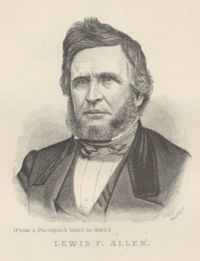
Lewis Falley Allen,
Rural Architecture
“ Nothing adds more to the outward expression of a dwelling, than the style of its chimneys. We have just shown that independent chimney tops pass off their smoke more perfectly, than when only partitioned inside to the common point of outlet. Aside from the architectural beauty which a group of chimney flues adds to the building, we have seen that they are really useful, beyond the formal, square-sided piles so common throughout the country. ”
Various, Chambers's Edinburgh Journal, No…
“ A top window-sash, lowered a little, instead of serving, as many people believe it does, like such an opening into the chimney flue, becomes generally, in obedience to the chimney draught, merely an inlet of cold air, which first falls as a cascade to the floor, and then glides towards the chimney, and gradually passes away by this, leaving the hotter impure air of the room nearly untouched. ”
Ara Marcus Daniels, Chimneys & Fireplaces
“ The door should be placed just below the smoke pipe opening, and care must be taken to see that it fits snugly and is always closed so tight that no air can get in.SUPPORTING THE CHIMNEY.All chimneys should be built from the ground up. None of the weight should be carried by any part of the building except the foundation. Proper foundations should be provided at least 12 inches wider all round than the chimney. If the chimney is an exterior one, and there is no basement or cellar, its foundation should be started well below the frost line. ”
Mary Hartwell Catherwood,
Old Caravan Days
“ The chimneys were built in two huge stacks at the gable-ends of the house, outside the weather boarding: a plan the architects of this day utterly condemn. The outside chimney was, however, as far beyond the stick-and-clay stacks of the cabin, as our fire-stone flues are now beyond it. ”
Louis H. Gibson, Convenient Houses, With Fifty Plans for the Housekeeper
“ If it does not, the shrinkage of the wood-work, which in a two-story frame house will sometimes amount to two inches in the height of the building, makes a high place around the flues, where the frame comes in contact with or rests on the chimney. All chimney-stacks should extend above highest point of ridge of roof, and the extreme tops should be laid in Portland cement. All the exposed brick of the chimney should be hard-burned. ”
William Wordsworth,
The Prose Works of William Wordsworth
“ Nor will the singular beauty of the chimneys escape the eye of the attentive traveller. Sometimes a low chimney, almost upon a level with the roof, is overlaid with a slate, supported upon four slender pillars, to prevent the wind from driving the smoke down the chimney. Others are of a quadrangular shape, rising one or two feet above the roof; which low square is often surmounted by a tall cylinder, giving to the cottage chimney the most beautiful shape in which it is ever seen. ”
J. E. Panton, Suburban Residences, and How to Circumvent Them
“ Thus too are tested the young and untried chimneys, which, should they smoke, are to be examined by a practical man before anything else can be done. They may smoke through faulty construction. In this case new grates must be had from Haines & Co., 83 Queen Victoria Street, who have a grate that can easily deal with this desperate strait. Or they may require tall chimney-pots, or a mere ‘blower,’ which is best when made of a clear thick sheet of glass. ”
William Howitt,
The Student-Life of Germany
“ Furthermore, in England the chimneys are not merely the channels of smoke, but the especial windpipes of the chambers, and afford at the same time such an excellent way to come down into any room of the house, at once and unheard, that I have often been told that he who had once gone up and down a chimney would prefer it to a staircase. ”
Various, Blackwood's Edinburgh Magazine…
“ An immense arched chimney projects far into the last-named apartment, and under it is a stone hearth, slightly raised above the tiled floor. Around, and upon this tiled hearth, during the long winter evenings, the peasant and his family establish themselves; the room is lighted by a glimmering oil-lamp, and, more effectually, by the bright wood-fire, which crackles and sparkles as the rain-drops or snow-flakes occasionally fall through the aperture of the chimney. The men smoke and talk, and repose themselves after the fatigues of the day ”
J. Alfred Gotch, Early Renaissance Architecture in England
“ In later centuries chimneys appear to have become a source of considerable annoyance to architectural designers, and a great deal of misapplied ingenuity was expended in trying to conceal their existence, owing to the idea that they interfered with the purity of classic façades. But in the early days of the introduction of classic features, the problem of making chimneys harmonize with the rest of the building seems to have been a source of delight instead of annoyance. 113.—Rushton Hall, Northamptonshire. Gable on East Front (1627) . 114.—Chimney at Droitwich, Worcestershire. ”
Cottages; or, Hints on Economical Building (1884)
“ The plans in Plates VI, X and XVII, show how one stack can serve three rooms on the same floor with fire-places, and in the case of the double houses all the designs show that this method of saving expense has been adopted. Chimneys must be carefully built of good, hard brick, laid in cement mortar, the flues straight and smooth and of uniform size. To allow of better arrangement in the upper floors, the flues may be safely drawn on one side to at least 30° from the perpendicular. There must always be at least 8 inches of brick work when the chimney-stack comes in contact with any wood-work. ”
John Ruskin,
The Poetry of Architecture
(1873)
“ The form of Fig. 19 only assimilates it more closely with the roof on which it stands. But we must not imitate chimneys of this kind, for their excellence consists only in their agreement with other details, separated from which they would be objectionable; we can only follow the principle of the design, which appears, from all that we have advanced, to be this: we require, in a good chimney, the character of the building to which it belongs divested of all its elevation, and its prevailing lines deprived of all their ornament'. ”
T. A. H. Miller, Fireplaces and Chimneys
“ Many of the chimneys built today are unsightly and frequently detract from an otherwise well-designed house. Within the last 100 years the size and attractiveness of chimneys ordinarily built has declined. The large old chimneys of colonial days were proportioned to suit the house and surroundings and at the same time provide for two or more large fireplaces. With reduction in the size of fireplaces and the substitution of several stoves and eventually one central heating plant, the chimney has developed into a merely utilitarian shaft. ”
Marcus B. Huish, Happy England
“ Unlike chimneys erected by our cottage builders of to-day, which appear to issue out of a single mould, those of the untutored architects of the past present every variety of treatment and appearance.The old solidly built chimney seen in many of Mrs. Allingham’s cottages (Chiddingfold, Plate 44) is worthy of note as a type of many sturdy fellows which have resisted the ravages of time, and have stood for centuries almost without need of repair. In old days the chimney was regarded not only as a special feature but as an ornament, and not as a necessary but ugly excrescence. ”
Various, Robert Merry's museum, Volumes III-IV… (1842)
“ The chimneys proceed from the fireplace to the top of the house, and come out through the roof, above which they are carried up several feet; on their top is often an earthen pot, called a chimney-pot. The use of a chimney is to carry off the smoke. Chimneys have not been thought of above a thousand years ”
Herman Melville,
I and My Chimney
(1856)
“ To take out the backbone of anything, wife, is a hazardous affair. Spines out of backs, and chimneys out of houses, are not to be taken like frosted lead pipes from the ground. Besides," added I, "the chimney is the one grand permanence of this abode. If undisturbed by innovators, then in future ages, when all the house shall have crumbled from it, this chimney will still survive--a Bunker Hill monument. ”
J. Alfred Gotch, The Growth of the English House (1909)
“ The angles of the building generally have quoins, the roof is hipped every way, and at the eaves there is a projecting cornice of varying degrees of richness. The chimneys are gathered together in large solid stacks; the roof surface is broken by dormers. The whole effect is simple and quiet. The large spaces of plain walling, the large area of the window openings, the large chimney-stacks are all in complete contrast to the lively windows, steep gables, and detached chimney-shafts of Elizabethan and Jacobean houses. ”
Louis H. Gibson, Convenient Houses, With Fifty Plans for the Housekeeper
“ It is known that wood-work should not come directly in contact with chimneys. The framework should never rest on a chimney. There are reasons for this other than those which have a regard for safety from fire, one of which is that the chimney is not liable to settle. ”
Herman Melville,
I and My Chimney
“ The frame of the old house is of wood—which but the more sets forth the solidity of the chimney, which is of brick. And as the great wrought nails, binding the clapboards, are unknown in these degenerate days, so are the huge bricks in the chimney walls. The architect of the chimney must have had the pyramid of Cheops before him ”
Memorials of old Derbyshire (1907)
“ As you enter, your back is turned to the great fireplace which once warmed all the house, and which was kept burning day and night. When you get inside the house-place the great vault of the chimney, more than eleven feet wide, is before you, spanned by a depressed arch. People in the neighbourhood speak of the chimney of Offerton Hall as “a lantern chimney.” ”
Herman Melville,
I and My Chimney
(1856)
“ The architect of the chimney must have had the pyramid of Cheops before him; for, after that famous structure, it seems modeled, only its rate of decrease towards the summit is considerably less, and it is truncated. From the exact middle of the mansion it soars from the cellar, right up through each successive floor, till, four feet square, it breaks water from the ridge-pole of the roof, like an anvil-headed whale, through the crest of a billow. ”
Renee Richmond Huntley Ormsbee, If You're Going to Live in the Country
“ Unlined chimneys are not prohibited but the best arrangement is one in which all flues are lined with fire clay tile, joints well set in mortar, and each flue separated by a partition of brick. Only sound, uncracked tile should be put in place.Fireplace walls must be of ample proportions to support the chimney and at least eight inches thick. It is further suggested that they be lined with fire brick.The woodwork around fireplaces must not be closer than four inches to the back wall of a chimney and [Pg 129] floor beams must be two inches away from a chimney wall. ”
Various, Chambers's Journal of Popular Literature…
“ A piece of land had just been laid out{514} in the building of mansions of a superior class—not one of them valued at less than seven or eight thousand pounds—when lo and behold the purchasers of the newly erected edifices find to their consternation that the tall chimney of an unexpected factory has begun to belch volumes of black smoke into their back-windows all day long! The chimney—that of a perfectly respectable flour-mill, we believe—is unexceptionable as regards chimney architecture. ”
William Hewitt, An Essay on the Encroachments of the German Ocean Along the Norfolk Coast
“ The chimney is very modern, as the builders of the middle ages gave the preference to warming their halls by a central hearth, leaving the smoke to blacken the roof and escape as it best might by an open lantern. ”