Clog (footwear)

Definition and stakes

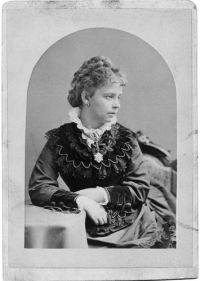
Portrait of Alice Morse Earle Alice Morse Earle,  Two Centuries of Costume in America…

“ For a time clogs seem to have been in constant use in America; frail morocco slippers and thin prunella and callimanco shoes made them necessary, as did also the unpaved streets. Heavy-soled shoes were unknown for women’s wear. Women walked but short distances. In the country they always rode. We find even Quaker women warned in 1720 not to wear “Shoes of light Colours bound with Differing Colours, and heels White or Red, with White bands, and fine Coloured Clogs and Strings, and Scarlet and Purple Stockings and Petticoats made Short to expose them”—a rather startling description of footwear. ”
Source: Gutenberg

Joseph Sparkes Hall,  The Book of the Feet: A History of Boots and Shoes

“ Shortly after the elastic boot was brought out, I made a little improvement in shoes, which are now made wholly or partially elastic. They are well suited for ladies whose feet swell, or whose insteps rise very suddenly, as they accommodate themselves to those changes. Morocco, prunella, and leather shoes, may all be made comfortable by attending to the instructions contained in the previous chapter on the proper forms of lasts.
The elastic clog is another improvement on the old mode of fastening with straps, buckles, and buttons
”
Source: Gutenberg

Henry Jones, Oswald Barron, Stanley Cook, Thomas Joyce and W. Alison Phillips,  1911 Encyclopædia Britannica (1911)

“ There are long gowns and toga-like cloaks, but these as a rule seem garments for the old man of rank. In the open air the cloak is often pulled over the head, for hats and caps are rare, the Phrygian bonnet being the commonest form. Girdles of folded cloth gather the loose tunic at the waist. Most paintings show the ankle shoe as black, cut with a pointed tab before and behind, the soles being sometimes of wood like the sole of the Lancashire clog of our own days. ”
Source: Wikisource

Get perspective with Kwize: daily news enlightened by great literature