 Alexander Pope,
An Essay on Man
(1734)
Alexander Pope,
An Essay on Man
(1734)
“ and nothing is more certain, than that much of the force as well as grace of arguments or instructions depends on their conciseness. ”
Alexander Pope,
An Essay on Man
(1734)
“ and nothing is more certain, than that much of the force as well as grace of arguments or instructions depends on their conciseness. ”
 Samuel Johnson,
The Works of Samuel Johnson, LL.D. in Eleven Volumes…
Samuel Johnson,
The Works of Samuel Johnson, LL.D. in Eleven Volumes…
“ In all pointed sentences, some degree of accuracy must be sacrificed to conciseness; ”
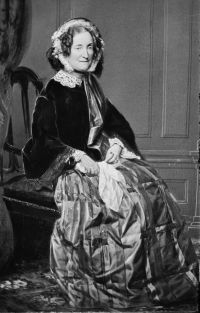 Lydia Sigourney,
Moral Pieces in Prose and Verse
(1815)
Lydia Sigourney,
Moral Pieces in Prose and Verse
(1815)
“ It is in the writings of these illustrious characters that we find originality of thought, justice of sentiment, and force of reasoning, occasionally elevating our conceptions, convincing our judgments, and softening our feelings. Many more examples might be adduced of those who prefer the exercise of composition to that of conversation, and who, in silently meditating upon some rational subject, and in recording the spontaneous flow of ideas and reflections, have felt a silent satisfaction, and an enlargement of mind, never found among the restraints, or the gaieties of society. ”
 Herbert Spencer,
First Principles
Herbert Spencer,
First Principles
“ For how can consciousness be wholly resolved into impressions and ideas, when an impression of necessity implies something impressed? Or again, how can the sceptic who has decomposed his consciousness into impressions and ideas, explain the fact that he considers them as his impressions and ideas? Or once more, if, as he must, he admits that he has an impression of his personal existence, what warrant can he show for rejecting this impression as unreal while he accepts all his other impressions as real? ”
Henry Felton, A Dissertation on Reading the Classics and Forming a Just Style (1713)
“ For while we study to be concise, we can hardly avoid being obscure. We crowd our Thoughts into too small a Compass, and are so sparing of our Words, that we will not afford enow to express our Meaning. ”
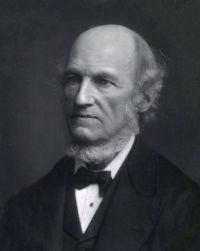 William Benjamin Carpenter,
Popular Science Monthly
(1873)
William Benjamin Carpenter,
Popular Science Monthly
(1873)
“ But, on the other hand, there are certain things we feel to be too strange and absurd to be believed; and that feeling we come to especially, when we have endeavored to cultivate our Common-Sense in the manner which I described to you in my last lecture. The higher our common-sense—that is, the general resultant of the whole character and discipline of our minds—the more valuable is the direct judgment that we form by the use of it. ”
 Samuel Taylor Coleridge,
Specimens of the Table Talk of Samuel Taylor Coleridge
Samuel Taylor Coleridge,
Specimens of the Table Talk of Samuel Taylor Coleridge
“ In tranquil moods and peaceable times we are quite practical; facts only, and cool common sense, are then in fashion. But let the winds of passion swell, and straightway men begin to generalize, to connect by remotest analogies, to express the most universal positions of reason in the most glowing figures of fancy; in short, to feel particular truths and mere facts as poor, cold, narrow, and incommensurate with their feelings."—Statesman's Manual, p. ”
William James, The Principles of Psychology, Volume 1…
“ It seems reasonable to me—upon the hypothesis that it is a person using another's mind or brain—that there must be more or less of that other's style or tone incorporated in the message, and that to the unseen personality, i.e., the power which impresses, the thought, the fact, or the philosophy, and not the style or tone, belongs. ”
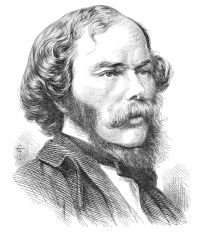 George Henry Lewes,
The Principles of Success in Literature
George Henry Lewes,
The Principles of Success in Literature
“ Yet in spite of Sincerity and Prudence, how shamelessly men compile second-hand references, and display in borrowed footnotes a pretence of labour and of accuracy! I mention this merely to show how, even in the humbler class of compilers, the Principle of Sincerity may find fit illustrations, and how honest work, even in references, belongs to the same category as honest work in philosophy or poetry. EDITOR.CHAPTER V. THE PRINCIPLE OF BEAUTY. It is not enough that a man has clearness of Vision, and reliance on Sincerity, he must also have the art of Expression, or he will remain obscure. ”
P. Coffey, Ontology, or the Theory of Being
“ The true meaning of the thesis is, not that every being is good in all respects, or possesses such goodness as would justify us in describing it as “good” in the ordinary sense, but that every being possesses some goodness: every being in so far as it has actuality has formal, intrinsic goodness, or is, in other words, the term or object of natural tendency or desire. ”
 George Edward Moore,
Principia Ethica — Chapter I
(1903)
George Edward Moore,
Principia Ethica — Chapter I
(1903)
“ Every one does in fact understand the question ‘Is this good?’ When he thinks of it, his state of mind is different from what it would be, were he asked ‘Is this pleasant, or desired, or approved?’ It has a distinct meaning for him, even though he may not recognise in what respect it is distinct. ”
 Victor Cousin,
Lectures on the true, the beautiful and the good
Victor Cousin,
Lectures on the true, the beautiful and the good
“ A third doctrine, finding sensation insufficient, and also discontented with reason, which it confounds with reasoning, thinks to approach common sense by making science, art, and ethics rest on sentiment. It would have us confide ourselves to the instinct of the heart, to that instinct, nobler than sensation, and more subtle than reasoning. ”
William Dawson Le Sueur, Popular Science Monthly (1882)
“ When we are struck by the generosity or baseness of an action, or feel the influence of character, or experience the pleasure of harmonious or the pain of discordant relations, our consciousness is in no way concerned with matter. ”
Frank Frankfort Moore, A Gray Eye or So. In Three Volumes…
“ For bad taste, for indelicacy, for vulgarity, for disregard of sound argument—that is, argument that sounds well—and for general obstinacy, there is nothing to compare with a conscience that remains in moderately good working order. ”
 Mary Wollstonecraft,
Maria; Or, The Wrongs of Woman
Mary Wollstonecraft,
Maria; Or, The Wrongs of Woman
“ True sensibility, the sensibility which is the auxiliary of virtue, and the soul of genius, is in society so occupied with the feelings of others, as scarcely to regard its own sensations. With what reverence have I looked up at my uncle, the dear parent of my mind! ”
Victor Cousin,
Lectures on the true, the beautiful and the good
“ Nevertheless, if sentiment is not a principle, it is a true and important fact, and, after having distinguished it well from reason, we ourselves proceed to elevate it far above sensation, and elucidate the important part it plays in the perception of beauty. ”
Victor Cousin,
Lectures on the true, the beautiful and the good
“ We have distinguished that particular sensibility, which is stirred in us in the train of reason itself, from physical sensibility, which needs an impression made upon the organs in order to enter into exercise.All our moral judgments are accompanied by sentiments that respond to them. The sight of an action which we judge to be good gives us pleasure,—the consciousness of having performed an obligatory act, and of having performed it freely, is also a pleasure; the judgment of merit and demerit makes our hearts beat by taking the form of sympathy and benevolence. ”
Samuel Taylor Coleridge,
The Literary Remains of Samuel Taylor Coleridge…
“ But in the popular acceptation, common sense in an uncommon degree is what the world calls wisdom. ”
 F. H. Bradley,
Ethical Studies — Essay VII.
(1876)
F. H. Bradley,
Ethical Studies — Essay VII.
(1876)
“ The reasoning we have developed rests, in a word, on the confusion between a pleasant thought and the thought of a pleasure; between an idea of an objective act or event, contemplation of which is pleasant, and of which I desire the realization, and the idea of myself as the subject of a feeling of satisfaction which is to be. ”
 Fredrika Bremer,
The Homes of the New World
(1853)
Fredrika Bremer,
The Homes of the New World
(1853)
“ Let the wind blow how it may, there is but one thing to attend to, one thing to ask about, namely, whether he steer according to the compass, which, in this case, is the conscience or conscientious conviction. ”
 Joseph Conrad,
A Personal Record — Preface
(1912)
Joseph Conrad,
A Personal Record — Preface
(1912)
“ The manner in laughter, in tears, in irony, in indignations and enthusiasms, in judgments--and even in love. The manner in which, as in the features and character of a human face, the inner truth is foreshadowed for those who know how to look at their kind. ”
Joseph Conrad,
Lord Jim — Chapter 21
(1900)
“ Say what you like, to get its joy, to breathe its peace, to face its truth, one must return with a clear conscience. All this may seem to you sheer sentimentalism; and indeed very few of us have the will or the capacity to look consciously under the surface of familiar emotions. ”
Victor Cousin,
Lectures on the true, the beautiful and the good
“ As we have said, they excel in composition, especially in expression. They always have a thought, and a moral and elevated thought. For this reason they are dear to us, their cause interests us, is in some sort our own cause, and so this homage rendered to their misunderstood glory naturally crowns these lectures devoted to true beauty, that is to say, moral beauty. ”
F. H. Bradley,
Appearance and Reality — Chapter XX
(1893)
“ It leads us to ask if two perfections, great and small, can possibly exist side by side. And we must answer in the negative. If we take perfection in its full sense, we cannot suppose two such perfect existences. ”
 Johann Wolfgang von Goethe,
Maxims and Reflections
Johann Wolfgang von Goethe,
Maxims and Reflections
“ How can the character, the peculiar nature of a man, be compatible with good manners?257It is through his good manners that a man's peculiar nature should be made all the more conspicuous. Every one likes distinction, but it should not be disagreeable. ”
 Percy Bysshe Shelley,
A Defence of Poetry and Other Essays
Percy Bysshe Shelley,
A Defence of Poetry and Other Essays
“ We look on all that in ourselves with which we can discover a resemblance in others; and consider those resemblances as the materials of moral knowledge. It is in the differences that it actually consists. ”
F. H. Bradley,
Appearance and Reality — Chapter XXIV
(1893)
“ And an imperfect appearance of this character we were compelled, in our last chapter, to recognize in the individual habits of the soul. Further in the beauty which presents us with a realized type, we find another form of the union of fact with principle. ”
Victor Cousin,
Lectures on the true, the beautiful and the good
“ A few words will replace them under your eyes.We cannot witness a good action, whoever may be its author, another or ourselves, without experiencing a particular pleasure, analogous to that which is attached to the perception of the beautiful; and we cannot witness a bad action without feeling a contrary sentiment, also analogous to that which the sight of an ugly and deformed object excites in us. This sentiment is profoundly different from agreeable or disagreeable sensation.Are we the authors of the good action? We feel a satisfaction that we do not confound with any other. ”
F. H. Bradley,
Appearance and Reality — Chapter II
(1893)
“ We have seen that the distinction of primary from secondary qualities has not taken us far. Let us, without regard to it, and once more directly turning to what meets us, examine another way of making that intelligible. We find the world’s contents grouped into things and their qualities. ”
Lydia Sigourney,
Moral Pieces in Prose and Verse
(1815)
“ The quality of our taste, the predominance of our feelings, or even the casualty of circumstance, may produce associations of ideas, confirmed by habit into predilection or enmity. To search for the cause of these varying opinions, to examine the foundation of these attachments and prejudices, and to reduce them all to the rule of equity is the office of the judgment, that most important effort of the reasoning powers. ”
Victor Cousin,
Lectures on the true, the beautiful and the good
“ You pronounce, for example, that this figure is noble and beautiful, that this sunrise or sunset is beautiful, that disinterestedness and devotion are beautiful, that virtue is beautiful; if one contests with you the truth of these judgments, then you are not as accommodating as you were just now; you do not accept the dissent as an inevitable effect of different sensibilities, you no longer appeal to your sensibility which naturally terminates in{128} you, you appeal to an authority which is made for others as well as you, that of reason ”
 Laurence Housman,
Ploughshare and Pruning-Hook: Ten Lectures on Social Subjects
Laurence Housman,
Ploughshare and Pruning-Hook: Ten Lectures on Social Subjects
“ Are we going to salve our consciences to-day by mere degrees of comparison, by saying: “We are not so bad as that now”? Perhaps we are not so bad; but the basis on which we continue to act has not altered. ”
William James, The Principles of Psychology, Volume 2…
“ And that the mind should have the power of reacting in just that duplicate way can only be stated as a harmony between its nature and the nature of the truth outside of it, a harmony whereby it follows that the qualities of both parties match. ”
 Charles Horton Cooley,
Human nature and the social order
(1902)
Charles Horton Cooley,
Human nature and the social order
(1902)
“ We may always expect to find a human nature sufficiently broad and sound—at least in those phases most apparent in the special means of expression chosen—to be felt as representative; also some timely contribution added to the range of thought or feeling, and faith in or loyalty to this peculiar contribution. ”
Victor Cousin,
Lectures on the true, the beautiful and the good
“ A philosophy, less systematic, by conforming itself to facts, carries through common sense to better results. By distinguishing between the passive phenomenon of desire and the power of freely determining self, it restores the true activity that characterizes human personality. ”
Victor Cousin,
Lectures on the true, the beautiful and the good
“ What good could result from having determined with a precision until then unknown the respective domains of experience and reason, if, wholly superior as it is to the senses and experience, reason is captive in their inclosure, and we know nothing beyond with certainty? Thereby, then, we return by a detour to skepticism to which sensualism conducts us directly, and at less expense. ”
 George Bernard Shaw,
Man and Superman — Dedicatory
(1903)
George Bernard Shaw,
Man and Superman — Dedicatory
(1903)
“ No doubt that literary knack of mine which happens to amuse the British public distracts attention from my character; but the character is there none the less, solid as bricks. I have a conscience; and conscience is always anxiously explanatory. You, on the contrary, feel that a man who discusses his conscience is much like a woman who discusses her modesty. ”
F. H. Bradley,
Ethical Studies — Essay VII.
(1876)
“ And, presupposing an acquaintance with that process, as well as with the evolution of the unreflecting good will, we can content ourselves with saying very little.—The self, as we saw, objectifies its reactions in external things, and rises from satisfaction, as forefelt in this or that sensuous object, to the thought of ends, the ideas of permanent objects and pursuits, felt or known to be pleasant, and exciting desire by the ideal affirmation which they bring. ”
 Josiah Royce,
The World and the Individual, First Series
(1899)
Josiah Royce,
The World and the Individual, First Series
(1899)
“ And the real, although common sense thus often opposes it to the merely desirable, remains to the end that which, if present, would, as we say, satisfy reason, and thereby give us the greatest fulfilment possible to our type of consciousness. ”
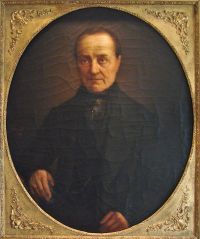 Auguste Comte,
A General View of Positivism
Auguste Comte,
A General View of Positivism
“ We see in them every kind of beauty combined; beauty of mind and character as well as of person. All their actions, even those which are unconscious, exhibit a spontaneous striving for ideal perfection. ”
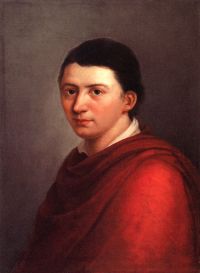 Friedrich von Schlegel,
The philosophy of life, and philosophy of language…
Friedrich von Schlegel,
The philosophy of life, and philosophy of language…
“ Whence else springs the high estimation in which steadiness and consistency of character are generally held, but from the fact that it is a rare exception for will and understanding—the inward thought and the outward practice—to be in perfect harmony and agreement? ”
Victor Cousin,
Lectures on the true, the beautiful and the good
“ In examining the phenomena which fall under the senses, we find between them grave differences upon which it is useless here to insist, and which establish the distinction of primary qualities and of secondary qualities. ”
Infanta of Spain Eulalia, The thread of life
“ By the side of the intellectual element, by which we estimate our thoughts and actions, there is feeling; that is, the sensibility which modifies the judgment and enlightens the deep thought determining our responsibility. ”
Joseph Conrad,
The Secret Agent
(1907)
“ A certain simplicity of thought is common to serene souls at both ends of the social scale. ”
Josiah Royce,
The World and the Individual, Second Series
(1901)
“ Herewith, however, we come to a point in the theory of our consciousness of likeness and difference which is, in my opinion, of critical importance for our whole doctrine about the particular facts of the world, and for our final interpretation of the problem of the individual. The likenesses and differences that we observe in facts are not merely thrust upon us without our consent or connivance. They are the objects of our attentive Interest. ”
P. Coffey, Ontology, or the Theory of Being
“ In such cases as these, intellect, interpreting sense experience and reasoning from it, places a real distinction, in the composite individual, between the factors that can continue to exist without others, and these latter. ”
Grace E. Hadow, Chaucer and His Times
“ We see the peculiar idiosyncrasies of this or that person, and we are conscious, not only of a subtle bond between ourselves and them which enables us to see things from their point of view, but of their relation to human nature in general and to their own class in particular. ”
1911 Encyclopædia Britannica, Volume 7… (1911)
“ These three facts are different in character, but are not found apart in consciousness. Sensations, or the facts of the sensibility, are necessary; we do not impute them to ourselves. The facts of reason are also necessary, and reason is not less independent of the will than the sensibility. ”
William James, The Principles of Psychology, Volume 2…
“ And every unity, every identity, every classification is rightly called fanciful unless it serves some other end than the mere satisfaction, emotion, or inspiration caught by momentarily believing in it. ”
