Corymb

Definition and stakes

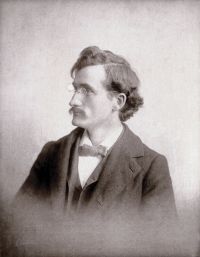
Portrait of L. H. Bailey L. H. Bailey,  Beginners' botany (1921)

“ It is a branching raceme. Because of the earlier growth of the lower branches, the panicle is usually broadest at the base or conical in outline. True panicles are not very common.
When an indeterminate flower-cluster is short, so that [159] the top is convex or flat, it is a corymb (Fig. 217) . The outermost flowers open first. Centripetal flower-clusters are sometimes said to be corymbose in mode.
When the branches of an indeterminate cluster arise from a common point, like the frame of an umbrella, the cluster is an umbel (Fig. 218) .
”
Source: Gutenberg

Alfred Barton Rendle,  1911 Encyclopædia Britannica (1911)

“ Thus the flowers are arranged in groups, and frequently very complicated forms of inflorescence result. When the primary peduncle or floral axis, as in fig. 8, is elongated, and gives off pedicels, ending in single flowers, a raceme is produced, as in currant, hyacinth and barberry. If the secondary floral axes give rise to tertiary ones, the raceme is branching, and forms a panicle, as in Yucca gloriosa. If in a raceme the lower flower-stalks are developed more strongly than the upper, and thus all the flowers are nearly on a level, a corymb is formed, which may be simple, as in fig. ”
Source: Wikisource

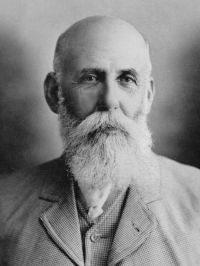
Portrait of Thomas Frederick Cheeseman Thomas Frederick Cheeseman,  Manual of the New Zealand Flora (1906)

“ Var. corymbosa, Kirk, Students' Fl. 114.—Branchlets slender, often flaccid and drooping, striate. Pod shorter, broadly oblong, much compressed, oblique; valves thin. Seed usually 1.—C. corymbosa, Col. in Trans. N.Z. Inst. xxi. (1889) 80.
Var. Hookeri.—Smaller, 2–4 ft. Racemes very numerous, densely fascicled. Flowers larger, 1/6 in. Pod ovate-oblong, less compressed; beak shorter.—C. Hookeri, Kirk, l.c.
”
Source: Wikisource

Get perspective with Kwize: daily news enlightened by great literature