Coriander

Definition and stakes

Richard Folkard,  Plant Lore, Legends, and Lyrics

“ It was esteemed as a spice by the Arabs, Egyptians, and Hindus. The plant’s foliage has a strong and offensive odour, but its little round fruit is pleasantly aromatic, and its seeds, when covered with sugar, form the well-known Coriander comfits. Robert Turner, in the ‘Brittish Physician,’ says that the powder of the seeds taken in wine, stimulate the passions; and Gerarde affirms that the juice of the green leaves, “taken in the quantity of four dragmes, killeth and poisoneth the body.”——Coriander is held to be under the planetary influence of Saturn. ”
Source: Gutenberg

Aegineta Paulus,  The seven books of Paulus Ægineta… (1844)

“ With regard to the treatment, the Arabians recommend oily emetics, with soda, pepper, salt, strong wine, &c. Avicenna (iii, 6, 2, 8) ; Rhases (Cont. xxi) ; Alsaharavius (Pract. xxx. 2.)
Schulze is satisfied that the corion or coriandrum of the ancients was the same as our coriander. He appears, however, to have rather overrated its deleterious properties. It is only in particular states of the body that it proves at all injurious. (Toxicol. vet. vii.) Sprengel also is satisfied as to the identity of the ancient and modern coriander. (Comment. in Dios.)
”
Source: Gutenberg

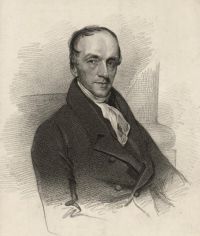
Portrait of Richard Watson Richard Watson,  A Biblical and Theological Dictionary

“ CORIANDER, גד, Exod. xvi, 31; Num. xi, 7; a strongly aromatic plant. It bears a small round seed, of a very agreeable smell and taste. The manna might be compared to the coriander seed in respect to its form or shape, as it was to bdellium in its colour. See Manna.
CORINTH, a celebrated city, the capital of Achaia, situated on the isthmus which separates the Peloponnesus from Attica. This city was one of the best peopled and most wealthy of Greece. Its situation between two seas drew thither the trade of both the east and west.
”
Source: Gutenberg

Get perspective with Kwize: daily news enlightened by great literature