Cross-stitch

Definition and stakes

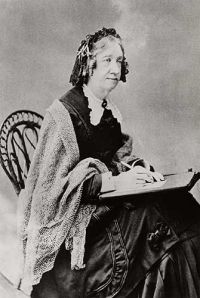
Portrait of Thérèse de Dillmont Thérèse de Dillmont,  Encyclopedia of Needlework

“ Fig. 292. Plain cross stitch on auxiliary canvas.
Two-sided cross stitch, worked in four rows of stitches (figs. 293, 294, 295) .—Straight lines of cross stitch, alike on both sides, can be worked in two journeys to and fro. Working from left to right, begin by fastening in your thread, never with a knot, but by two or three little running stitches, which are hidden afterwards by your first cross stitch. Directing your needle to the right, pass it diagonally over a double cross of the warp and woof of the canvas, and so on to the end of the line.
”
Source: Gutenberg

Anonymous,  The Ladies' Work-Table Book

“ All the stitches must incline to the right, or the work will appear imperfect and unsightly.
Double Cross Stitch.—This is a stitch very easy of execution. Bring your needle up No. 41, over four threads, down 5, up 1 down 45, up 43 down 25, up 3 down 25, up 3 down 21, up 43 down 21, one stitch. Four, six, or eight threads may be taken in depth, and two in width, according as taste may suggest. This is an admirable stitch for large pieces of work. Gold thread introduced between each row is a desirable addition to its attractive beauty.
”
Source: Gutenberg

Get perspective with Kwize: daily news enlightened by great literature