Crystal system

Definition and stakes

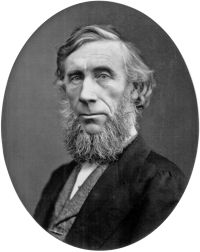
Portrait of A. E. H. Tutton A. E. H. Tutton,  Crystals (1911)

“ LIQUID CRYSTALS. We have seen in the foregoing pages that a crystal is usually a solid, highly organised in a homogeneous manner, and, unless the symmetry be developed to its highest extent, the crystal then belonging to the cubic system, it is also in general anisotropic, that is, it exhibits double refraction. Section-plates of it, more or less thin according to the strength of the double refraction, exhibit colours in parallel polarised light, and show the phenomenon of a single optic axis, or of two optic axes, in convergent polarised light. ”
Source: Gutenberg

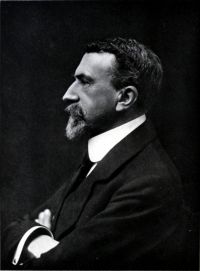
Portrait of A. E. H. Tutton A. E. H. Tutton,  Crystals (1911)

“ The previous observations of Rome de l’Isle in 1772, Le Blanc in 1784, Vauquelin in 1797, and of Gay-Lussac in 1816, that the various alums, potash alum, ammonia alum, and iron alum, will grow together in mixed crystals or in overgrowths of one crystal on another, when a crystal of any one of them is hung up in the solution of any other, does not affect the question, as the alums crystallise in the cubic system, the angles of the highly symmetric forms of which are absolutely identical by virtue of the symmetry itself. ”
Source: Gutenberg

Portrait of A. E. H. Tutton A. E. H. Tutton,  Crystals (1911)

“ It becomes obvious 124that the atoms—in their stereometric positions in the molecule, being thus fixed in the solid crystal when the molecules set themselves rigidly in the regular organisation of the space-lattice—form the points of the regular point-system of the crystal structure, which determines to which of the thirty-two classes of symmetry the crystal shall belong. Any movement of the atoms in the crystal, other than that which accompanies change of temperature, and possibly change of pressure, is thus improbable ”
Source: Gutenberg

Get perspective with Kwize: daily news enlightened by great literature