Deciduous tree

Definition and stakes

Viscount James Bryce Bryce,  South America: Observations and Impressions

“ Very few—in this part I could see none—are coniferous, but very many are evergreen, changing their leaves not all at the same time, like the deciduous trees of temperate countries, but each tree at its own time, so that there are always some with fresh leaves coming as the others are beginning to go. The variety of tints is endless, from the dark glossy green of many a forest tree to the light green of the bamboos. ”
Source: Gutenberg

Robert Tyas,  Woodland Gleanings: Being an Account of British Forest-Trees

“ The buds, after [174] unfolding themselves, make no farther progress, but immediately shrink from the season and die. The tree continues torpid, like other deciduous trees, during the remainder of the winter, and vegetates again in the spring, at the usual season. I have seen it in full leaf in the middle of summer, when it appeared, both in its form and foliage, exactly like other Oaks.
"I have been informed that another tree, with the same property of early vegetation, has lately been found near the spot where Rufus's monument stands.
”
Source: Gutenberg

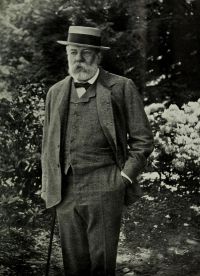
Portrait of Charles Sprague Sargent Charles Sprague Sargent,  Manual of the Trees of North America…

“ Resinous trees, with furrowed scaly bark, light brown durable heartwood, thin white sapwood, erect ultimately spreading branches, deciduous usually 2-ranked lateral branchlets, scaly globose buds, and stout horizontal roots often producing erect woody projections (knees) . Leaves spirally disposed, pale and marked with stomata below on both sides of the obscure midrib, dark green above, linear-lanceolate, spreading in 2 ranks, or scale-like and appressed on lateral branchlets, the two forms appearing on the same or on different branches of the same tree or on separate trees, deciduous. ”
Source: Gutenberg

Get perspective with Kwize: daily news enlightened by great literature