“ The diaphragms should be so proportioned that, when looking up the tube from the edge of an aperture of just the size and position of the biggest lens in the largest eyepiece, no part of the edge of the objective is cut off, and no part of the side of the tube is visible beyond the nearest diaphragm. ”
Diaphragm (optics)
Definition and stakes
The theme of “diaphragm (optics)” has been addressed by authors such as George Bartlett Prescott, Ernst Leitz, Otto Henker, A. M. Low and Edmund Arthur Engler. It is often associated with terms like light, sound, lens, vibration and pressure.
Quotes about “diaphragm (optics)”
Various, Scientific American Supplement…
“ The diaphragm serves but to increase the intensity of these effects, as in the transmitter, by concentrating the lines of force of the field, and by presenting a greater surface to the air—the necessary vehicle of sound. When it is thick, the internal motions that it takes on in consequence of variations in the field, and which are transmitted to the surrounding air and the ear, are solely those of resonance. ”
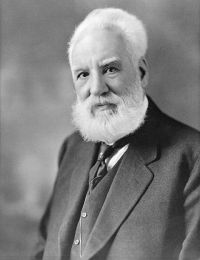 Alexander Graham Bell,
Popular Science Monthly
(1881)
“ In these cases the wooden box and mouth-piece of the transmitter should be removed, so that no air-cavities may be left on either side of the diaphragm. It is evident therefore, that in the case of thin disks a real vibration of the diaphragm is caused by the action of the intermittent beam, independently of any expansion and contraction of the air confined in the cavity behind the diaphragm. ”
C. A. Ealand, The Romance of the Microscope
“ A diaphragm of this nature consists of a number of thin, blackened, metal leaves, fastened to a metal ring in such a manner that, when the ring is revolved, the leaves close together, making the opening in the centre smaller and smaller. The Iris diaphragm has many advantages over the old perforated metal plate. At will, we can have any opening from full to the merest pin-point or we can cut off the light rays altogether, should we wish to do so; we are not confined to a definite number of stops. ”
Various, Encyclopaedia Britannica, 11th Edition…
“ The cone of rays nearest to B2 is not received to its total extent by the fitting B1, and the cone which has entered through B1 is again diminished in its further course, when passing through the diaphragm A′, so that the cone of rays really used for producing the image is limited by A, the diaphragm which seen from O appears to be the smallest. A is therefore the entrance pupil. The real diaphragm A′ which limits the rays in the centre of the system is the aperture diaphragm. Similarly three diaphragms lying in the image-space are to be seen from the image-point O′—namely B′, A′′, and B′2. ”
Various, Scientific American Supplement…
“ In diaphragms of sufficient thickness this kind of motion would exist alone. In thin diaphragms the motions that correspond to their special sounds might become superposed upon the preceding, and this would be prejudicial rather than useful, since, in such a case, if there resulted a re-enforcement of the effects produced, it would be at the expense of the reproduction of the timbre, the harmonics of the diaphragm being capable of coinciding only through the merest accident with those of the sounds that were setting in play the fundamental sound of the diaphragm. ”
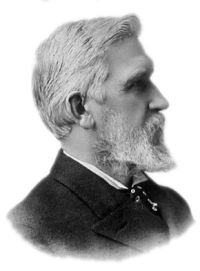 Elisha Gray,
Electricity and Magnetism
“ If there is a long movement there will be a strong current and vice versa. If a sound is uttered, and even if the multitude of sounds that are required to form a word, be spoken to the diaphragm, the latter partakes in kind of the air-motions that strike it. It swings or vibrates in the air, and if it is a perfect diaphragm it moves exactly as the air does, both as to amplitude and complexity of movement. ”
Ernst Leitz, Microscopes and Accessory Apparatus…
“ The condenser and iris diaphragm form one piece, giving central but no oblique illumination. The whole apparatus may be raised and lowered in the optical axis by means of a screw. The cylinder diaphragm may be inserted in place of the condenser. A ring below the iris diaphragm permits the insertion of glass discs for the purpose of modifying the light. ”
American School of Correspondence, Cyclopedia of Telephony and Telegraphy…
“ These vibrations, upon reaching a diaphragm, cause it to move. The greatest amplitude of motion of a diaphragm is, or is wished to be, at its center, and its edge ordinarily is fixed. The diaphragm thus serves as a translating device, changing the energy carried by the molecules of the air into localized oscillations of the matter of the diaphragm. The waves of sound in the air advance; the vibrations of the molecules are localized. The agency of the air as a medium for sound transmission should be understood to be one in which its general volume has no need to move from place to place. ”
Various, Harper's Round Table, November 10…
“ A diaphragm in photography is a thin metal plate with a hole in the centre, which is placed between the lenses of the camera tube to concentrate the rays of light and increase the sharpness of the picture. The smaller the opening the sharper will be the picture, but the exposure will take longer than with a larger opening. The reason of the lines of the buildings in the pictures being out of perpendicular is because the lens is not rectilinear. ”
Various, Scientific American Supplement…
“ They produce, then, in the transmitting diaphragm other motions than those of the fundamental sound and of its peculiar harmonics. (3.) It is true that in practice the edges of the telephone diaphragm are in nowise fixed, but merely set into a groove, or rather clamped between wooden or metallic rings, whose mass is comparable to their own ”
Various, Chambers's Journal of Popular Literature…
“ When we apply our mouth to the bell-shaped end of the apparatus, and speak or shout or sing, we set the diaphragm vibrating as in a tuning-fork; the vibrations thus created are electrically communicated through the wire to a distant telephone, and are repeated on its diaphragm with more or less distinctness.It is known that the motion of an iron plate contiguous to the poles of a magnet creates a disturbance of electricity in coils surrounding those poles; and the duration of this current will coincide with the vibratory motion of the plate or diaphragm. ”
“ In the carbon transmitter of the telephone a variable electrical resistance is produced by the pressure on the diaphragm, based on the fact that carbon is not as good a conductor of electricity under pressure as when not. Here, the mouthpiece is just a shell supporting a thin metal diaphragm to which the mirror on the back is attached, an apparatus for transforming the air vibrations produced by the voice into light vibrations of the projected beam, which is reflected from this light here in the room. The light reflected is thus thrown into vibrations corresponding to those in the diaphragm. ”
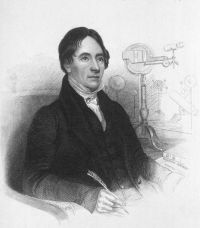 Thomas Dick,
The Practical Astronomer
“ A diaphragm, or aperture of a proper diameter, is placed at the focus of the eye lens, where the image formed by the object-glass falls, for the purpose of cutting off the extreme rays of the field lens, and rendering every part of the field of view equally distinct. ”
Various, Scientific American, Volume 40…
“ When the treadle motion is operated the impelling diaphragm is rapidly vibrated, and through the medium of the air contained in the flexible tube it communicates motion to the pen diaphragm and consequently to the needle bar and needle. ”
 Gaston Tissandier,
Popular Scientific Recreations
“ If while the cylinder is being turned an electric impulse arrives, the pull on the diaphragm, caused by the friction of the strip on the cylinder, is more or less released, and the diaphragm is free to vibrate or spring back into its original condition. ”
Various, Scientific American Supplement…
“ The rapidity of a lens depends mainly on its aperture and its focal length. Thus a lens of twelve inches focus will require four times the exposure of a six inch, with an equal sized diaphragm, and a quarter inch diaphragm will require four times the exposure of a half inch when used in the same lens.The Photographic Society of Great Britain have recommended that the diaphragms of all lenses should bear such relation to the focal length that each should require exactly double the exposure of the next smaller. ”
Various, Scientific American Supplement…
“ We can put a diaphragm manifestly out of condition to effect its peculiar scale of harmonics by placing small, unequal, and irregularly distributed bodies upon its surface, by cutting it out in the form of a wheel, and by punching a sufficient number of holes in it to reduce it half in bulk. ”
Various, Encyclopaedia Britannica, 11th Edition…
“ For points lying farther from the axis, the entrance pupil no longer alone limits the rays, the other diaphragms taking part. In fig. 16 only one diaphragm L is present besides the entrance pupil A, and the object-space is divided to a certain extent into four parts. The section M contains all points rendered by a system with a complete aperture; N contains all points rendered by a system with a gradually diminishing aperture ”
A. M. Low, Wireless Possibilities
“ How difficult it is going to be to make a large, heavy, and rapidly moving diaphragm reproduce accurately when we have had to take all these precautions to obtain accuracy of transmission! It is not impossible ”
 Mary Wood-Allen,
What a Young Woman Ought to Know
“ The breathing should neither be thoracic—that is, with the upper part of the chest—nor abdominal. It should be diaphragmatic; that is, with the expansion of the sides of the lower part of the chest, thus filling every air-cell and bringing the life-giving oxygen to the blood. The importance of the diaphragm as [53] the breathing muscle cannot be overestimated. A diaphragm, you know, is a partition across a cylinder; the diaphragm is a muscular partition across the cylinder of the body, dividing the lungs from the abdomen. ”
Carl William Siemens, Popular Science Monthly (1883)
“ The minute currents here employed are far surpassed as regards delicacy and frequency by those revealed to us by that marvel of the present day, the telephone. The electric currents caused by the vibrations of a diaphragm acted upon by the human voice naturally vary in frequency and intensity according to the number and degree of those vibrations, and each motor-current, in exciting the electro-magnet forming part of the receiving instrument, deflects the iron diaphragm occupying the position of an armature to a greater or smaller extent according to its strength. ”
Natt N. Dodge, 100 Desert Wildflowers in Natural Color
“ This desirable objective has become less difficult to attain with the advent of “faster” films which enable you to use the required small diaphragm “stop” without too greatly reducing the shutter speed, and still obtain adequate exposures. ”
Otto Henker, 1911 Encyclopædia Britannica (1911)
“ In dark field illumination care has to be taken that no direct rays reach the objective, and hence a good dark field illumination can be produced if the condenser system has a larger aperture than the objective. If an Abbe lighting apparatus is used a dark field diaphragm (fig. 44) can be placed in the iris diaphragm case. The central diaphragm disk keeps away all the light which would otherwise fall directly into the objective, and the open zones send so many oblique rays through the object that they cannot all be taken up by the objective. ”
Various, Scientific American, Vol. XXXIX.No…
“ With a persistence worthy of a better cause, the Engineering writer returns to the point he seems especially anxious to enforce. Toward the end of the article he says: "In every instrument described by Mr. Edison the diaphragm is the ruling genie of the instrument. Professor Hughes, however, has through his great discovery been enabled to show that variations of resistance can be imparted to an electrical current not only without a diaphragm, but with very much better results when no such accessory is employed." ”
John Lord, Beacon Lights of History, Volume 14…
“ Consequently, one listening at the receiving diaphragm will hear all that is uttered into the transmitting diaphragm. It was thus, by the combination of the dynamo and motor, both of which were given by Faraday to the world, that we have received this priceless instrument, which has been so potent in its effects on the civilization of the Twentieth century. ”
“ Central cross wires in the plane of the diaphragm are entirely suitable for alignment of the instrument, and over a moderate extent of field the distortion is so small that a micrometer scale in the plane of the diaphragm gives very good approximate measurements, and indeed is widely used in microscopy.It should be noted that the achromatism of this type of eyepiece is compensatory rather than real. One cannot at the same [Pg 141] time bring the images of various colors to the same size, and also to the same plane. ”
Albert A. Hopkins, Magic, Stage Illusions and Scientific Diversions…
“ The objective turned toward the right has a slit in the center for the passage of the diaphragm which, in revolving, allows the light to pass intermittingly. When the small diaphragm makes one revolution the large one makes five revolutions, and it is then only that the apertures meet and the light passes. The bellows behind the objective allows the light to reach the sensitized film. ”
 William Francis Channing,
Popular Science Monthly
(1883)
“ This expansion of the armature is for the purpose of increasing its superficial contact with the air for the propagation of sound-waves. The Reis armature, so equipped, is the equivalent of the "diaphragm" in what is commonly called "the Bell receiver," a form, however, which appears to have originated with Elisha Gray. In the "Bell receiver" the diaphragm is an elastic, expanded, circular armature. ”
1911 Encyclopædia Britannica, Volume 8… (1911)
“ The diaphragm or midriff (Anglo-Saxon, mid, middle, hrif, belly) in human anatomy is a large fibro-muscular partition between the cavities of the thorax and abdomen; it is convex toward the thorax, concave toward the abdomen, and consists of a central tendon and a muscular margin. ”
Edmund Arthur Engler, Popular Science Monthly (1880)
“ Trials were made with wires of different thicknesses, and it was found that the results improved as the thickness of the wire was increased, until finally the best results were obtained by using a piece of solid material rigidly secured to the diaphragm and ivory plate. It then occurred to Mr. Edison that, inasmuch as the working of his instrument depended upon changes of pressure only, there would be no need of having a vibrating diaphragm at all. A heavy diaphragm was therefore constructed and rigidly fastened to the carbon disk, so that the loudest tones would produce no vibration in it. ”
Related terms
Authors who wrote about “diaphragm (optics)”
George Bartlett PrescottErnst LeitzOtto HenkerA. M. LowEdmund Arthur EnglerAlexander Graham BellVariousFrank E. MillerThomas Lomar GrayJames W. SteeleElisha GrayLouis BellRobert RoutledgeC. A. EalandThomas DickAmerican School of Correspondence Arthur B. ReeveNatt N. DodgeCarl William SiemensMary Wood-Allen
Alexander Graham BellVariousFrank E. MillerThomas Lomar GrayJames W. SteeleElisha GrayLouis BellRobert RoutledgeC. A. EalandThomas DickAmerican School of CorrespondenceArthur B. ReeveNatt N. DodgeCarl William SiemensMary Wood-Allen