“ Government at each level, and different governments at the county level, shall co-operate in the performance of functions and exercise of powers and, for that purpose, may set up joint committees and joint authorities. (3) In any dispute between governments, the governments shall make every reasonable effort to settle the dispute, including by means of procedures provided under national legislation. (4) National legislation shall provide procedures for settling inter-governmental disputes by alternative dispute resolution mechanisms, including negotiation, mediation and arbitration. ”
Dispute resolution
Definition and stakes
The theme of “dispute resolution” has been addressed by authors such as David Hunter Miller, Robert Lansing, Percy Greg, enacted by the Constitutional Assembly of South Africa and amended by the Parliament of South Africa and James W. Gerard. It is often associated with terms like arbitration, state, mediation, law and court.
Quotes about “dispute resolution”
“ If no decision can be reached, the accused is acquitted for the time, or, in a civil dispute, a compromise is imposed. The rulers cannot, without incurring such general anger as would be fatal to their power, disregard our fundamental laws. ”
James W. Gerard, Face to Face with Kaiserism
“ Comparatively easy as it is to settle a dispute on questions of territory by arbitration or to work out schemes for compromise in regard to such, so difficult or almost impossible it would be to arbitrate on a question of actual supremacy or to settle it by compromise. ”
United States Treaty Series (1968)
“ Good offices and mediation, either at the request of the parties at variance, or on the initiative of Powers strangers to the dispute, have exclusively the character of advice and never have binding force. ”
Moon Treaty (1979)
“ If the consultations do not lead to a mutually acceptable settlement which has due regard for the rights and interests of all the States Parties, the parties concerned shall take all measures to settle the dispute by other peaceful means of their choice and appropriate to the circumstances and the nature of the dispute. ”
David Hunter Miller, The Geneva Protocol
“ What the paragraph of Article 5 above quoted says is that although neither the Council nor a Committee of Arbitrators may consider a dispute regarding a domestic question if the point is raised, still none the less the Council or the Assembly, under Article 11 of the Covenant, may consider the situation in its bearing upon the peace of the world. ”
 Samuel Johnson,
Political Tracts
(1776)
Samuel Johnson,
Political Tracts
(1776)
“ If one party resolves to demand what the other resolves to refuse, the dispute can be determined only by arbitration; and between powers who have no common superiour, there is no other arbitrator than the sword. ”
Sergiei Nilus, The Protocols and World Revolution
“ While discussion and dispute are taking place, we will simply pass the measures we desire and present them to the public as an accomplished fact. Nobody will dare to demand the rejection of measures thus passed, and the more so as they will be interpreted as an improvement. ”
David Hunter Miller, The Geneva Protocol
“ In cases where neither the arbitral procedure nor the judicial settlement provided for in Article 13 of the Covenant is applied, the Council meets and discusses the dispute, attempts to effect conciliation, mediation, etc. 3. If it be unsuccessful and war breaks out, the Council, if unanimous, has to express an opinion as to which party is guilty. The Members of the League then decide for themselves whether this opinion is justified and whether their obligations to apply economic sanctions become operative. ”
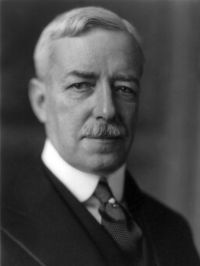 Robert Lansing,
The Peace Negotiations: A Personal Narrative
Robert Lansing,
The Peace Negotiations: A Personal Narrative
“ If one of the states, a party to the dispute, shall offer and agree to submit its interests and causes of action wholly to the control and decision of the League of Nations, that state shall ad hoc be deemed a Contracting Power. If no one of the states, parties to the dispute, shall so offer and agree, the Delegates shall, through the Executive Council, of their own motion take such action and make such recommendation to their governments as will prevent hostilities and result in the settlement of the dispute. ”
by the Constitutional Court of Thailand, Constitutional Court Decision No…
“ Such a conflict of authority as referred to in the Constitution occurs when there is a disagreement or dispute over the exercise of authority of two organs or more and the authority is granted by the Constitution. ”
Various, The World Court (Vol. I, No. 1… (1915)
“ As Congress cannot make compacts between the States as it cannot in respect to certain matters by legislation compel their separate action, disputes between them must be settled either by force or else by appeal to tribunals empowered to determine the right and wrong thereof. Force under our system of government is eliminated. The clear language of the Constitution vests in this Court the power to settle those disputes. We have exercised that power in a variety of instances, determining in the several instances the justice of the dispute. ”
by John Adams, Novanglus Essays — Essay 5 (1775)
“ Even in the grand fundamental dispute, the people arranged themselves under their house of representatives and council, with as much order as ever, and conducted their opposition as much by the constitution as ever. ”
Charles Evans Hughes, Texas Company v. Brotherhood of Railway and Steamship Clerks…
“ Freedom of choice in the selection of representatives on each side of the dispute is the essential foundation of the statutory scheme. All the proceedings looking to amicable adjustments and to agreements for arbitration of disputes, the entire policy of the act, must depend for success on the uncoerced action of each party through its own representatives to the end that agreements satisfactory to both may be reached and the peace essential to the uninterrupted service of the instrumentalities of interstate commerce may be maintained. ”
Louis Ginzberg, The Legends of the Jews — Volume 3
“ When they are in doubt over a case of clean or unclean, or when there is a dispute between two parties, which they desire to have settled exactly according to the law, or in conformity with a compromise, they come to me ”
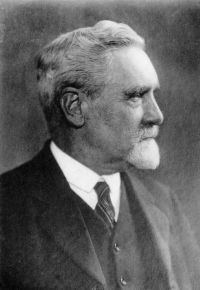 J. Holland Rose,
William Pitt and national revival
(1911)
J. Holland Rose,
William Pitt and national revival
(1911)
“ Why may not two nations adopt, what individuals often adopt who have dealings that may lead to disputes, the measure of agreeing beforehand that in case any differences shall happen which they cannot settle amicably, the question shall be referred to arbitration. The matter in dispute is seldom of much real consequence, but the point of honour prevents either party from yielding, but if it is decided by third parties, each may be contented. ”
Joseph Rickaby, Moral Philosophy: Ethics, Deontology and Natural Law
“ And if so it be that the constitution makes no provision one way or another, any dispute that may occur must be settled by amicable arrangement among the parties concerned: if they cannot amicably agree, they must fight. To save this last eventuality, it were well that any claim which the people in any country may have to remove princes and statesmen from office, to alter the polity, or to divide the empire, should be made matter of the clearest understanding and most express and unambiguous stipulation. ”
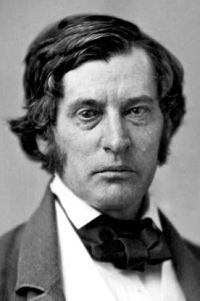 Charles Sumner,
Charles Sumner: his complete works…
Charles Sumner,
Charles Sumner: his complete works…
“ That, in the judgment of this Congress, an appeal to arms for the purpose of deciding disputes among nations is a custom condemned alike by religion, reason, justice, humanity, and the best interests of the people,—and that, therefore, it considers it to be the duty of the civilized world to adopt measures calculated to effect its entire abolition. ”
Lives of Distinguished North Carolinians…
“ To consider, to deliberate, to debate—what? What course of action shall, by mutual agreement, be taken by the States whom this convention will represent, what manner of resistance, what mode of redress? Now, sir, in all matters of this kind, in all revolutions, in all dissolutions of the ties which bind us together, the first step is the great difficulty. It is so even in social and private life; it is so in the married state. The first wanton and public outrage on the part of one towards the other of the parties is easily followed by such steps as end in total and thorough estrangement. ”
 Bertha von Suttner,
Memoirs of Bertha von Suttner: The Records of an Eventful Life…
Bertha von Suttner,
Memoirs of Bertha von Suttner: The Records of an Eventful Life…
“ The solution must be, “We do not say where the right lies in the pending conflicts; we only desire that a system of law and a tribunal should be created in which those who are competent and in authority (as we are not) should settle the conflicts without violence.” ”
 Bertrand Russell,
Political Ideals
(1917)
Bertrand Russell,
Political Ideals
(1917)
“ There is likely to be a continual increase in the practice of submitting disputes to arbitration, and in the realization that the supposed conflicts of interest between different states are mainly illusory. ”
I. H. Bates, The Ultimate Triumph of Just Principles (1861)
“ Wherever they meet, whether in a conflict between different nations or different parts of the same nation, one or the other must peaceably yield, or the strife must be settled in blood or, what is still worse, a disgraceful compromise. The last has been the mode in our own country until this glorious day. The various forms of contention, from the petty lawsuit up to the shock of armies, are only so many struggles for existence and influence between great and opposing principles—only parts of that sublime battle between right and wrong. ”
J. Hamp SeCheverell, Journal History of the Twenty-Ninth Ohio Veteran Volunteers…
“ It is revolting and sickening, and it is hoped that the day will come when disputes arising among nations may be settled by compromise, as two reasonable and upright men would decide a difference, governed by the golden rule, instead of resorting to blows where right and justice must be subordinate to brute force. ”
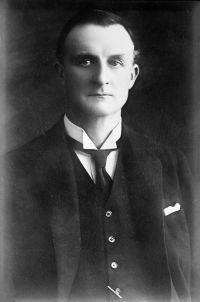 Edward Grey,
The League of Nations
(1918)
Edward Grey,
The League of Nations
(1918)
“ Individuals in civilized States have long ago accepted an analogous limitation and obligation as regards disputes between individuals; these are settled by law r, and any individual who, instead of. appealing to law, resorts to force to give effect to what he considers his rights, finds himself at once opposed and restrained by the force of the State—that is, in democratic countries, by the combined force of the other individuals. ”
by the United Nations, United Nations General Assembly Resolution A/69… (2014)
“ Reaffirms its commitment to the peaceful settlement of disputes under Chapter VI of the Charter, in particular Article 33, which provides for a solution by negotiation, enquiry, mediation, conciliation, arbitration, judicial settlement, resort to regional agencies or arrangements or other peaceful means chosen by the parties ”
 Franklin Henry Giddings,
Towards an enduring peace
(1916)
Franklin Henry Giddings,
Towards an enduring peace
(1916)
“ When any question, difference or dispute arising between two or more Constituent States is not justiciable as defined in these Articles, and is not promptly brought to an amicable settlement, and is of such a character that it might ultimately endanger friendly relations between such States, it shall be the duty of each party to the matter at issue, irrespective of any action taken or not taken by any other party, to submit the question, difference or dispute to the International Council with a view to a satisfactory settlement being arrived at. ”
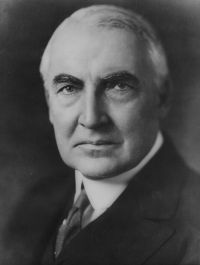 Warren G. Harding,
State of the Union Addresses
Warren G. Harding,
State of the Union Addresses
“ The same disposition to reasonableness, to conciliation, to recognition of the other side's point of view, the same provision of fair and recognized tribunals and processes, ought to make it possible to solve the one set of questions its easily as the other. ”
 Leslie Stephen,
The Life of Sir James Fitzjames Stephen…
Leslie Stephen,
The Life of Sir James Fitzjames Stephen…
“ If ultimately a division has to be made, human reason will have to decide in what shape the legal sanction, 'or, in other words, disciplined and systematic physical force,' shall be used. We shall then come to the ultima ratio, after all compromises have been tried. ”
Andrew G. T. Moore, McDermott, Inc. v. Lewis — Opinion of the Court
“ In fields like torts, where the typical dispute involves two persons and a single or simple one-shot issue and where the common substantive policy is to spread the loss through compensation and insurance, the preference for forum law and the emphasis on the state interest in forum residents which are the common denominators of the new conflicts methodologies do not necessarily lead to unacceptable choices. ”
 David Hume,
Hume's Political Discourses
David Hume,
Hume's Political Discourses
“ All politicians will allow, and most philosophers, that reasons of state may, in particular emergencies, dispense with the rules of justice, and invalidate any treaty or alliance where the strict observance of it would be prejudicial in a considerable degree to either of the contracting parties. ”
Marshall Everett, Complete Life of William McKinley and Story of His Assassination
“ And as we are brought more and more in touch with each other the less occasion is there for misunderstandings and the stronger the disposition, when we have differences, to adjust them in the court of arbitration, which is the noblest forum for the settlement of international disputes. ”
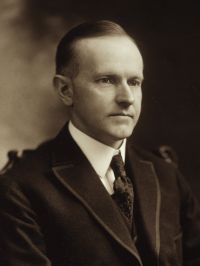 Calvin Coolidge,
Calvin Coolidge's Inaugural Address
(1925)
Calvin Coolidge,
Calvin Coolidge's Inaugural Address
(1925)
“ In conformity with the principle that a display of reason rather than a threat of force should be the determining factor in the intercourse among nations, we have long advocated the peaceful settlement of disputes by methods of arbitration and have negotiated many treaties to secure that result. ”
Joseph P. Tumulty, Woodrow Wilson as I Know Him
“ Disputes of a justiciable character are defined as disputes as to the interpretation of a treaty, as to any question of international law, as to the existence of any fact which if established would constitute a breach of any international obligation, or as to the nature and extent of the reparation to be made for any such breach. ”
Various, The Catholic World, Vol. 16, October 1872-March 1873
“ Is it not because no right has been oppressed, no treaty broken anywhere, without a discussion on both sides of the question before the peers and commons of England, whose assemblies have thus become, in the silence of the world, a sort of tribunal where all the great causes of humanity are pleaded, and where opinion pronounces those formidable judgments which, sooner or later, are always executed? ”
Selected Speeches on British Foreign Policy 1738-1914
“ The following is the passage to which I refer:'Amicable negotiations may take place, either between the Powers themselves between whom a dispute has arisen, or jointly with a third Power. The part to be taken by the latter, for the purpose of ending the dispute, differs essentially according to one or other of two cases; whether the Power, in the first place, merely interposes its good offices to bring about an agreement; or, secondly, is chosen by the two parties, to act as a mediator between them.' And he adds: 'mediation differs essentially from good offices ”
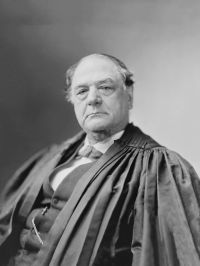 Noah Haynes Swayne,
The Cherokee Tobacco — Opinion of the Court
Noah Haynes Swayne,
The Cherokee Tobacco — Opinion of the Court
“ This results from the nature and fundamental principles of our government. The effect of treaties and acts of Congress, when in conflict, is not settled by the Constitution. But the question is not involved in any doubt as to its proper solution. ”
 Jean-Jacques Rousseau,
The Social Contract
(1913)
Jean-Jacques Rousseau,
The Social Contract
(1913)
“ I mean to inquire if, in the civil order, there can be any sure and legitimate rule of administration, men being taken as they are and laws as they might be. In this inquiry I shall endeavour always to unite what right sanctions with what is prescribed by interest, in order that justice and utility may in no case be divided. ”
A Biography of Henry Clay, the Senator from Kentucky
“ And it is fortunate for the peace and justice of society, that neither party to any contract, whether public or private, can decide conclusively the question of fulfilment by the other, but must always act under subjection to the ultimate decision, in case of controversy, of an impartial arbiter, provided in the judicial tribunals of civilized communities. ”
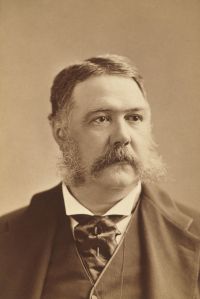 Chester A. Arthur,
Second State of the Union Address
(1882)
Chester A. Arthur,
Second State of the Union Address
(1882)
“ I am unwilling to dismiss this subject without assuring you of my support of any measures the wisdom of Congress may devise for the promotion of peace on this continent and throughout the world, and I trust that the time is nigh when, with the universal assent of civilized peoples, all international differences shall be determined without resort to arms by the benignant processes of arbitration. ”
Thomas Hart Benton, Thirty Years' View (Vol. 1 of 2…
“ To have made the decision under the authority of the individual States, co-ordinate in all cases, with decisions under the authority of the United States, would unavoidably produce collisions incompatible with the peace of society. ”
 John Mitchell Kemble,
The Saxons in England, Volume 2…
John Mitchell Kemble,
The Saxons in England, Volume 2…
“ But the great machinery for keeping peace between man and man, is the establishment of courts of justice, and a system by which each man can have law, by the consent and with the co-operation of his neighbours, without finding it necessary to arm in his own defence. ”
The Diplomatic Correspondence of the American Revolution…
“ If one or the other of the contracting powers, or both together, in virtue of this convention, or any other which may be made, which may have relation to it, are disturbed, molested, or attacked, it is agreed that the two powers shall act in concert, to defend themselves reciprocally, [440] and to procure themselves, by united efforts, an entire and satisfactory reparation, both for the insult done to the flag, and for the loss caused to their subjects. ”
Related terms
Authors who wrote about “dispute resolution”
David Hunter MillerRobert LansingPercy Gregenacted by the Constitutional Assembly of South Africa and amended by the Parliament of South AfricaJames W. GerardJ. N. LarnedSamuel JohnsonSergiei Nilusby the Constitutional Court of ThailandVariousby John AdamsCharles Evans HughesLouis GinzbergJ. Holland RoseJoseph RickabyFranklin Henry GiddingsAndrew G. T. Moore Joseph Story
 George Haven PutnamJohn Adams
Robert LansingPercy Gregenacted by the Constitutional Assembly of South Africa and amended by the Parliament of South AfricaJames W. GerardJ. N. LarnedSamuel JohnsonSergiei Nilusby the Constitutional Court of ThailandVariousby John AdamsCharles Evans HughesLouis GinzbergJ. Holland RoseJoseph RickabyFranklin Henry GiddingsAndrew G. T. MooreJoseph StoryGeorge Haven PutnamJohn Adams