Divine sovereignty

Definition and stakes

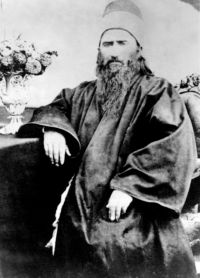
Portrait of ʻAbdu'l-Bahá ʻAbdu'l-Bahá,  Foundations of World Unity

“ To be brief; our purpose is to show that the divine sovereignty, the Kingdom of God, is an ancient sovereignty; that it is not an accidental sovereignty; just as a kingdom presupposes the existence of subjects, of an army, of a country; for otherwise the state of dominion, authority and kingdom cannot be conceived of. Therefore if we should imagine that the creation is accidental we would be forced to admit that the creator is accidental whereas the divine bounty is ever flowing and the rays of the Sun of Truth are continuously shining. ”
Source: Gutenberg

Portrait of ʻAbdu'l-Bahá ʻAbdu'l-Bahá,  The Promulgation of Universal Peace

“ Therefore, divine sovereignty necessitates a creation over which its dominion is exercised. There must be evidences of sovereignty. If we try to conceive of a time when creation was nonexistent, when there were no subjects or creatures under divine dominion and control, Divinity itself would disappear; there would be a cessation of the bounty of God, just as the kingship and favor of an earthly monarch would disappear if his kingdom did not exist. The sovereignty of God is eternal. ”
Source: Gutenberg

by John Thomas,  Elpis Israel — Chapter 2 -- The Creation of the Earth and Man (1848)

“ If man's domestic sovereignty be thus qualified and limited by the grace of God, shall we say that He conferred on man "divine right" to govern his species in its spiritual and civil concerns, to found kingdoms and empires, and to invent religions as a means of imparting durability to their thrones? What God permits and regulates is one thing ”
Source: Wikisource

Get perspective with Kwize: daily news enlightened by great literature