Docility, the quality of being open to direction and authority, has been examined across various disciplines as both a moral virtue and a practical requirement. Authors such as Charlotte Mason present it as a fundamental yet subtle principle in education, while Mortimer Adler connects it to prudence and justice in intellectual endeavors.
Religious and institutional writings, from John Taylor to T. W. Allies, highlight its function in harmonizing human will with divine or structured order. These viewpoints together emphasize docility as a complex balance between yielding and moral autonomy, crucial for individual development and social cohesion.
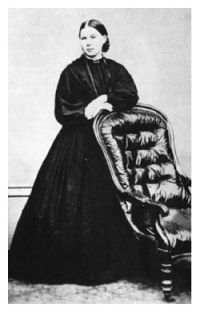 Charlotte Mason,
School Education — 1904 Preface
Charlotte Mason,
School Education — 1904 Preface