Dry air

Definition and stakes

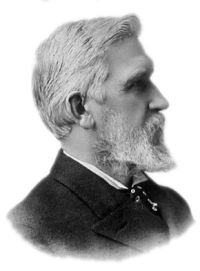
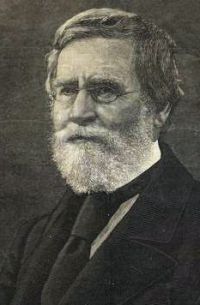
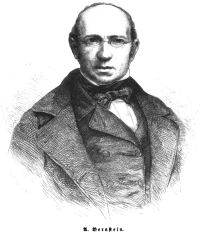
Portrait of Aaron David Bernstein Aaron David Bernstein,  Popular Books on Natural Science

“ From this: dry air, when coming in contact with wet objects, absorbs the moisture, and by this dries the object somewhat. If there be no wind, the moistened air will remain around the wet object, and the drying goes on very slowly. But so soon as a little wind arises, the moist air is moved away, new dry air constantly takes its place, and coming into contact with the wet article, effects in a very short time the desired result. ”
Source: Gutenberg

Robert Angus Smith,  Popular Science Monthly (1872)

“ It is, however, better for us to have what is called practically dry air—that is, air capable of containing much more moisture than it has. The amount of drying work done is according to the dryness, warmth, and speed of the air; with little of these qualities, a great bulk of air is required, where otherwise a small bulk might have sufficed. By warmth and dryness we have an advantage in requiring less rapid currents. I have said elsewhere that a climate has a certain advantage from being very rainy. To call dryness an advantage is not a contradiction. ”
Source: Wikisource

Portrait of Aaron David Bernstein Aaron David Bernstein,  Popular Books on Natural Science

“ The moist air fares like the wet clothes we spoke of; the warm dry air absorbs its particles of water. But if a colder stratum of air approaches the stratum containing clouds, then the water-particles of the latter are condensed; the cloud becomes small drops of water; these drops are too heavy to be supported in the air, and they fall down as rain. ”
Source: Gutenberg

Get perspective with Kwize: daily news enlightened by great literature