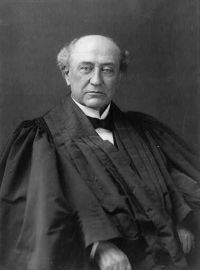
Equity, in legal terms, refers to a system of principles and remedies aimed at addressing the shortcomings of common law, ensuring fairness where strict legal rules might otherwise result in injustice. Historically, scholars such as Christopher Columbus Langdell questioned equity's jurisdiction, noting its role as a remedial framework distinct from substantive law, while Peter Vivian Daniel stressed its subordination to legal rights, arguing that equity cannot supersede clearly defined legal claims.
William Johnson and John Marshall Harlan emphasized equity's flexible role in interpreting statutes and updating legal practices, aligning with the evolution of common law. These perspectives collectively highlight equity's function as a complementary force, balancing legal rigidity with context-sensitive justice.
 Christopher Columbus Langdell,
Harvard Law Review
(1887)