External auditory meatus

Definition and stakes

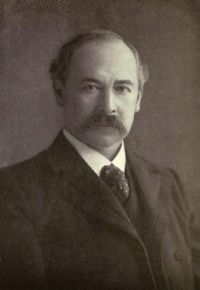
Portrait of George M. Gould George M. Gould,  Anomalies and Curiosities of Medicine

“ Bartholinus, Lycosthenes, Pare, Schenck, and Oberteuffer have remarked on deficient external ears. Guys, the celebrated Marseilles litterateur of the eighteenth century, was born with only one ear. Chantreuil mentions obliteration of the external auditory canal in the new-born. Bannofont reports a case of congenital imperforation of the left auditory canal existing near the tympanic membrane with total deafness in that ear. Lloyd described a fetus showing absence of the external auditory meatus on both sides. ”
Source: Gutenberg

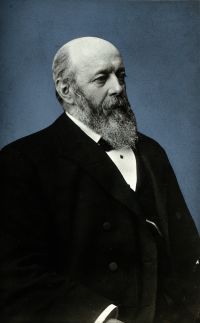
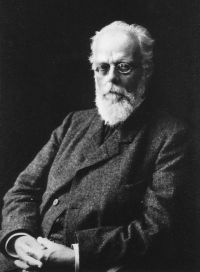
Portrait of August Weismann August Weismann,  Essays Upon Heredity and Kindred Biological Problems

“ The organ of hearing is without any external ear and without an air-containing external auditory meatus. The aerial vibrations do not pass, as in other mammals, from the external auditory passage to the tympanic cavity and thus to the nerve-terminations of the inner ear; but they reach the tympanic cavity by direct transmission through the bones of the skull, which possess a special structure and contain abundant air-cavities. ”
Source: Gutenberg

A system of practical medicine…

“ The watch and human voice would only show the ear to be defective in its hearing power, and it may be from any of the above-mentioned causes. The tuning-fork, in vibration, placed on an incisor tooth or on the frontal bone, would bring out the fact that if the deafness was due to a diseased middle ear or obstruction in the external auditory canal, the tuning-fork would be heard best by the defective ear; but if due to a disease of the internal ear, it would be heard the least distinctly by the defective-hearing ear. ”
Source: Gutenberg

Get perspective with Kwize: daily news enlightened by great literature