“ The facial muscles are agitated by every little shock which the nervous system receives, because they are already perpetually in movement in respiration, speaking, chewing, and in the defence and use of the organs of sense situated in the head. We very often meet people who, in consequence of increased irritability of the nerve-centres, suffer from nervous contractions of the face, which make them wink rapidly, contort the mouth and frown, but we never notice similar disturbances in hands or feet, or in any other part of the body. ”
Facial nerve
Definition and stakes
The theme of “facial nerve” has been addressed by authors such as Francis Edmund Anstie, A. Mosso, Francis Warner, Thomas Lauder Brunton and Xavier Bichat. It is often associated with terms like eye, brain, sensation, muscle and face.
Quotes about “facial nerve”
“ If I may allow myself to make use of a comparison, I should say that the facial nerve is like a telegraph wire, which transmits the messages directly to their destination, while with the other nerves the messages are sent successively from one station to another, consequently they pass less rapidly from the brain to their destination in the muscles. ”
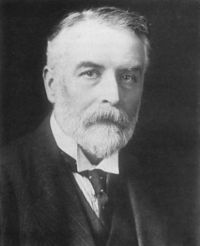 George Albert Boulenger,
The Cambridge natural history, Vol…
(1904)
George Albert Boulenger,
The Cambridge natural history, Vol…
(1904)
“ The seventh or facial nerve is an exceptionally interesting nerve. Besides the usual components of a typical branchial nerve certain of its so-called branches are wholly or largely derived from the lateralis system. For this reason the nerve may be said to consist of two portions, the facial proper, or those fibres which constitute the facial nerve in air-breathing Craniates, and the lateralis branches which solely innervate lateral line sense-organs, and are therefore peculiar to aquatic forms. ”
“ All other nerves have a very intricate course, and are connected with other cells, and other nerve-filaments, which constitute the cerebral convolutions; the facial nerve only receives commands directly from the central parts of the brain and transmits them by the shortest route to the periphery. ”
Various, Popular Science Monthly (1909)
“ Gushing by a purposeful division of the facial nerve and its anastomosis with the spino-facial, has more recently succeeded in restoring to the patient a considerable degree of normal emotional control of the expressive muscles of the face. I leave to expert physiologists to conjecture what new adjustments in their related forms of functioning this required from the cerebral hemispheres. ”
A system of practical medicine… (1886)
“ The fibres which convey the sense of taste pass centripetally from the tongue in the chorda tympani nerve, join the facial just within the stylo-mastoid foramen, and continue united with it to the geniculate ganglion of the facial, at which point they leave it to pass in the great superficial petrosal to the spheno-palatine ganglion, and thence to the trunk of the fifth nerve. Loss of sensation over the face only occurs in cases where the fifth nerve has been simultaneously affected with the facial, which may occur from exposure to cold. ”
A system of practical medicine… (1886)
“ Surgical operations, so often demanded for disease of the bones or soft parts of the face, may necessitate the lesion of its trunk or branches. The exposed position of this nerve is sometimes the occasion of its injury at the very outset of the life of the individual, when the application of the forceps to the head has been resorted to in delivery. But the most frequent cause of facial paralysis appears to be the exposure of one side of the face directly to cold—as sleeping in a draught of air, sitting at the open window of a railroad coach, etc. ”
Francis Warner, Popular Science Monthly (1882)
“ The value of the study of the nerve-muscular conditions of the face is finely illustrated in the case of the passive, expressionless face which may be woke up, "lighted up," made to express the whole soul in the face simply by conditions of the tension of the facial muscles resulting from the mental state. Thus, often, great and pleasing beauty is seen in faces unattractive when at rest. Conversely, some faces are beautiful in their passive condition, but lack expression and interest when in action from mental work; women having such faces talk but little. ”
Alexander Miles, Manual of Surgery Volume Second…
“ Facial Spasm.—Clonic contraction of the facial muscles (histrionic spasm) occasionally results from irritative lesions in the cortex or pons. Sometimes all the muscles are involved, sometimes only one, for example the orbicularis oculi (palpebrarum) —blepharospasm. This condition may be induced reflexly from irrigation of the trigeminal nerve, notably of branches that supply the nasal cavities and the teeth.The treatment consists in removing any source of peripheral irritation that may be present, in employing massage, and in administering nerve tonics, bromides, and other drugs. ”
Various, Popular Science Monthly (1894)
“ The incessant flow of involuntary nerve-currents to the facial muscles doubtless accounts for the odd similarity of expression among men of the same vocation. In many such cases the conditions are so complex that it seems impossible to lay one's finger upon the special items of environment which conduce to the facial characteristics exhibited by nearly all members of certain trades and professions. ”
 Charles Darwin,
The Expression of the Emotions in Man and Animals
Charles Darwin,
The Expression of the Emotions in Man and Animals
“ Now as men during endless generations have had their attention often and earnestly directed to their personal appearance, and especially to their faces, any incipient tendency in the facial capillaries to be thus affected will have become in the course of time greatly strengthened through the principles just referred to, namely, nerve-force passing readily along accustomed channels, and inherited habit. ”
Alfred Charles William Harmsworth, Motors and Motor-Driving (1902)
“ Veils of varying thickness, according to the temperature, should of course be worn by ladies, but much of the benefit to nervous patients is caused by the air blowing on the face. The facial nerves are acted upon with beneficial results well known to have a restorative influence on weak and so-called 'nervous' individuals. ”
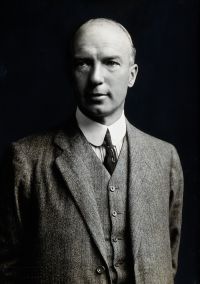 Alexis Thomson,
Manual of Surgery, Sixth Edition…
(1921)
Alexis Thomson,
Manual of Surgery, Sixth Edition…
(1921)
“ They are usually excited by some trivial cause, such as moving the jaws in eating or speaking, touching the face as in washing, or exposure to a draught of cold air. Between the paroxysms the patient is free from pain, but is in constant terror of its return, and the face wears an expression of extreme suffering and anxiety. When the paroxysm is accompanied by twitching of the facial muscles, it is called _spasmodic tic_. ”
William Horatio Bates, Better Eyesight Magazine — February 1921
“ As for the facial pain and contraction, they are practically cured. When the trouble returns, as it sometime does, I know how to relieve it. I am very glad to have an opportunity to tell this story, and I wish I knew how to make it known to all who are suffering from the pain of defective eyesight, or of facial neuralgia, that these conditions can be cured by relaxation, and that the dreadful operations which are resorted to in the case of the neuralgia are unnecessary. STORIES FROM THE CLINIC ~ 12: The Relief of Pain. ”
Various, Popular Science Monthly (1895)
“ But a little reflection will show that the salient points of many of the typical faces which we constantly see are under but little obligation to these agents of the will. It is beyond the power of the facial muscles shown in works on anatomy to give a man a shiny nose or a double chin, or to affect the tint and general tone of the integument. Such changes must be attributed to the influence of the sympathetic nervous system, which is practically independent of the will, and which profoundly influences growth and nutrition in all parts of the body. ”
Francis Edmund Anstie, Neuralgia and the diseases that resemble it
“ Other reflex affections are common enough in this kind of facial neuralgia, and especially spasmodic contractions of the facial muscles, which, indeed, often form one of the most striking features of the malady, the attacks of pain being accompanied by hideous involuntary grimaces. Even in the earlier stages of the disease there is usually some degree of the same thing, as, for instance, spasmodic winking. In the great majority of cases, after a little time, exquisitely tender points are formed in the chief foci of pain ”
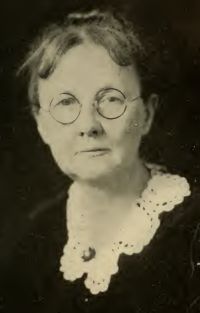 Eleanor Acheson McCulloch Gamble,
The Applicability of Weber's Law to Smell
(1898)
Eleanor Acheson McCulloch Gamble,
The Applicability of Weber's Law to Smell
(1898)
“ The more peripheral parts of every sense-organ are more subject to injury and disease. Thus, the muscles and lenses of the eye give much more trouble than the retina and the optic nerve. In the case of smell, the sensory epithelium is well protected by its secluded position. ”
 Algernon Blackwood,
Tongues of Fire
Algernon Blackwood,
Tongues of Fire
“ A haunting anxiety lay in the otherwise bright eyes. The corners of the little mouth turned down. From time to time she crushed a small lace handkerchief against her lips with violence. Occasionally, removing it quickly, she drew in a deep draught of the sweet air from the open window, inhaling and exhaling with fixed concentration in her face, then swiftly placing the handkerchief on her lips again. One might have thought she suffered toothache, neuralgia; some nerve attack perhaps that affected the mouth or lips or gums. ”
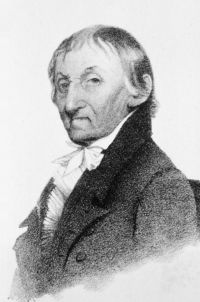 James Thacher,
An Essay on Demonology, Ghosts and Apparitions…
James Thacher,
An Essay on Demonology, Ghosts and Apparitions…
“ The nerves are the medium of illusions; their influence pervades the whole body, and their various impressions are transmitted to the brain. When the entire brain is affected, delirium is the consequence; if the optic nerve only, visions disturb the imagination; if the acoustic nerves receive the impression, unreal sounds or voices are heard. If the optic nerves are cut or rendered paralytic, the sense of vision is irrecoverably destroyed. The nervous system is liable to be diseased and deranged from various causes, from which, it is obvious, derangement of both body and mind must ensue. ”
J. H. Craven, A text-book on hygiene and pediatrics from a chiropractic standpoint (1924)
“ Usually there is pallor of the face which may be followed quickly with a twitching of the facial muscles, and sometimes those of the hands and feet. In most cases the attack comes on without warning; the eyes become fixed and rolled backward; the twitching usually begins in the face and very soon the entire body is involved. ”
Francis Edmund Anstie, Neuralgia and the diseases that resemble it
“ Latent tendencies to facial neuralgia are particularly apt to reassert their existence, and they are usually accompanied and aggravated by a tendency to vaso-motor disturbance, which not unfrequently seems to be the most distressing part of the malady. ”
Francis Edmund Anstie, Neuralgia and the diseases that resemble it
“ They speak of it as a burning pain of intense and often intolerable severity; they believe that it seldom if ever originates at the moment of the injury, but rather at some time during the healing process; and it is especially noteworthy that it is sometimes felt not in the nerve actually wounded, but in some other nerve with which it has connections. After it has lasted a certain time, an exquisite tenderness of the skin is developed, and a peculiar physical change of skin-tissue occurs; it becomes thin, smooth, and glossy. ”
Francis Warner, Popular Science Monthly (1882)
“ Asymmetry is, however, seen in facial palsy, in sneering, and occasionally in the one-sided grimaces of very nervous people. Certain commonly marked lines in the face—horizontal and vertical lines in the frontal zone, the naso-labial grooves, the lines of the upper and lower lips, and the positions of the angles of the mouth—exist as the result of the puckerings produced by muscular action. ”
Charles Creighton, A History of Epidemics in Britain…
“ In both diseases we are dealing essentially with a profound disorder of the nerves and nerve-centres, commencing in local skin-affections which come and go and at length settle, proceeding to implicate the nervous functions generally, impairing the efficiency of the individual, and bringing him to a miserable end. ”
Sven Anders Hedin, Trans-Himalaya: Discoveries and Adventurers in Tibet…
“ Our faces are distorted and assume quite a different expression, for we involuntarily draw the facial muscles together in the wind, to protect the eyes, producing a quantity of fresh wrinkles which are filled with white dust. ”
 Edwin F. Bowers,
Zone therapy; or, Relieving pain at home
Edwin F. Bowers,
Zone therapy; or, Relieving pain at home
“ A complete cure of her condition was brought about within a week, and now, after the expiration of six months, there has been no return of her symptoms.For the benefit of physician readers I should like to add that in treating eye strain, conjunctivitis, sties, granulated lids, and eye conditions generally, pressures made with a blunt probe, (see E Fig. 11) on the muco-cutaneous margins (where the skin joins the mucous membrane in the nostrils) affects the second division of the ophthalmic nerve, and assists materially in bringing about a favorable influence in eye troubles. ”
Popular Science Monthly (1881)
“ The draught of cold air, acting, we will suppose, on the back of the head, conveys through the sympathetic nerve, which ramifies on the scalp, a shock to the nervous center from which these nerve-fibers proceed; but we must understand that this nerve-center sends its filaments to other portions of the body, and so the shock which this center receives by one set of nerves is reflected by another set to some surface quite remote from that primarily acted upon, and in this way a temporary paralysis of the nerves supplying the blood-vessels of the mucous membrane of the nose is brought about. ”
 G. T. Bettany,
Life of Charles Darwin
G. T. Bettany,
Life of Charles Darwin
“ Now, whenever we know, or suppose, that others are depreciating our personal appearance, our attention is strongly drawn towards ourselves, more especially to our faces.” This excites the nerve centres receiving sensory nerve for the face, and in turn relaxes the blood capillaries, and fills them with blood. ”
 Xavier Bichat,
General Anatomy, Applied to Physiology and Medicine…
Xavier Bichat,
General Anatomy, Applied to Physiology and Medicine…
“ The animal sensibility of the skin sometimes diminishes and even disappears; paralysis is a proof of this. These affections, more rare than the loss of motion, often however take place. In the organs of the senses, it is the eye which most frequently loses the sensation; the ear comes next, then the skin, then the nostrils and finally the tongue, which is the sensitive organ that is always most rarely paralyzed, no doubt because it is that which is the most connected with the support of organic life, without which we could not exist. ”
 Albert Leffingwell,
Vivisection
Albert Leffingwell,
Vivisection
“ Numerous investigators have long established the fact that the great sensory nerve of the head and face is endowed with an exquisite degree of sensibility. More than half a century ago, both Magendie and Sir Charles Bell pointed out that merely exposing and touching this fifth nerve gave signs of most acute pain. "All who have divided this root in living animals must have recognized, not only that it is sensitive, but that its sensibility is far more acute than that of any other nervous trunk in the body." ”
 Samuel Hopkins Adams,
The Health Master
Samuel Hopkins Adams,
The Health Master
“ By incorrect breathing the facial aspect of the mouth-breather is variously modified and always for the worse; since the soft facial bones of youth are altered by the continual striking of an air-current on the roof of the mouth, which is pushed upward, distorting the whole face.” “None of our children are distorted. You won’t find a better-looking lot anywhere,” challenged Mrs. Sharpless, the grandmother’s pride up in arms. “True. None of them has had overdeveloped adenoids, except Betty. The others all breathe through their noses. ”
Thomas Brown, Lectures on the Philosophy of the Human Mind…
“ It is not more wonderful, a priori, that a sensation of colour should be immediately followed by the notion of a mile of distance, than that the irritation of the nostril, by any very stimulant odour, should be immediately and involuntarily, followed by the sudden contraction of a distant muscular organ, like the diaphragm, which produces, in sneezing, the violent expiration necessary for expelling the acrid matter;—or that an increase of the quantity of light poured on the eye, should be instantly, and without our consciousness, followed by a contraction of the transparent aperture. ”
 Erasmus Darwin,
Zoonomia; Or, the Laws of Organic Life…
Erasmus Darwin,
Zoonomia; Or, the Laws of Organic Life…
“ Hence dark spots are seen on the bed-clothes by patients, when the optic nerve is become less irritable, as in fevers with great debility; and the patients are perpetually trying to pick them off with their fingers to discover what they are; for these parts of the retina of weak people are sooner exhausted by the stimulus of bright colours, and are longer in regaining their irritability. ”
 Herbert Spencer,
Essays: Scientific, Political, & Speculative…
Herbert Spencer,
Essays: Scientific, Political, & Speculative…
“ If, then, recession of the forehead, protuberance of the jaws, and largeness of the cheek-bones, three leading elements of ugliness, are demonstrably indicative of mental inferiority—if such other facial defects as great width between the eyes, flatness of the nose, spreading of its alæ, frontward opening of the nostrils, length of the mouth, and largeness of the lips, are habitually associated with these, and disappear along with them as intelligence increases, both in the race and in the individual ”
Related terms
Authors who wrote about “facial nerve”
Francis Edmund AnstieA. MossoFrancis Warner Thomas Lauder BruntonXavier Bichat
 G. Armauer HansenAlexander MilesEdwin F. BowersRay Vaughn PierceJames ThacherAlbert LeffingwellVariousAlfred Charles William HarmsworthCharles DarwinGeorge Albert BoulengerCharles CreightonJ. H. CravenAlgernon BlackwoodEleanor Acheson McCulloch GambleAlexis Thomson
Thomas Lauder BruntonXavier BichatG. Armauer HansenAlexander MilesEdwin F. BowersRay Vaughn PierceJames ThacherAlbert LeffingwellVariousAlfred Charles William HarmsworthCharles DarwinGeorge Albert BoulengerCharles CreightonJ. H. CravenAlgernon BlackwoodEleanor Acheson McCulloch GambleAlexis Thomson