Fume

Definition and stakes

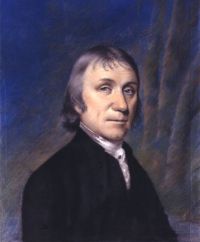
Portrait of Joseph Priestley Joseph Priestley,  Experiments and Observations on Different Kinds of Air

“ The burning of any substance occasions the same smell: for the gross fume which arises from them, before they flame, is the inflammable air they contain, which is expelled by heat, and then readily ignited. The smell of inflammable air is the very same, as far as I am able to perceive, from whatever substance of the same kingdom it be extracted. Thus it makes no difference whether it be got from iron, zinc, or tin, from any kind of wood, or, as was observed before, from any part of an animal. ”
Source: Gutenberg

Various,  Little Folks (October 1884)

“ When you see a thin blue fume rising from it, it is hot enough. That is the sign. If you do not look closely it may escape your notice, for it is only a thin fume you want, not a thick smoke. If we were to let the fat remain till it smoked it would be spoilt."
"Oh dear, how careful we have to be!" said Margaret.
"The slices of apple are quite ready, ma'am," said Mary.
"And the batter is quite ready," said Margaret.
"I see too, that cook has put a dish with kitchen paper on it for us to put the fritters on as they are fried. And there is the fume. Do you see it, children?"
”
Source: Gutenberg

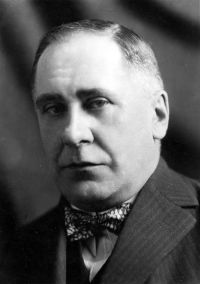
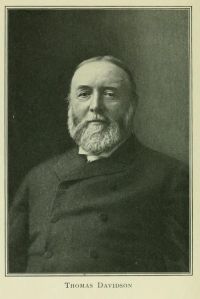
Portrait of Thomas Davidson Thomas Davidson,  Chambers's Twentieth Century Dictionary 1908… (1908)

“ Fume, fūm, n. smoke or vapour: any volatile matter: heat of mind, rage, a passionate person: anything unsubstantial, vain conceit.—v.i. to smoke: to throw off vapour: to be in a rage: to offer incense to.—n. Fum′atory, a place for smoking or fumigation.—adjs. Fū′mid, smoky; Fumif′erous, producing fumes.—n. Fumos′ity, quality of being fumous: (pl.) the fumes arising from over eating or drinking.—adjs. Fum′ous, Fumose′, Fum′y, producing fumes. ”
Source: Wikisource

Get perspective with Kwize: daily news enlightened by great literature